
UK Card Shows & Events: Where Collectors Actually Meet
UK card shows explained: how the circuit works, what to expect at your first event, haggling etiquette and how to spot good deals. Meet the hobby.

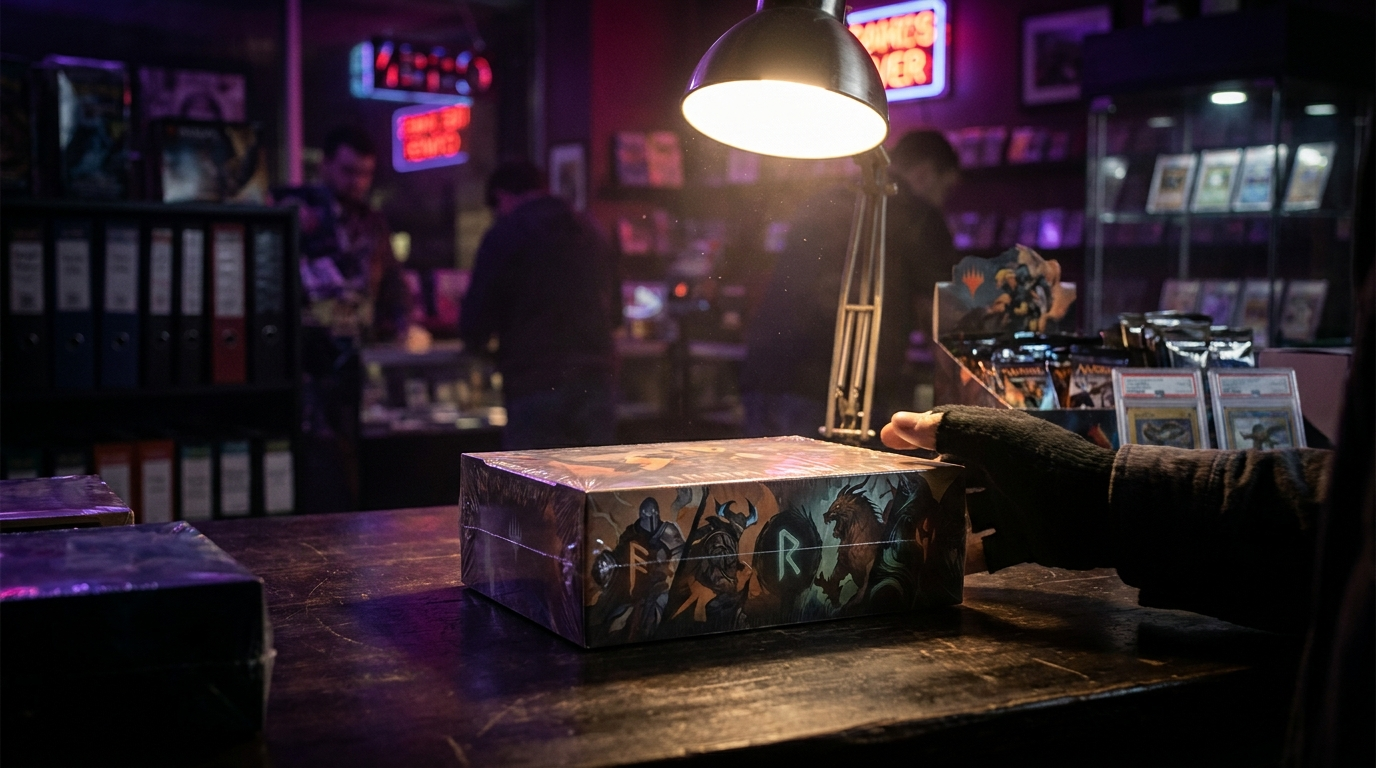
Sealed product runs on trust. When you buy a booster box, you are trusting that nobody has been inside it since it left the factory — because the moment someone has, you are no longer buying a lottery ticket, you are buying a losing one. A resealed Pokémon box looks almost identical to a legitimate one, costs the same, and contains packs that have already been searched, weighed or emptied of their best cards.
The good news is that resellers who do this are rarely as careful as the factory, and once you know what machine-sealed product actually looks like, most reseals give themselves away. In this guide we will walk through how the scams work, the red flags on boxes and on individual packs, what pack weighing is, and the buying habits that keep you out of trouble almost every time.
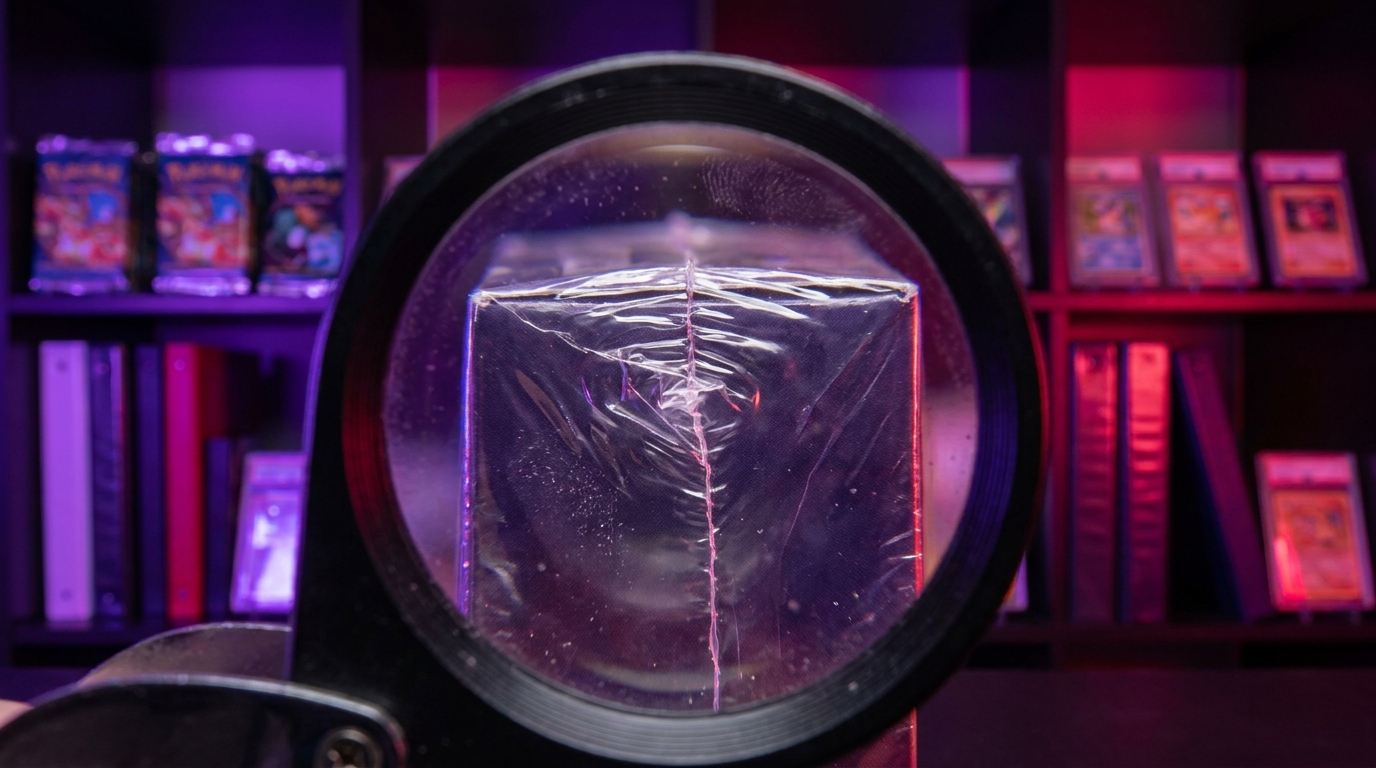
The scam is simple: buy legitimate sealed product, open it carefully, remove the valuable cards, then restore the packaging well enough to sell it on as new — and a resealed Pokémon box enters the wild. At pack level, that means slitting the crimp or seam, swapping the hits for bulk commons, and re-gluing. At box level, it means removing the shrink wrap, doing whatever they like with the contents, then re-wrapping with a heat gun and consumer-grade shrink film.
Some operations are cruder — refilling a box with cheap packs from an older set, or even weighting it with paper. Others are genuinely skilled. That is why the defence is not one single check but a stack of them: wrap, seams, box, packs, seller and price all have to make sense together.
Factory shrink wrap is applied by machine, and machines are boringly consistent. When you inspect a sealed box, this is what to compare:
| What to check | Factory-sealed | Suspect |
|---|---|---|
| Shrink wrap | Tight to the box, no slack | Loose, wrinkled or bubbled with trapped air |
| Seams | Clean, straight, machine-folded with a neat overlap | Blobby melted edges and uneven folds |
| Film branding | Printed or subtly textured, as that product line normally is | Plain glossy film on a line that usually has printed wrap |
| Box beneath the film | Box condition matches the wrap | Scuffed, well-handled box under pristine film |
| Weight and feel | Contents snug and still | Rattling or shifting loosely inside |
None of these alone is proof — factory wrap varies between print runs and regions — but two or three together should send you walking. If you want a baseline, handle product from a trusted shop first; our guide to buying a booster box in the UK covers what fresh factory stock should look and feel like.
Loose packs are where most people get burned, because a single pack is easier to tamper with and easier to sell. Check the crimp — the machine-pressed seal at the ends of the pack. Factory crimps are uniform, evenly ridged and identical across packs from the same box. Re-glued packs often have flattened, irregular or suspiciously smooth crimps, sometimes with visible glue residue or a seam that has clearly been opened and pressed back.
Also be wary of packs with tiny nicks or lifted edges along the seam, packs that feel unusually thin, and — the classic — loose packs sold in bulk by a seller who has no plausible reason to own hundreds of them. Resealed singles packs overlap heavily with outright counterfeits, and the checks are similar; our guide on spotting fake Pokémon cards covers the print and material tells that expose fakes at card level too.
Collector’s tipBuying in person? Use it. A shop or car-boot seller who refuses to let you look closely at a sealed box before paying is answering your question for you. Take your time, tilt the box under the light to check the seams, and trust the instinct that says something feels off — it is right more often than not.
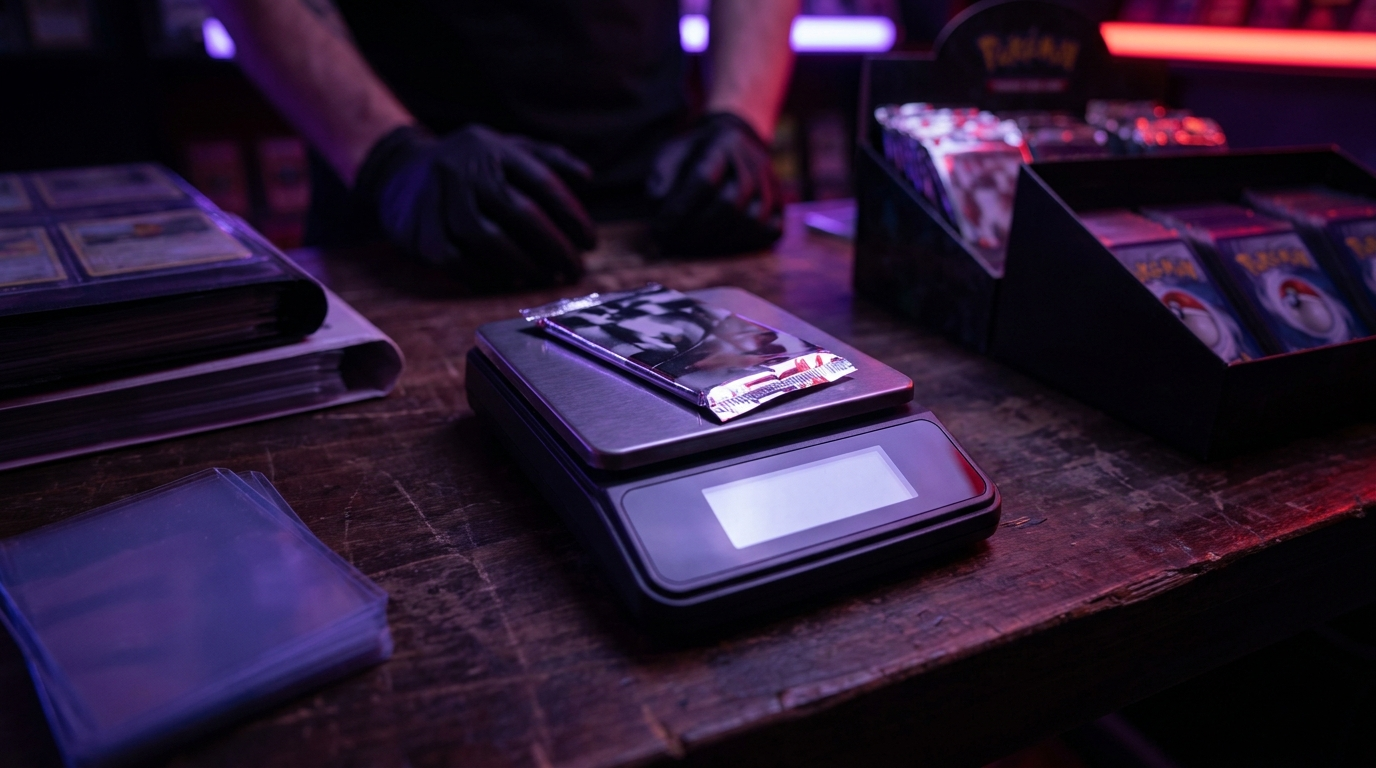
Weighing is subtler than resealing because the pack is never opened. Older Pokémon packs containing a holographic card weighed fractionally more than packs without one, so scammers ran packs across a precision scale, kept the heavy ones, and sold the light ones on. The packs are genuine and factory sealed — they have simply had the odds stripped out of them.
The Pokémon Company largely killed weighing by putting a code card in every modern pack and standardising contents, so weight differences on current sets are effectively meaningless. But it still matters for the vintage and older product where the technique works, which is why experienced collectors treat loose vintage packs with real caution and prefer heavy-era product graded or bought within sealed boxes.
Watch outTreat any loose vintage pack as though it has already crossed a scale. Unless it is graded or comes from a known, documented collection, assume the best odds have been picked out of it — and never pay a premium for the privilege of opening someone else’s rejects.
You do not need to become a forensic examiner, because the easiest way to deal with a resealed Pokémon box is never to be offered one. A few habits eliminate nearly all of the risk:
If a box or pack turns out to be tampered with, act quickly and calmly. Photograph everything — wrap, seams, crimps, contents — before touching it further. Bought online from a UK business? The Consumer Rights Act is on your side: the item is not as described, and you are entitled to a refund. Bought on eBay? Open a case under the eBay Money Back Guarantee with your photos attached; ‘item not as described’ claims on tampered product generally resolve in the buyer’s favour when the evidence is clear. Paid by card or PayPal elsewhere? A chargeback or dispute is your fallback.
Then tell people. Report the seller to the platform, and mention it in the collector communities you are part of — reseal operations rely on victims staying quiet and embarrassed. You will not get your excitement back, but you can make the scam less profitable for the next attempt.
Compare the wrap against factory standards: film should be tight with straight, machine-folded seams, and the box underneath should look as handled or as fresh as the film covering it. Loose or bubbled wrap, melted seam edges, and contents that rattle are the common giveaways.
Packs that have been run across a precision scale so the slightly heavier holo-containing ones could be kept back. The packs sold on are genuine and still factory sealed — they have just had the good odds removed from them.
Not meaningfully. Every modern pack contains a code card and standardised contents, so weight differences no longer track what is inside. Weighing remains a real risk on vintage and older loose packs.
It can be, if you buy with structure. Check the seller’s history and their feedback on sealed items specifically, insist on photos of the actual box rather than stock images, and walk away from new accounts listing hyped product below market price.
Photograph the wrap, seams, crimps and contents before handling it further, then claim. UK buyers are covered by the Consumer Rights Act, eBay purchases by the Money Back Guarantee, and card or PayPal payments by a dispute. Report the seller afterwards so the next buyer is warned.
The takeaway: reseals and weighed packs are real, but they are a solved problem if you buy from sources with reputations to lose and inspect anything that arrives from sources without one. Every box we sell comes straight from official distribution and ships the way it arrived — browse the full range here, and if you are ever unsure about something you have bought elsewhere, get in touch and we will happily give you a second opinion.
UK card shows explained: how the circuit works, what to expect at your first event, haggling etiquette and how to spot good deals. Meet the hobby.

Pokémon card trading is the best free fun in the hobby — until a bad trade stings. Value trades fairly, avoid scams online and trade with confidence.

Are Pokémon tins worth buying? We break down the tin line-up, mini tins vs full tins, the value maths and when a tin is genuinely the right buy.