
UK Card Shows & Events: Where Collectors Actually Meet
UK card shows explained: how the circuit works, what to expect at your first event, haggling etiquette and how to spot good deals. Meet the hobby.

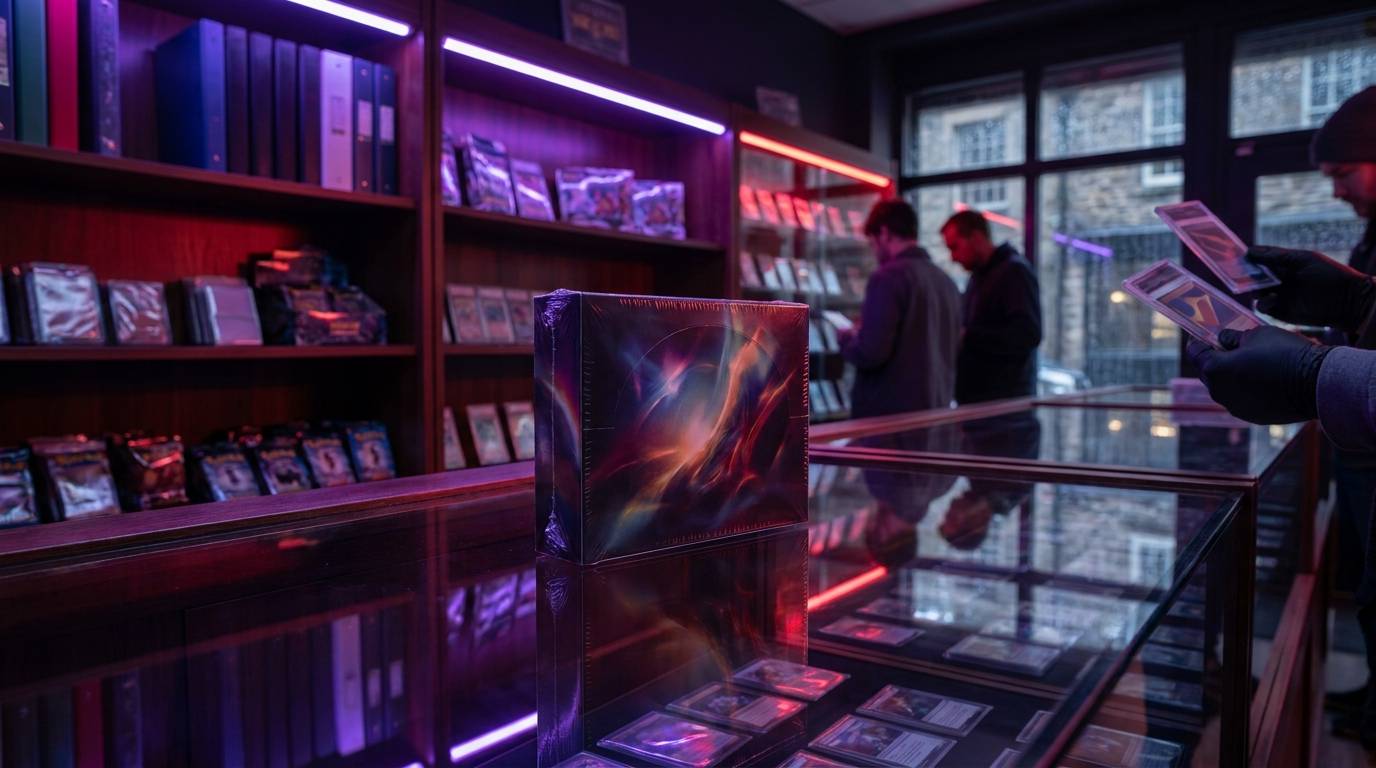
There is a moment in every collector’s journey when loose packs stop making sense and the maths points one way: the box. Buying a Pokémon booster box in the UK is the most cost-effective way to open a set — but it is also where the stakes get high enough for scammers to take an interest, and where a bad purchase hurts.
Boxes are a three-figure commitment, the resale market is full of traps for the unwary, and UK pricing swings wildly between fair and frankly cheeky depending on where you shop.
This guide covers what a booster box actually is, the honest maths against ETBs and bundles, how to avoid weighed and resealed boxes, which current sets are worth boxing, and where UK collectors can buy at fair prices.
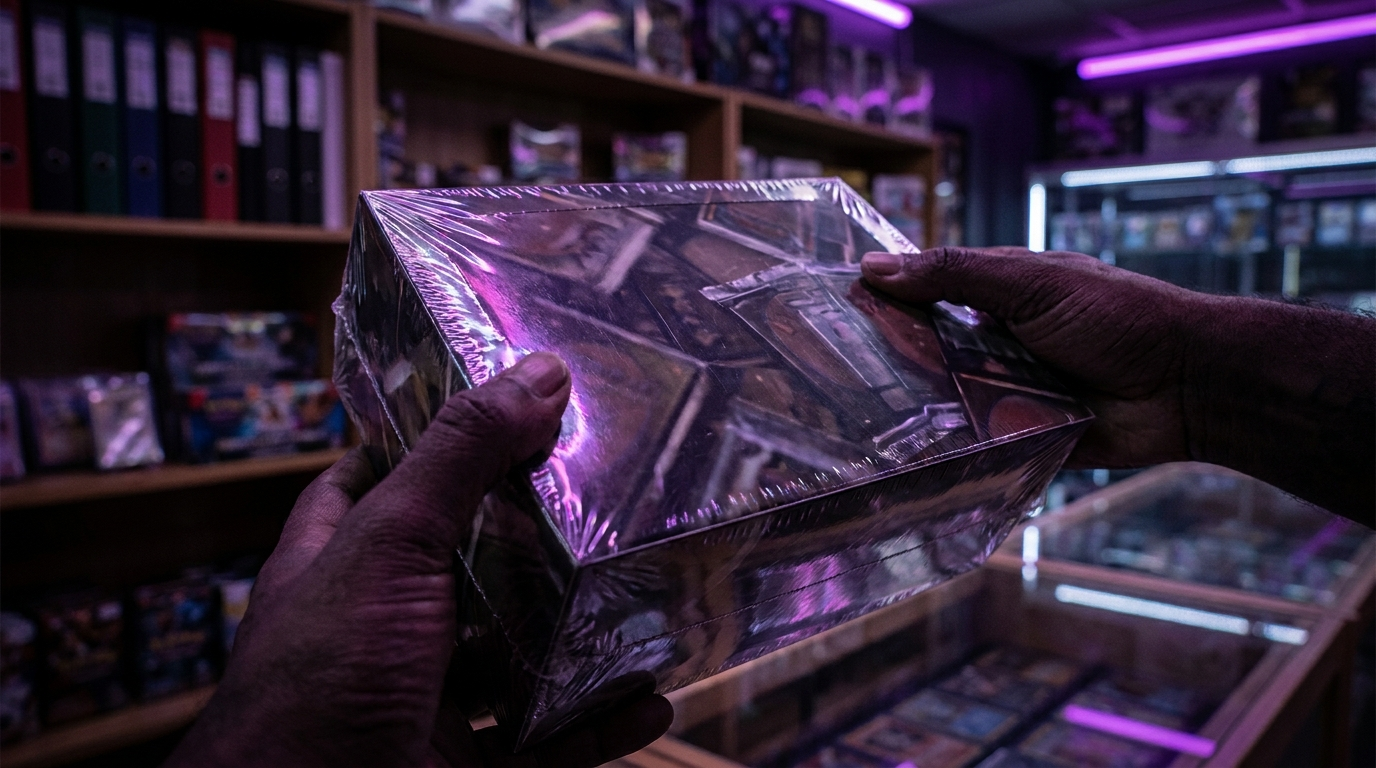
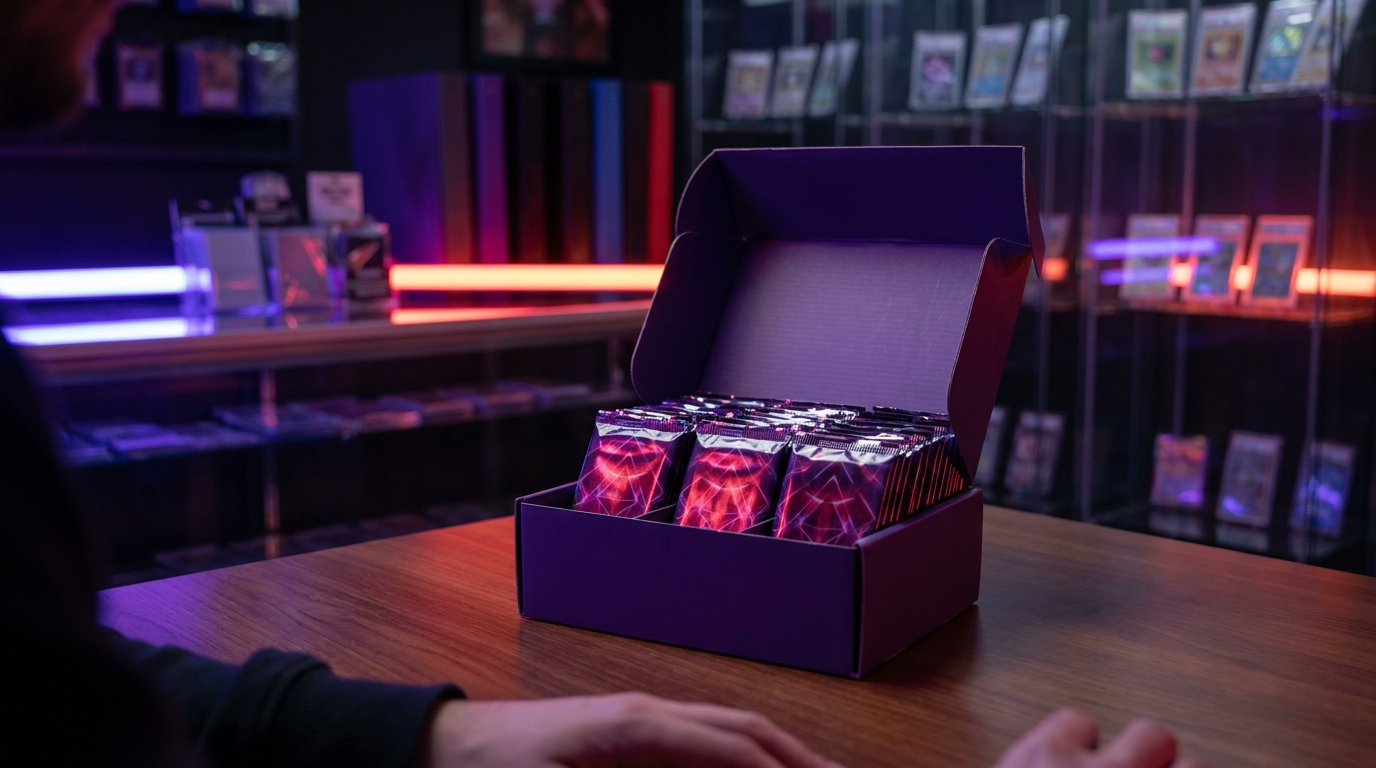
A booster box is the factory case a set’s packs ship to shops in: for modern English sets, 36 booster packs, factory-sealed in printed shrink wrap. Japanese boxes run 30 packs (with different pack structures entirely), and some special English sets use non-standard formats — Prismatic Evolutions, notably, was never sold as a standard 36-pack booster box at all, which catches people out when ‘boxes’ appear on marketplaces.
A half box is exactly what it sounds like — 18 packs, sold either by retailers splitting cases or as official smaller display formats in some product lines. Half boxes are a sensible middle step if a full box stretches the budget, though the per-pack price usually sits slightly above full-box rates.
Terminology worth knowing when you shop: a case is the distributor unit containing six boxes — case-fresh boxes are prized by sealed collectors because they have never been handled individually — and a display is simply the trade term for the box as it sits opened on a shop counter. Neither changes what you get; both appear in listings and are worth recognising when you see them.
Why buy a box rather than packs? Cost per pack, first and foremost. Beyond that: sealed boxes are the standard unit for long-term holds, opening a full box gives you a realistic run at a set’s pull rate structure, and there is honestly no experience in the hobby quite like working through 36 packs. For what those pull rates actually mean in practice, see our pull rates guide — a box improves your odds; it guarantees nothing.
Using typical UK prices at the time of writing (they move, so check current listings):
| Format | Typical UK price | Packs | Cost per pack |
|---|---|---|---|
| Booster box | £90–£130 | 36 | £2.50–£3.60 |
| Booster bundle | £20–£26 | 6 | £3.30–£4.30 |
| Elite Trainer Box | £45–£60 | 9 | £5.00–£6.60, offset by sleeves, dice, promo and the storage box |
| Loose packs | £4–£6 each | 1 | £4–£6 on the high street |
The pattern is consistent across sets: boxes are the cheapest packs, bundles are the value sweet spot for smaller budgets, ETBs charge for the extras, loose packs cost the most. Which is right depends on your goal — we go deeper in booster box vs Elite Trainer Box, but as a rule: maximum cards per pound, buy the box; first product for a new collector, the ETB earns its keep.
One caveat on the arithmetic: per-pack cost is not per-card value. A box’s real return depends on the set’s pull structure and what its chase cards are actually worth, which is why two boxes at identical prices can be very different propositions. The per-pack maths tells you which format is efficient; whether the set deserves your money is a separate question entirely.
Two scams dominate the sealed market. Resealing — opening product, removing hits, re-wrapping — and weighing, which targets loose packs (heavier packs historically indicated holo contents; modern packs largely defeat this, but the scam persists on older product). Boxes bought from proper retail channels are safe from both; boxes bought from strangers are where you need eyes open:
We cover the tells in forensic detail in our guide to resealed boxes and weighed packs — ten minutes of reading that can save you a three-figure mistake.
Watch outNobody sells a £120 box for £70 out of kindness. A meaningfully-below-market ‘sealed’ box from a private seller is the single most reliable warning sign in the hobby, and the stories that come with it — a house move, a collection break, a gift nobody wanted — are part of the pitch. If you buy anyway, pay through a route with buyer protection and film the unboxing in one continuous take from wrap to packs.
Buying in person? Give the box the same treatment politely: check the wrap seams, feel for softened corners under the plastic, and if a deal is materially below market, ask yourself why you are the lucky one. Good sellers do not mind scrutiny; the other kind minds a great deal, which is itself information.
Rather than a list that dates in months, here is the framework we use. Box current sets you actually want to open — at launch-window prices from legitimate retailers, the current Mega Evolution-era sets offer strong chase cards and sensible entry costs, and the 30th-anniversary wave has given the era genuine collector momentum. Follow announcements on the official Pokémon TCG site to know what is landing when.
Be cautious boxing hype at secondary prices. Once a set’s boxes trade well above retail, the maths of opening them collapses and you are paying collector premiums for gambling odds. And check singles prices first on a site like TCGplayer: if the three cards you actually want cost less than half a box, buying them outright wins — a theme we expand on in sealed vs singles.
Japanese boxes are the other lane worth knowing about: 30 packs, different pack structures, generally kinder pull rates and often cheaper per box — with the trade-offs that the cards are in Japanese and UK supply runs through importers. They behave differently enough that we would treat them as a separate hobby lane rather than a straight substitute for English product.
Thirty-six for modern English sets. Japanese boxes contain thirty packs with entirely different pack structures, and some special English releases never get a standard 36-pack box at all — Prismatic Evolutions being the obvious example, which catches people out when ‘boxes’ appear on marketplaces.
Yes, and by a wide margin. A box works out at roughly £2.50–£3.60 per pack against £4–£6 for loose packs on the high street. What the maths cannot tell you is whether the set itself deserves the money — that depends on its pull structure and what the chase cards are really worth.
Study the shrink wrap. Factory wrap is tight and uniform with machine-neat folds; loose, bubbled, taped or unusually thick wrap is a red flag, as is no wrap at all on a supposedly sealed box. Buying from established shops with official distribution removes the question entirely.
They are a genuinely good lane if you enjoy it: thirty packs, generally kinder pull rates and often a lower price per box. The trade-offs are that the cards are in Japanese and UK supply runs through importers, so treat them as a separate hobby lane rather than a straight substitute for English product.
Pre-ordering at launch pricing from a reputable shop usually wins. Once a set lands and allocation pressure builds, prices on popular boxes tend to move the wrong way — the boring early order is generally the cheap one.
UK collectors have three broad options. Big-name retail is safe but rarely cheap, and allocation of hot sets is thin. Marketplaces occasionally throw up genuine bargains and regularly throw up reseals, scalped pricing and grey imports — fine for the experienced, risky for everyone else. Specialist UK card shops are, unsurprisingly, where we would point you: official distribution, accountable reputations, and pricing that generally tracks the real market rather than testing what panic will pay.
That last category is why TCG Smiths exists — we are a UK specialist, we price boxes fairly whether a set is hot or not, and every order earns 10 loyalty points per £1. You can see the current range on our booster boxes page.
Timing helps too: pre-ordering from a reputable shop at launch pricing routinely beats chasing the same box post-release, once allocation pressure and hype premiums set in. If a set matters to you, the boring early order is usually the cheap one.
The takeaway: know the pack count, do the per-pack maths, inspect wrap like a sceptic, box current sets at fair prices, and buy from sellers who answer for what they sell. Do that, and the booster box stops being a gamble and becomes what it should be — the best-value way to open the sets you love.
UK card shows explained: how the circuit works, what to expect at your first event, haggling etiquette and how to spot good deals. Meet the hobby.

Pokémon card trading is the best free fun in the hobby — until a bad trade stings. Value trades fairly, avoid scams online and trade with confidence.

Are Pokémon tins worth buying? We break down the tin line-up, mini tins vs full tins, the value maths and when a tin is genuinely the right buy.