
UK Card Shows & Events: Where Collectors Actually Meet
UK card shows explained: how the circuit works, what to expect at your first event, haggling etiquette and how to spot good deals. Meet the hobby.

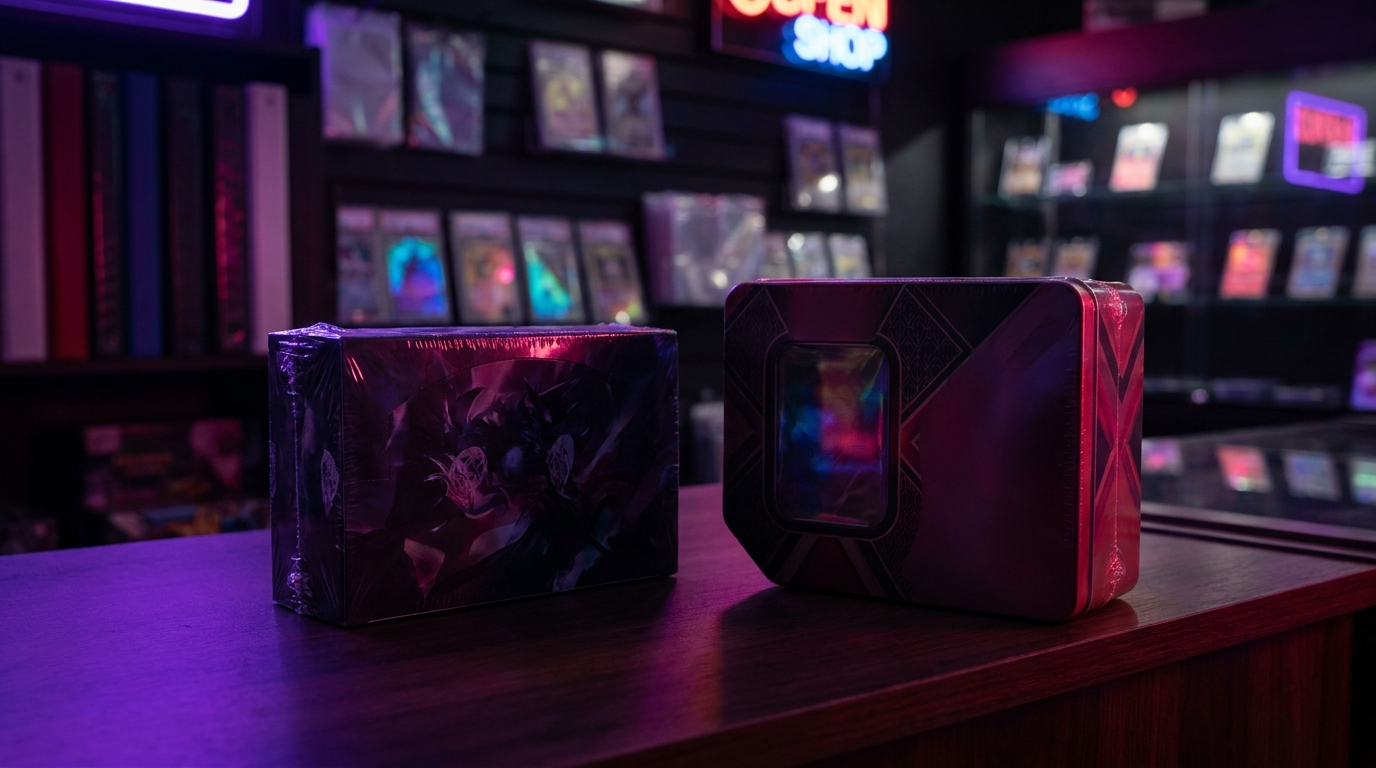
It is the most common question in sealed product, asked at every counter and in every collecting group: Pokémon booster box vs Elite Trainer Box — where should the money go? Both are pillars of every set launch, both get hoarded by collectors, and both have loud fan clubs insisting the other one is a mug’s game.
The honest answer is that they are barely competing products. One is a bulk unit of packs; the other is a boxed experience with packs inside. Once you see them that way, choosing becomes easy.
Here is the quick answer, the actual maths, what each format is genuinely best for, and how they compare as sealed holds.

Buy the booster box if your goal is opening as many packs as possible for your money. Nothing at retail beats a box on cost per pack, and 36 packs gives you a proper run at a set’s chase cards.
Buy the Elite Trainer Box if you want the complete set experience — packs plus the exclusive promo, official sleeves, dice, markers and a storage box you will actually use — or if you are buying for a newer collector who needs the accessories anyway.
And if you are torn because you want both lots of packs and the promo: buy the booster box, then pick up the ETB promo as a single later for a few pounds. That combination beats buying two ETBs every time.
Price context matters as much as format, mind: both answers assume fair retail. At scalped prices the calculus changes completely — an ETB at double retail is a worse buy than a box at retail even for a beginner, because you are paying collector premiums for opener’s odds.
Watch outWork out whether a price is scalped before you compare formats, not after. The quick check is to look at what the same shop charges for the equivalent product from two or three other current sets — a seller whose whole range sits near RRP is pricing honestly, while one whose hot-set boxes leap while everything else stays flat is testing what your impatience is worth. No format comparison survives a bad entry price.
Typical UK pricing at the time of writing — prices move with each set, so treat these as representative rather than quotes:
| Product | Typical price | Packs | Cost per pack | Extras |
|---|---|---|---|---|
| Booster box | £90–£130 | 36 | ≈ £2.50–£3.60 | None |
| Elite Trainer Box | £45–£60 | 9 | ≈ £5.00–£6.60 | Promo, 65 sleeves, dice, markers, dividers, storage box |
| Booster bundle | £20–£26 | 6 | ≈ £3.30–£4.30 | None |
The gap is real: pack for pack, an ETB costs roughly double a booster box. The extras claw some of that back — sleeves you would have bought anyway, a promo with resale value, a genuinely useful box — but even valuing those generously, the ETB rarely gets within touching distance on pure pack economics. We run that calculation line by line in Are Elite Trainer Boxes Worth It?, and current pricing is always visible on our booster boxes and Elite Trainer Boxes pages.
Two things the table hides. First, set-to-set variance: hyped sets push box prices up faster than ETB prices, occasionally narrowing the gap, while unloved sets see boxes discounted first, widening it. Second, promo value: the occasional ETB promo trades well above average and quietly rebates a chunk of the premium — worth a thirty-second price check before you decide. The ranking rarely flips, but the size of the gap moves with every release.
The booster box wins for: set completers and binder builders (36 packs makes real progress on a master set), chase hunters playing the odds, trade-stock builders, and anyone opening packs with friends — a box rip is an event. If this is you, our UK booster box buying guide covers everything from pack counts to avoiding resealed boxes.
Collector’s tipSplitting a box with friends? Agree the rules before the wrap comes off — who takes which packs, how the big hits are divided, and what happens if one pack carries most of the box’s value. Box splits are one of the friendliest things in the hobby right up until an unexpected chase card lands, and five minutes of boring agreement beforehand saves the awkward conversation afterwards.
The ETB wins for: new collectors (it is a starter kit in a box), gift-givers (it looks and feels like a complete present in a way a shrink-wrapped box of packs does not), promo collectors, and anyone who wants a taste of a set without a three-figure spend. The full ETB guide breaks down exactly what is inside and which ones to target.
Neither wins for: getting specific cards. If you want three particular cards from a set, check singles prices on TCGplayer first — buying them outright is almost always cheaper than gambling on either product.
There is also a middle path worth naming: booster bundles. At six packs with no extras, bundles carry near-box pack efficiency at a sixth of the outlay, making them the right call for anyone who wants pack value without a three-figure commitment — a box’s economics in instalments. Plenty of collectors settle into a rhythm of a bundle per set, saving full boxes for the sets they truly care about.
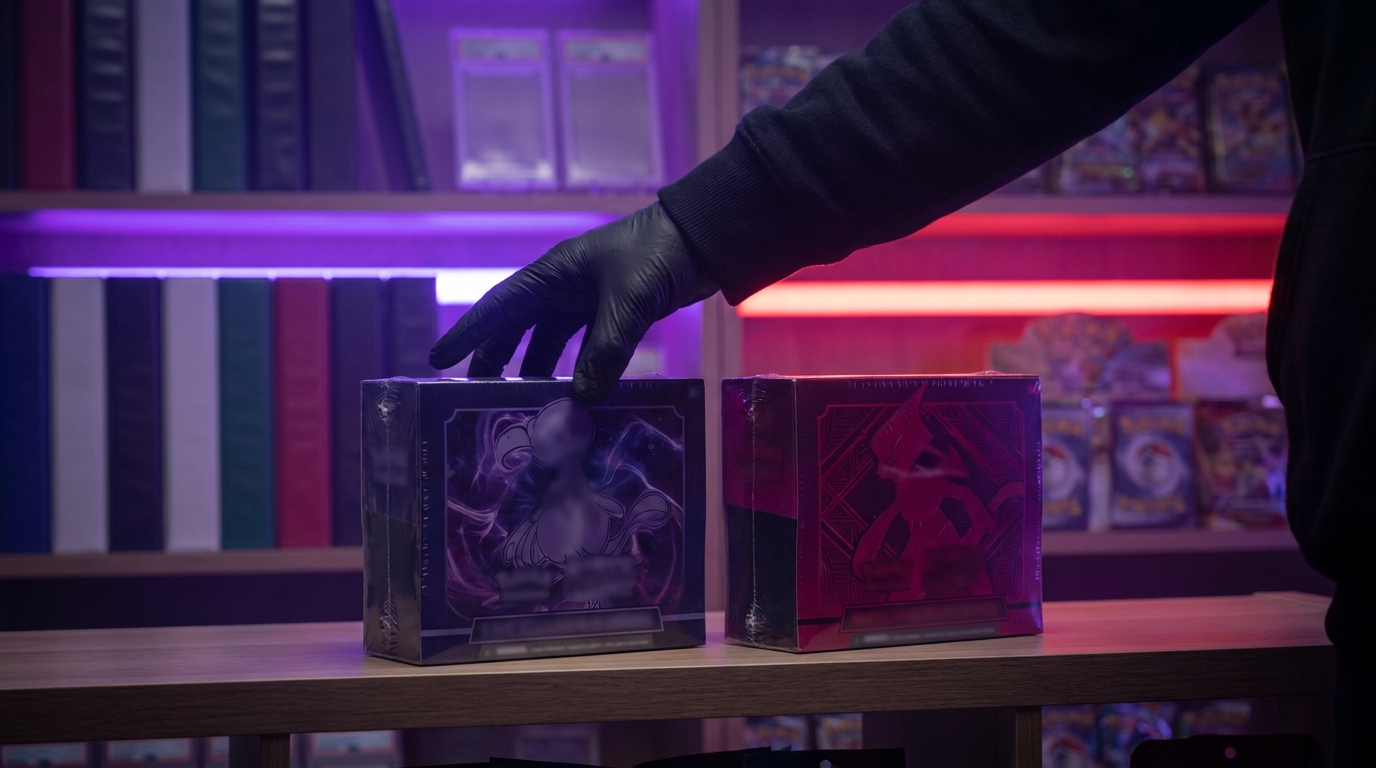
Both formats are held sealed, but they behave differently. Booster boxes are the hobby’s standard long-hold unit — the format vintage sealed collectors price, chart and chase. Their premiums track a set’s overall reputation. ETBs are a display-driven collectible: uniform shelf presence, set-specific artwork and an exclusive promo inside, with occasional breakouts — Prismatic Evolutions being the modern example — where the ETB itself became the trophy.
The usual honesty applies: most modern sealed product from big print runs appreciates slowly if at all, reprints are always possible, and nobody should buy either format expecting returns. Hold sealed product because you like owning it; new sets arrive constantly, and you can follow the release calendar on the official Pokémon TCG site rather than chasing yesterday’s hype at today’s premium.
Condition and provenance rules apply equally to both formats: sealed value assumes factory wrap in clean condition from a source a future buyer can trust, which is why case-fresh boxes and shop-bought ETBs command more confidence than marketplace strays. Store them dark, dry and upright, and remember that reprints are always The Pokémon Company’s prerogative — modern sealed is a patience play with no guarantees, whichever shape the box is.
The booster box, comfortably. It works out at roughly £2.50–£3.60 per pack against £5.00–£6.60 for an ETB — about double. Even valuing the sleeves, dice and promo generously, an ETB rarely gets within touching distance on pure pack economics.
Yes, and usually for a few pounds as a single. That is precisely why the smart move for anyone torn between the two is to buy the booster box and pick the promo up separately afterwards, rather than buying a second ETB to get it.
Six packs with no extras, at around £3.30–£4.30 per pack. It is a box’s economics in instalments — the right call for anyone who wants pack value without a three-figure commitment. Plenty of collectors settle into a bundle per set and save full boxes for the sets they truly care about.
Booster boxes are the hobby’s standard long-hold unit and the format sealed collectors price and chart. ETBs are display-driven, with occasional breakouts where the box itself becomes the trophy. Either way, modern sealed from a large print run appreciates slowly if at all, and reprints remain The Pokémon Company’s prerogative.
Neither. Check the singles prices first, because buying the three cards outright is almost always cheaper than gambling on either format. Open packs afterwards with whatever is left over, for the fun of it rather than as a route to those cards.
For pure pack value, the booster box wins and it is not close. For a first product, a gift, or the full accessories-and-promo experience, the ETB earns its premium. For chasing specific cards, buy singles and skip the debate entirely.
Or, as quick scenarios:
Our default advice at the counter: experienced collector with £100+ to spend on a set they love — box. Anyone newer, or spending under £60 — ETB, then graduate to boxes when the sleeves drawer is full. Whichever side you land on, you will find both formats at fair UK prices in the TCG Smiths shop, with 10 loyalty points per £1 to soften the blow either way.
UK card shows explained: how the circuit works, what to expect at your first event, haggling etiquette and how to spot good deals. Meet the hobby.

Pokémon card trading is the best free fun in the hobby — until a bad trade stings. Value trades fairly, avoid scams online and trade with confidence.

Are Pokémon tins worth buying? We break down the tin line-up, mini tins vs full tins, the value maths and when a tin is genuinely the right buy.