
How to Trade Pokémon Cards Safely (Online & In Person)
Pokémon card trading is the best free fun in the hobby — until a bad trade stings. Value trades fairly, avoid scams online and trade with confidence.

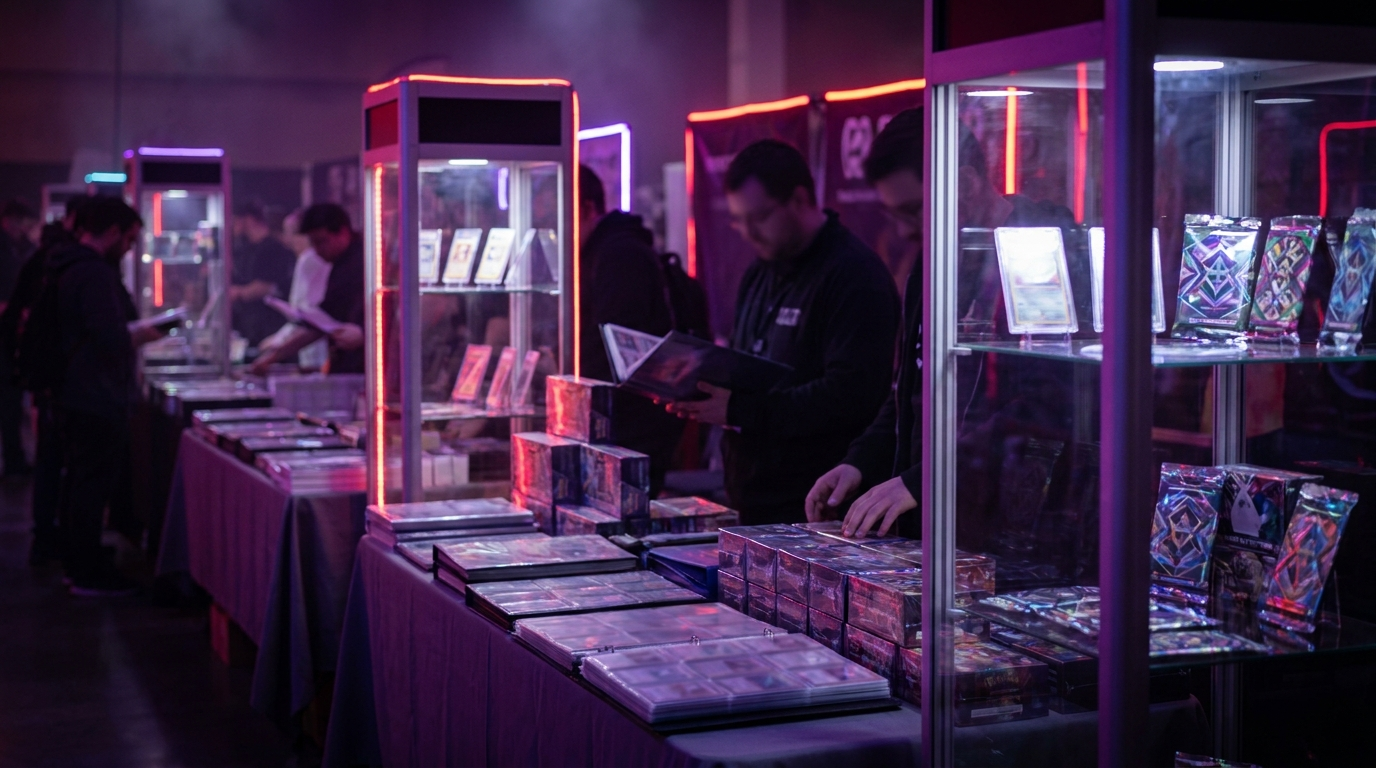
Online collecting is convenient, but nothing replaces a hall full of binders, display cases and people who share the obsession. UK card shows have grown enormously over the past few years — from a handful of trade fairs into a proper circuit spanning most major cities — and if you’ve never been to one, you’re missing the best day out this hobby offers.
Here’s how the circuit works, what your first show will actually be like, the unwritten rules of haggling, and how to come home with bargains rather than regrets.
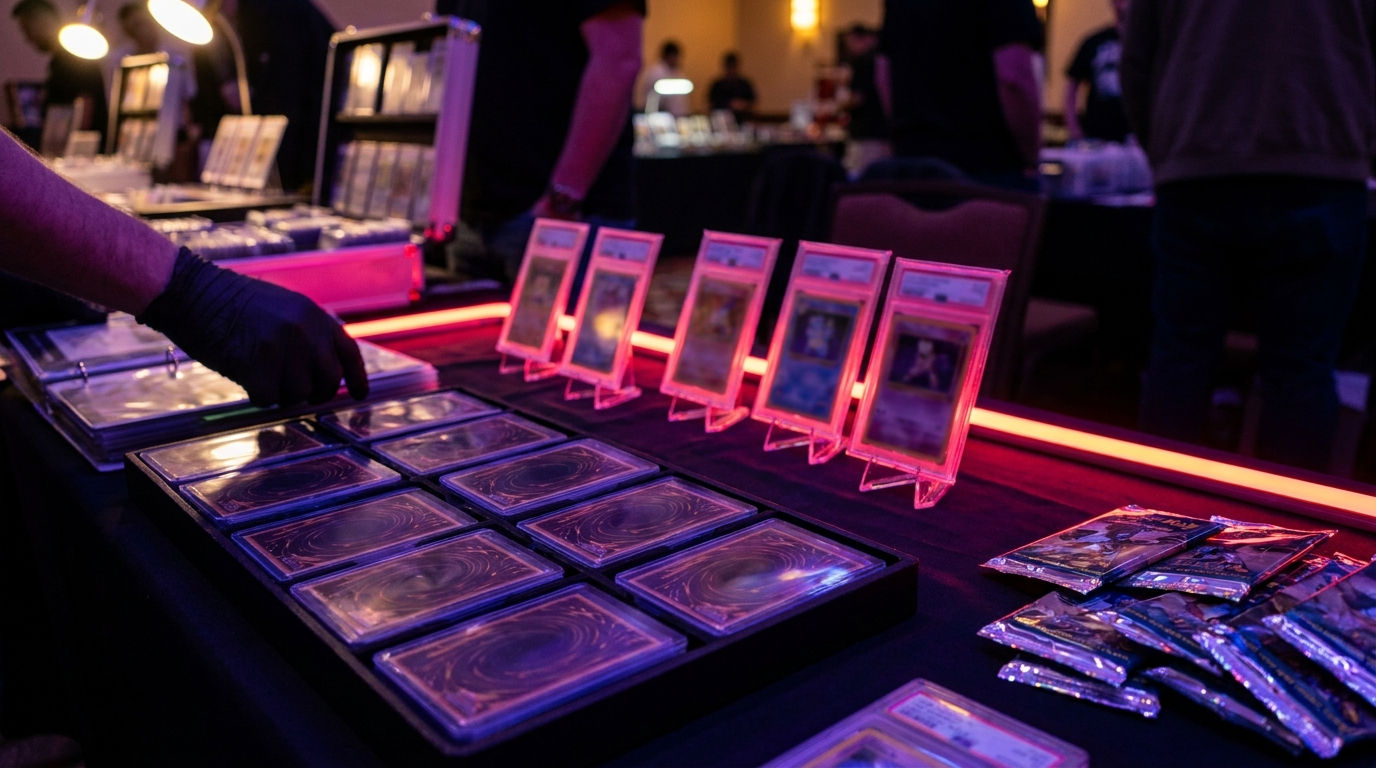
The scene breaks down into rough tiers:
| Type of event | What it is like | Best for |
|---|---|---|
| Big national shows | Weekend events in cities like London, Birmingham and Manchester, with hundreds of vendor tables across Pokémon, sports cards and other TCGs, plus on-site grading drop-offs, breakers and guests | The full experience, deep stock and high-end cards — worth travelling for |
| Regional and monthly fairs | Smaller recurring events in hotels, sports halls and community venues, with lower entry prices | Actual bargains, because table costs are lower |
| Shop events and meetups | Trade nights, pre-release events and community evenings run by local game shops | A gentle first step, especially for kids and nervous newcomers |
Dates move around and new events appear constantly, so the practical advice is to follow the shows and organisers on social media, where line-ups and vendor lists get announced. Grading companies frequently attend the larger events too — UK grader ACE Grading, for instance, has become a familiar presence at shows, letting you hand cards over in person and skip the postage anxiety.
The boom isn’t hard to explain. Card collecting exploded during the early 2020s, and shows solve the two problems online collecting created: trust (you inspect before you pay) and loneliness (a hobby practised through a letterbox finally gets faces). Modern shows are also far more than rows of tables — expect live breaks, trading zones, grading talks, occasional artist signings and a genuinely mixed crowd, from serious vintage dealers to eight-year-olds clutching their first binder. Whatever level you collect at, there’s a version of the day for you.
Honest picture: a warm hall, a modest entry fee, long rows of tables stacked with binders, toploader boxes and glass cases — everything from 50p bulk to five-figure slabs. A few first-timer tips:
Practicalities: most shows charge a modest entry fee (early-bird tickets often get first pick of the cases), halls get warm and busy by midday, and the best stock genuinely does go early — serious hunters arrive at the door. If you’re bringing kids, go in the morning before the crush, agree a budget in the car, and know that most vendors are lovely with young collectors — the 50p and £1 binders exist precisely for them. Card protection matters too: bring a small box or binder for purchases rather than letting toploaders swim loose in a carrier bag.
Collector’s tipPhotograph your want list before you leave home and keep it on your phone. Halls are warm, loud and full of distractions, and the most common regret from a show is getting home to realise you walked straight past the card you actually came for.
Haggling at UK card shows is normal, expected — and gentler than the internet suggests. The rules of the dance:
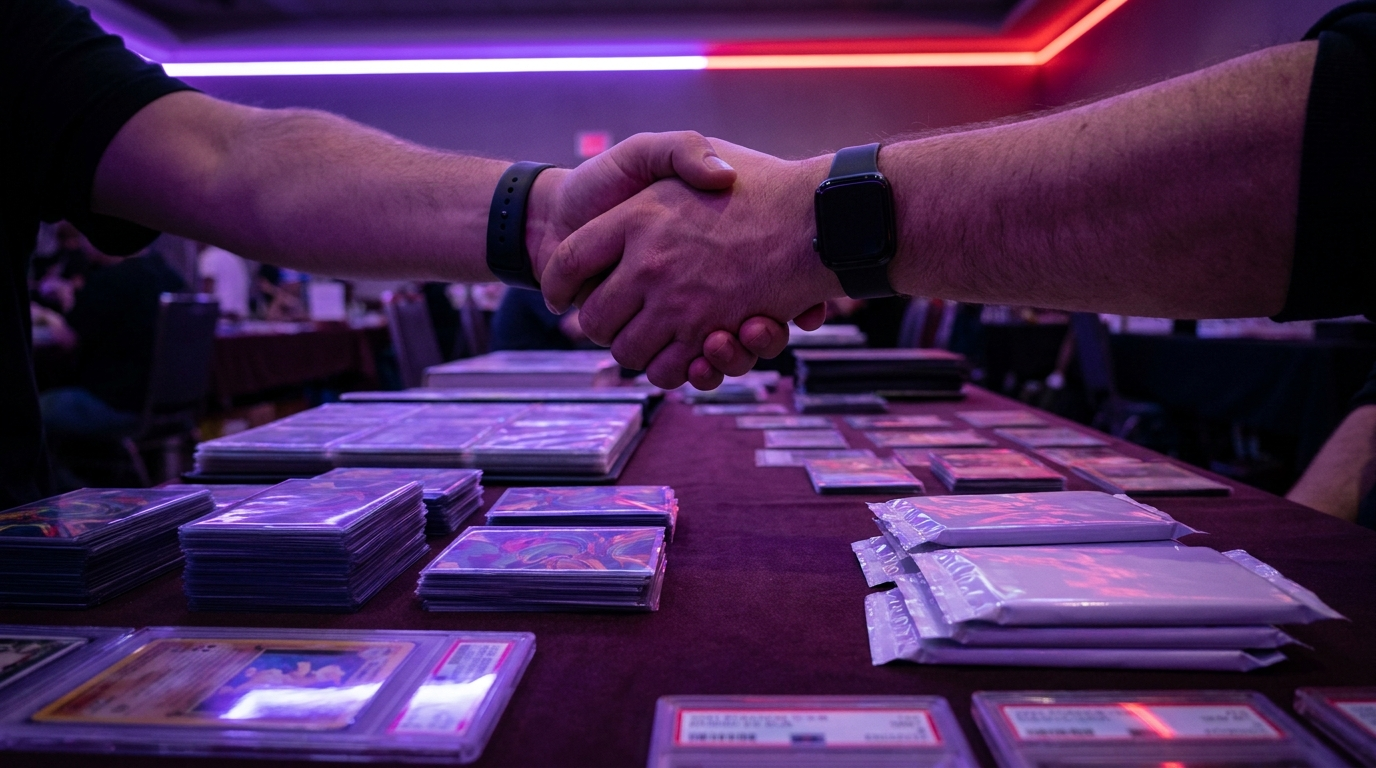
Shows are broadly honest — vendors rely on reputation, and the community talks — but bring the same scepticism you’d use online:
Shows also work in the other direction: they’re one of the best places to sell. Many vendors buy collections and singles on the spot, and while a dealer’s offer will sit below market rate — they carry the resale risk and table costs — you’re paid in cash, instantly, with no fees, postage or disputed-condition returns. Get two or three offers on anything substantial before accepting one, and if a card is genuinely valuable, know its recent sold prices before you put it on the glass. A calm seller with comps to hand gets noticeably better numbers than a hopeful one without.
Most charge a modest entry fee, with early-bird tickets costing more in exchange for first pick of the cases. Regional fairs are typically cheaper than the big national events.
Yes. Most vendors take cards, but cash still unlocks the best deals — and a fixed amount in your pocket is the simplest defence against hall-wide FOMO.
Completely, on cases and stacks rather than 50p binders. Ten to twenty percent under the asking price starts a conversation; half price ends one.
Many vendors buy on the spot. Offers sit below market rate because the dealer carries the resale risk and table costs, but you are paid in cash instantly with no fees, postage or condition disputes.
Very. Go in the morning before the crush, agree a budget in the car, and head for the 50p and £1 binders, which exist precisely for young collectors.
We’re Leeds-based, we love a show, and getting out to meet collectors face-to-face is a growing part of what we do — you can read more about who we are on our about page. Rather than list dates here that will inevitably go stale, we announce every event we’re attending or running through the mailing list first, with the occasional show-exclusive offer for people who come and say hello.
The short version: pick a show within travelling distance, bring cash, a budget and a trade binder, walk the full room before spending, and haggle like a human. If you spot the TCG Smiths table, introduce yourself — and if you’re organising an event you think we should be at, get in touch.
Pokémon card trading is the best free fun in the hobby — until a bad trade stings. Value trades fairly, avoid scams online and trade with confidence.
Are Pokémon tins worth buying? We break down the tin line-up, mini tins vs full tins, the value maths and when a tin is genuinely the right buy.

Pokémon TCG Pocket vs physical cards compared: costs, collecting, trading and the experience itself. Find out which side of the hobby fits you best.