
UK Card Shows & Events: Where Collectors Actually Meet
UK card shows explained: how the circuit works, what to expect at your first event, haggling etiquette and how to spot good deals. Meet the hobby.

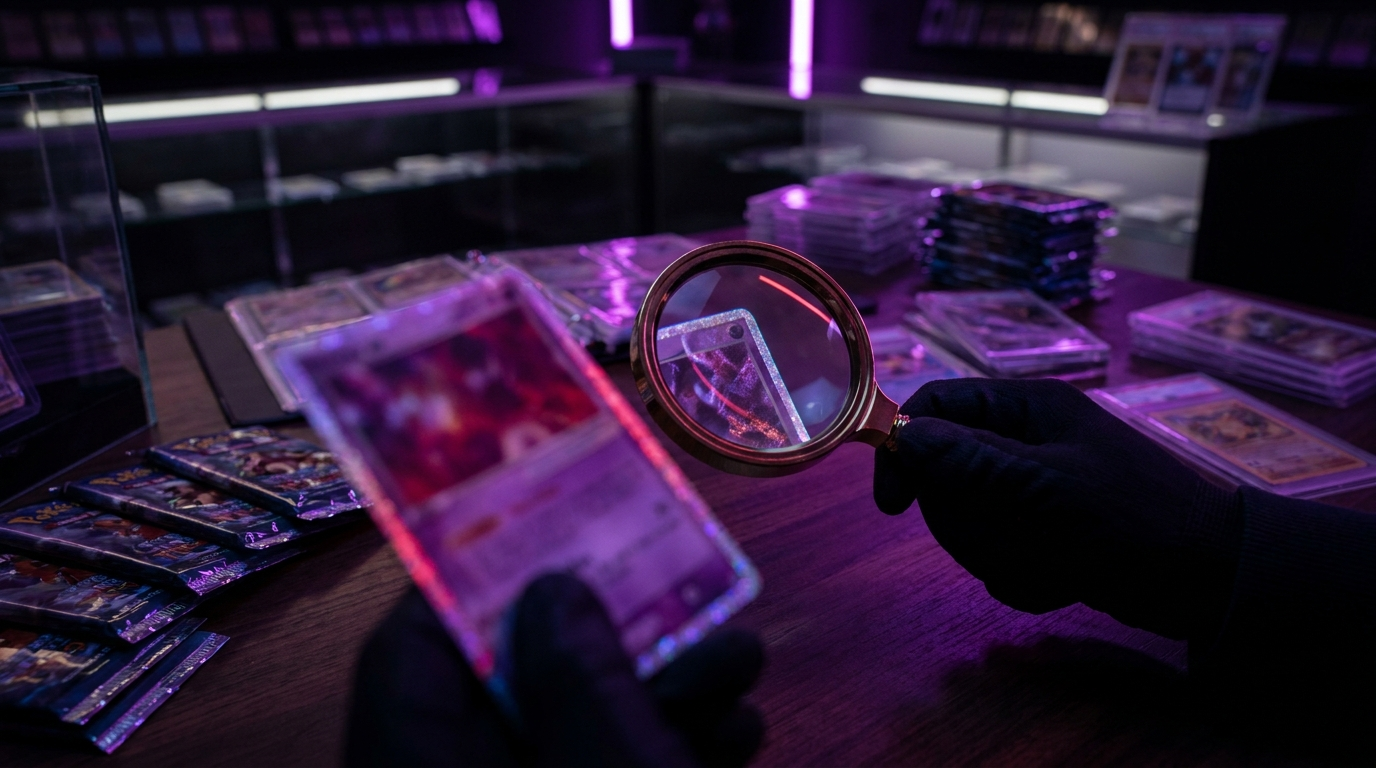
Fake Pokémon cards are no longer the comedy knock-offs of the playground era — the ones with orange energy symbols and ‘Pikachu’ printed in the wrong font. Modern counterfeits can fool a quick glance, which is why knowing how to spot fake Pokémon cards is now a core collecting skill rather than a nice-to-have.
The encouraging part: almost every fake, however good, fails at least one of a handful of simple tests. Counterfeiters can copy an image; they struggle to copy paper stock, print processes and texture at the same time. Stack a few checks together and the odds of a fake slipping through collapse.
Here are the nine checks we actually use, roughly in the order we use them — from thirty-second field tests to the closer inspection you would give an expensive single.
Counterfeiting follows the money, and the past few years of hobby growth have pulled fakes upmarket. Print-on-demand technology has improved, scans of real cards are everywhere, and fakes increasingly target exactly what collectors chase: alt arts, Special Illustration Rares and vintage holos. Some fakes are even sold in counterfeit slabs with copied labels.
No single test is bulletproof, and that is the mindset to keep. Real cards occasionally fail one check (print variation is a real thing), and the best fakes pass one or two. What fakes almost never do is pass all of these:
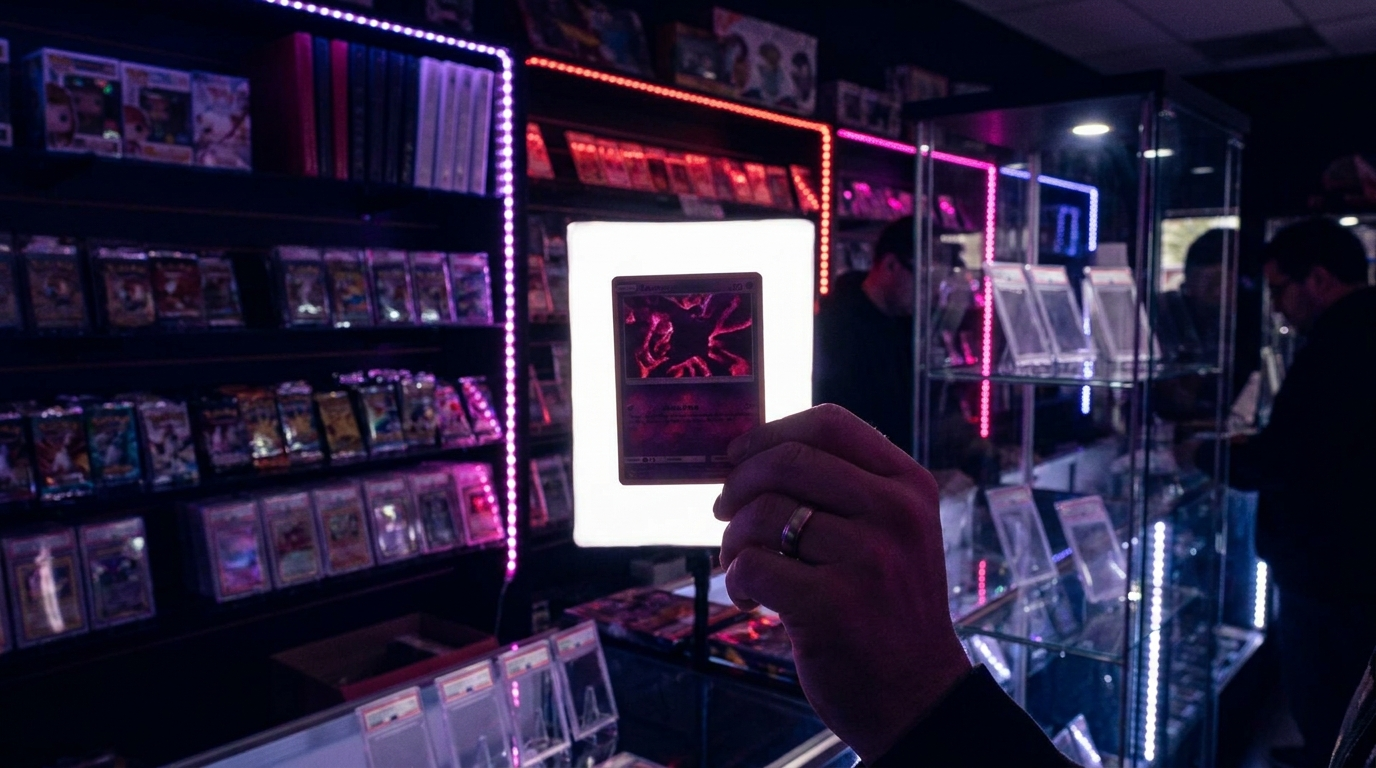
Hold the card in front of a bright torch — your phone light is fine. Genuine Pokémon cards are constructed with an opaque core layer sandwiched between paper, so light comes through dimly and evenly, with the card’s silhouette staying dark. Many fakes are printed on cheaper single-layer stock, so they glow noticeably brighter, or unevenly, like paper.
While the light is out, look at the card edge-on. On a genuine card you can usually make out the darker core line running through the middle of the edge. A pure white edge with no visible layering is a serious warning sign on modern cards. Do the same test on a common from your bulk box first so you know what a real one looks like — that comparison habit is the cheapest authentication tool there is.
Vintage buyers should note the era wrinkle: very old cards can behave slightly differently under strong light, and well-worn copies transmit a little more than crisp ones. That is why the light test works best as a comparison against a known-genuine card of similar age, rather than as an absolute pass-or-fail judgement on its own.
Pick the card up and forget your eyes for a moment. Genuine cards have a specific stiffness and a satiny finish; fakes tend to feel either flimsy and papery or oddly plasticky and slick. If you have handled a few hundred real cards, a wrong one often registers in your fingers before your brain can say why.
Texture is the counterfeiter’s nightmare. Modern holos, full arts and Special Illustration Rares carry an embossed texture pattern — ridges and dimples you can both feel and see when you tilt the card under light. Fakes frequently print a picture of a textured card on smooth stock: the shine is there, the physical texture is not. On expensive textured cards this single check catches a huge proportion of fakes. Vintage cards have no such texture, so lean on the other checks for those.
Pokémon’s typesetting is extremely consistent, and fakes wobble on the details: letter spacing that looks slightly cramped or stretched, energy symbols that are marginally too large or misshapen, bold text that is too heavy, and HP or attack numbers in a subtly wrong weight. Compare against a verified card from the same era — fonts have changed over the years, so era matters.
Colour gives fakes away at a glance once you know the tells. Counterfeits often run over-saturated — blues too vivid, yellows too hot — or slightly washed out. Under a loupe or a macro phone photo, genuine cards show a crisp, regular rosette dot pattern from professional offset printing; fakes often show blurry edges, banding or an inkjet-style dot mess. The card back is especially useful here: the blue swirl pattern on a real back is sharp and detailed, and the exact border shade is difficult to match. Counterfeit backs are routinely too dark, too purple or fuzzy in the fine detail.
Holofoil patterns deserve their own look. Each era uses characteristic foil styles — the cosmos swirl of vintage sets, the vertical sheens and etched patterns of later ones — and fakes routinely pair the right artwork with the wrong holo pattern, or use a static glitter effect that does not shift as the card tilts.
Collector’s tipKeep one cheap, known-genuine common from each era you collect sleeved at the front of your binder as a reference card. A £5 jeweller’s loupe and your phone’s macro mode will resolve the rosette dot pattern clearly, and holding the suspect card next to a verified one turns every check on this list from a judgement call into a straight side-by-side comparison.
If a supposed vintage holo shimmers like wrapping paper, that is your answer. Our guide to first edition Pokémon cards covers the era-specific details counterfeiters most often get wrong.
You will see it suggested constantly: tear the card in half, and if there is a black or dark layer inside, it was real. That is true — genuine cards reveal their dark core when torn — and it is also the single worst authentication method in the hobby, because the test destroys the thing you were testing. Rip a fake and you have confirmed a fake; rip a real card and you have destroyed a real card.
Watch outEverything the rip test tells you, the light test and an edge inspection tell you non-destructively. The only time ripping makes any sense is on a confirmed fake you are binning anyway — some collectors do it to make sure the fake can never be resold.
Fakery is not limited to singles. Resealed packs and boxes — real packaging, opened, gutted of hits and reclosed — are arguably a bigger risk for UK buyers than counterfeit singles. On loose packs, check the crimp: factory crimps are clean, straight and evenly spaced, and the seal should show no glue residue, wrinkling or a second crimp line. Packs that have been opened from the bottom and re-glued often look perfect from the front, so inspect both ends.
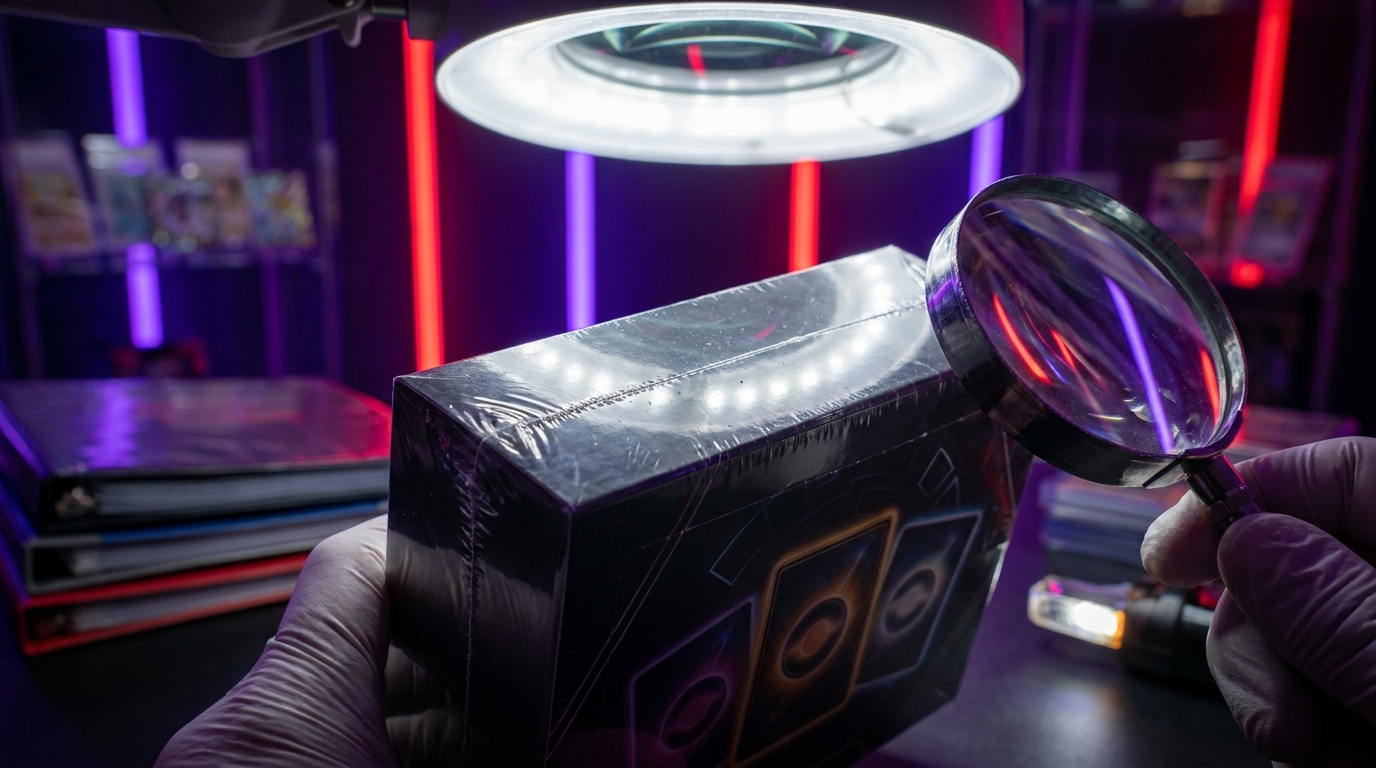
On boxes, factory shrink wrap is tight, neatly folded and consistent from copy to copy; loose, bubbled or taped wrap deserves suspicion, as does a box seal that looks disturbed. Prices well under the going rate on marketplace listings are the classic bait. We cover the whole scam ecosystem — weighed packs included — in our dedicated guide to resealed boxes and weighed packs.
Booster boxes deserve the same scrutiny scaled up: check that the wrap’s folds are machine-tight and uniform, that the box shows no sign of being opened and re-wrapped, and be doubly careful with loose vintage packs, where the sums involved make tampering genuinely worthwhile for bad actors.
Do not panic. Print variation is real, and genuine cards do occasionally look odd under one test — particularly worn vintage copies under a torch. Treat a single failure as a prompt to run the remaining checks carefully, ideally against a known-genuine card of the same era.
Yes. Counterfeit cases with copied labels are the newest front, and they look convincing at a glance. Every legitimate grading company runs a public certification database, so look up the number and confirm the record matches the card in hand, right down to the variant. A number that returns nothing, or a different card, has answered the question.
Less reliably. Very old cards behave slightly differently under strong light and well-worn copies transmit a little more than crisp ones. For vintage, treat the light test as a comparison against a known-genuine card of similar age rather than an absolute pass or fail, and lean harder on fonts, holo pattern and the back.
Check the crimp at both ends. Factory crimps are clean, straight and evenly spaced with no glue residue, wrinkling or a second crimp line. Packs opened from the bottom and re-glued often look flawless from the front, which is exactly why you inspect both ends rather than one.
Raise it with the seller and the marketplace first — many platforms have buyer protection for counterfeit goods, and some sellers genuinely do not know their stock is fake. Keep the card and your photographs until the case is resolved, and do not resell it onwards under any circumstances.
Most fakes enter the UK through huge overseas marketplaces and drop-shippers, then get recirculated through car boot sales, social media selling groups and marketplace listings — sometimes by sellers who genuinely do not know their stock is counterfeit. ‘Too cheap to be true’ remains the strongest single red flag, followed by stock photos instead of in-hand pictures and sellers who cannot or will not photograph card texture up close.
Counterfeit slabs are the newest front: convincing-looking cases with copied labels wrapped around fake cards. The defence is straightforward, because every legitimate grading company operates a public certification database — look up the cert number on PSA’s website (or the equivalent for other graders) and check that the card in hand matches the record, right down to the variant. A slab whose number returns nothing, or a different card, has answered your question for you.
Protecting yourself is mostly about sourcing. Buy sealed product from legitimate retailers who get stock through official distribution — you can find licensed product information on the official Pokémon TCG site. Buy expensive singles either graded, in person where you can inspect them, or from sellers with deep, verifiable feedback on that specific kind of card. And when a deal smells wrong, walk away — there is always another copy.
The takeaway: light, layers, feel, texture, fonts, colour, the back, comparison, provenance. Run even three of those nine checks and you are ahead of the vast majority of buyers. This is also, frankly, why we started TCG Smiths — a UK shop where the sourcing is done properly so you do not have to gamble. Everything in our Pokémon range comes from official distribution, and if you are ever unsure about a card you bought elsewhere, bring the question to us and we will give you an honest answer.
UK card shows explained: how the circuit works, what to expect at your first event, haggling etiquette and how to spot good deals. Meet the hobby.

Pokémon card trading is the best free fun in the hobby — until a bad trade stings. Value trades fairly, avoid scams online and trade with confidence.

Are Pokémon tins worth buying? We break down the tin line-up, mini tins vs full tins, the value maths and when a tin is genuinely the right buy.