
UK Card Shows & Events: Where Collectors Actually Meet
UK card shows explained: how the circuit works, what to expect at your first event, haggling etiquette and how to spot good deals. Meet the hobby.

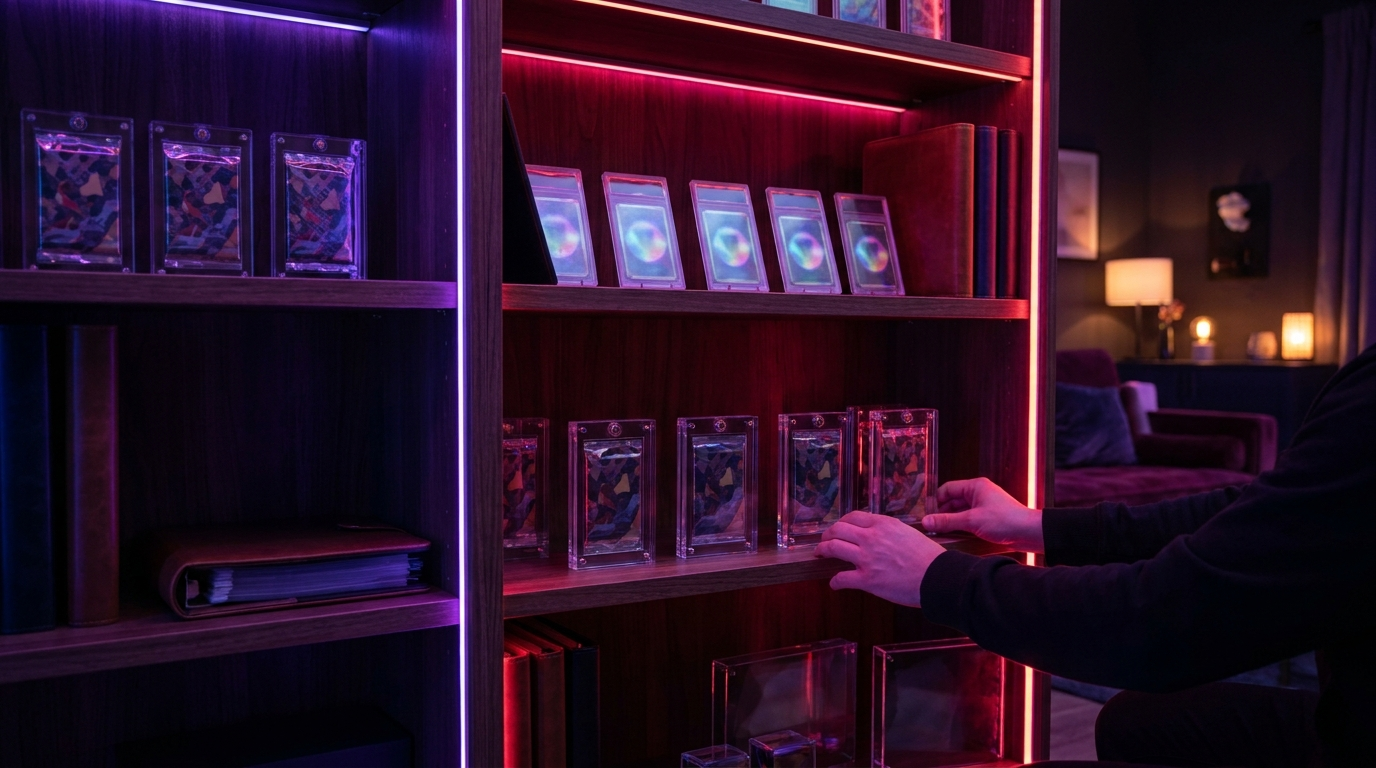
At some point, keeping your best cards hidden in a box starts to feel like owning art and leaving it in the attic. Collections are meant to be seen — but the moment cards leave dark storage, light, dust and gravity all start working against them. A proper Pokémon card display lets you have both: the shelf that makes visitors stop mid-sentence, and cards that are just as mint in ten years as they are today.
This guide covers the tension between displaying and preserving, the UV problem nobody takes seriously enough, the right cases for sealed product and slabs, how to frame cards without ruining them, and the finishing touches that separate a pile of plastic from a display you are proud of.
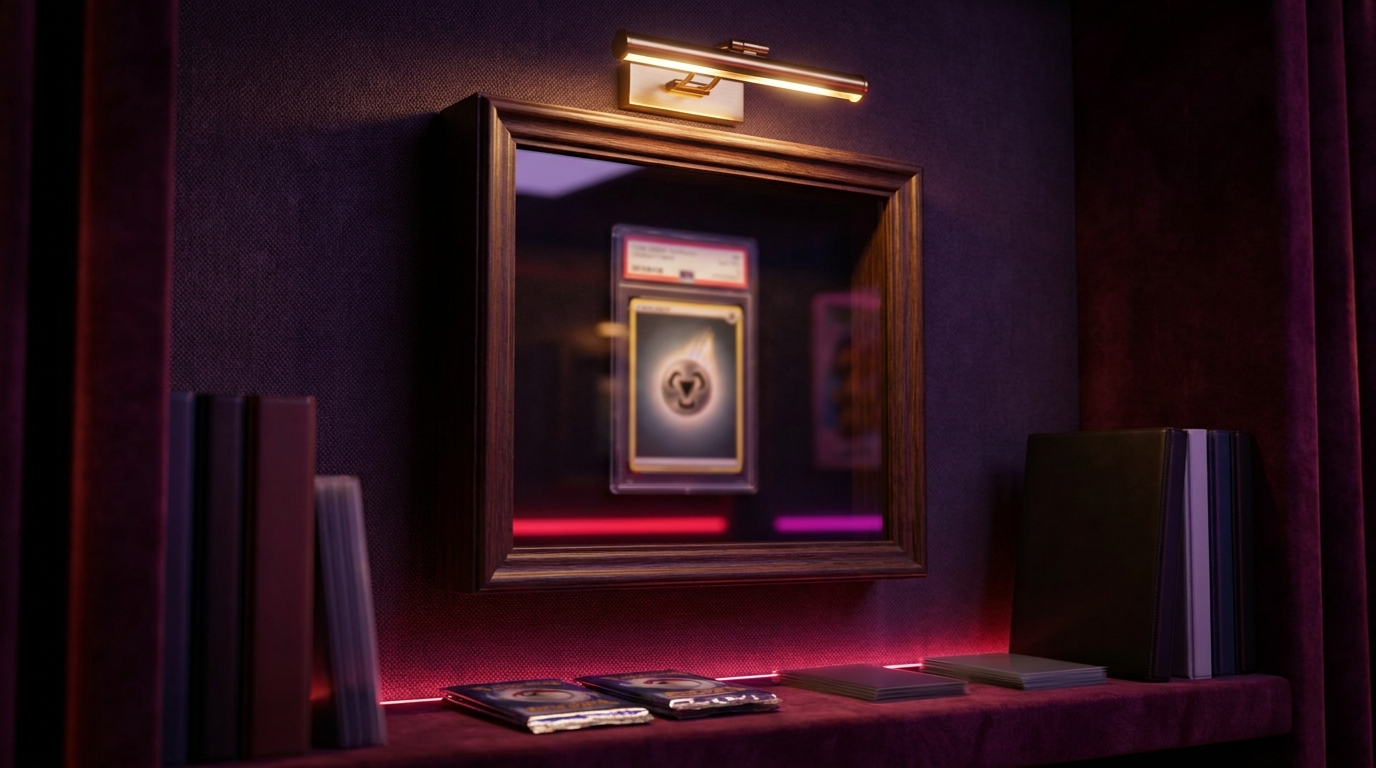
Every Pokémon card display decision trades visibility against protection. Loose on a shelf is maximum visibility and maximum risk; sealed in a box in a cupboard is the reverse. The goal is to slide each item to the right point on that scale. Our rule of thumb: the more valuable or irreplaceable the item, the more protection it needs before it earns shelf space. Bulk commons can live in a binder; your graded grail goes behind UV-rated acrylic or it stays in the dark. For the storage half of this equation — what everything should live in before it ever reaches a shelf — start with our guide to storing Pokémon cards properly.
| Display method | What it protects against | Best for |
|---|---|---|
| Loose on an open shelf | Nothing at all | Cards you would not mind losing |
| Binder on a shelf | Dust, handling, light | Bulk, set builds and non-chase cards |
| UV-rated acrylic case | Dust, handling, most UV | Sealed product and graded slabs |
| Deep frame with UV glazing | Dust, handling, most UV | Themed sets destined for a wall |
| Glass-doored cabinet | Dust, knocks, curious hands | A whole display in one go |
Sunlight fades cards. Not dramatically, not overnight — slowly, evenly and irreversibly. Ultraviolet light breaks down inks and yellows cardstock, and because the fade is gradual you will not notice until you compare a displayed card against a stored copy and feel your stomach drop. Indirect daylight does it too, just more slowly, and some artificial lighting contributes as well.
The defences, in order of effectiveness:
Watch outUV damage is cumulative and permanent — there is no restoring a faded card, no grade that forgives it and no buyer who overlooks it. By the time the colour shift is obvious next to a stored copy, the damage happened months ago. Treat direct sunlight on a shelf as a flat no rather than a risk to be managed.
Even graded slabs need this care — the case protects against handling, not light, which is why PSA and other graders advise keeping slabs out of direct sun like any other card.
Sealed boxes — ETBs, booster boxes, collection boxes — are the easiest wins in any Pokémon card display, and acrylic cases are how you protect them. A good case is crystal clear, UV-rated, sized snugly to the product with a stable base and magnetic or sliding closure. The case does three jobs: blocks dust (which is genuinely tedious to remove from shrink wrap without scuffing it), prevents handling damage and fading, and frankly makes the product look more special — the difference between a box on a shelf and a box in a case is the difference between stock and an exhibit.
Cases exist for every standard product size, from single booster packs up to booster boxes. If you are collecting sealed long-term, price the case into every purchase; you will find display cases and protective gear in our accessories range.
Collector’s tipBuy the case at the same time as the box, not months later. Cases for unusual or older product sizes get discontinued surprisingly quickly, and dust that has already settled into shrink wrap is miserable to remove without scuffing the film.
Framed cards look phenomenal — a set of six Eeveelutions in a deep frame is wall art by any standard. But standard picture framing is hostile to cards: direct contact with glass can stick to and mark surfaces over time, ordinary glass blocks little UV, and tape or adhesive mounting is outright vandalism. Frame properly instead:
Done this way, framing is fully reversible: the card comes out in the same condition it went in, which is the entire test of a good display.
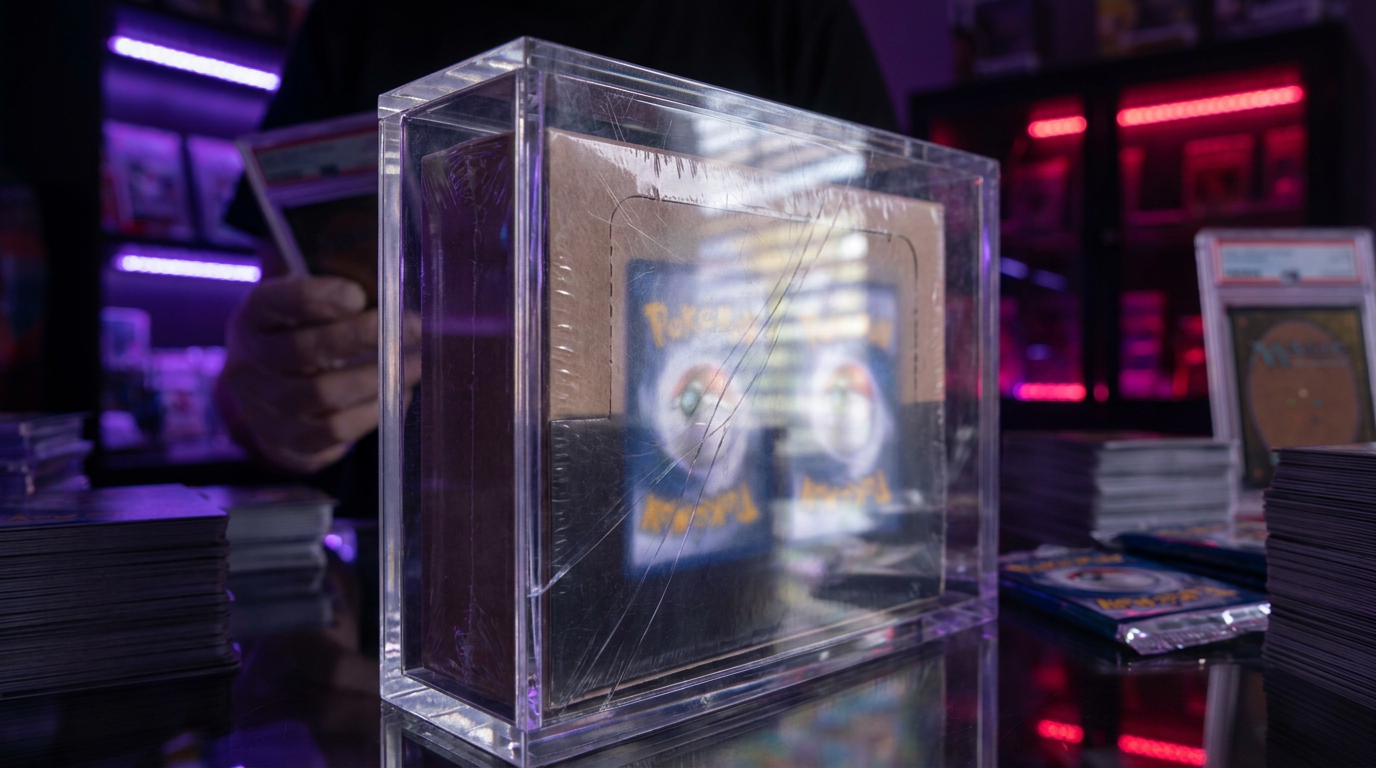
The displays that stop people are rarely the most expensive — they are the most intentional. A few principles carry most of the effect: group by theme (one set, one Pokémon, one era per shelf reads as curation rather than clutter); vary the heights with tiered stands so slabs and boxes overlap like a skyline instead of standing in a flat row; light it deliberately with LED strips — warm or coloured backlighting flatters foil beautifully and, kept at sensible brightness and out of direct beam, is far kinder than daylight; and leave breathing room, because negative space is what makes the centrepiece read as a centrepiece. Glass-doored cabinets deserve a special mention: they solve dust, add security and make everything inside look ten per cent more valuable.
Start small. One well-lit shelf with five properly cased items teaches you more about what you like than a wall of clutter — and displays, like collections, are better grown than bought. When a gap on the shelf does need filling, the full Pokémon range is where our display-worthy sealed product lives.
Think about the room as well as the shelf. Displays belong away from radiators, kitchens and bathrooms — heat and humidity swings warp cards and cloud acrylic over time — and out of reach of small hands and pets if your household includes either. A little height solves most accidents before they happen. If your collection has serious value on show, consider which room guests and tradespeople see, too; discretion is an underrated part of security.
Once a collection is worth real money on a shelf, two boring tasks matter. First, document it: photograph every displayed item clearly, keep a simple list with rough values — checking recent sold prices on TCGplayer keeps the numbers honest — and store the photos somewhere other than your home. Second, check your cover: home contents policies vary enormously on collectables, and many have single-item or hobby limits that a good collection sails past. A call to your insurer about named items costs nothing; discovering the limit after a burglary costs everything. Good photos also happen to be how you share the display online, and our card photography guide will make it look as good on a screen as it does on the wall.
Yes. UV light breaks down the inks and yellows the cardstock, and the change is gradual and permanent. Indirect daylight does the same thing more slowly, which is why placement matters more than any protective product.
No. A slab protects against handling, dust and knocks, not light. Graders themselves advise keeping slabs out of direct sun exactly like a raw card.
Absolutely, provided you frame the holder rather than the bare card. Sleeve it, seat it in a toploader or one-touch, mount without adhesives, use UV-filtering glazing and leave a gap between the card surface and the glass.
A UV-rated acrylic case sized snugly to that product, on a shelf that never catches direct sun and away from radiators. It solves dust, handling and fading at once, and makes the box look like an exhibit rather than stock.
Often only partially. Contents policies vary enormously on collectables and many carry single-item or hobby limits a good collection passes easily. Ring your insurer about naming items, and keep photos and a valued list stored somewhere other than the house.
The takeaway: display boldly, but let nothing on the shelf be unprotected — UV-rated cases, proper frames and sun-free placement mean showing off costs your collection nothing. If your setup needs cases, stands or protection to get started, browse the accessories here — and send us a photo of the finished shelf, because we genuinely love seeing them.
UK card shows explained: how the circuit works, what to expect at your first event, haggling etiquette and how to spot good deals. Meet the hobby.
Pokémon card trading is the best free fun in the hobby — until a bad trade stings. Value trades fairly, avoid scams online and trade with confidence.
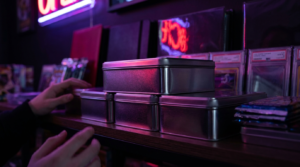
Are Pokémon tins worth buying? We break down the tin line-up, mini tins vs full tins, the value maths and when a tin is genuinely the right buy.