
UK Card Shows & Events: Where Collectors Actually Meet
UK card shows explained: how the circuit works, what to expect at your first event, haggling etiquette and how to spot good deals. Meet the hobby.


Every collector hits the same moment: the pile wins. Cards on the desk, cards in old tins, a carrier bag of packs from Christmas — and somewhere in there, cards genuinely worth protecting. Proper Pokémon card storage is what turns that chaos into a collection, and it’s far cheaper and quicker to sort than most people expect.
We see the consequences of skipping it every week at the counter: valuable cards with shoebox-edge wear, holos curved from loose stacking, and the heartbreaker — a card that would have graded highly if it hadn’t spent two years loose in a drawer with its mates.
This guide is the practical system we recommend: audit first, then bulk, hits, binders and sealed product each in the right home — finished with a realistic weekend plan to get it all done.

Don’t buy a single storage product until you know what you’re storing. Clear a table and sort everything into four piles:
The audit matters because each pile gets a different solution, and mixing them is how expensive cards end up in shoeboxes. It’s also the moment you’ll discover what you actually own — most people find at least one pleasant surprise.
Be honest during the sort, because sentimentality is the enemy of storage. A card can be personally precious and still belong in the keepers pile rather than a toploader; equally, a card you don’t much like might be your most valuable and deserve the full treatment regardless. Sort by value and purpose, not by affection — you can love your cards just as much once they’re properly housed.
| Pile | Where it lives | Why |
|---|---|---|
| Bulk | Cardboard trading-card boxes, rough-sorted by set with dividers | Dense, cheap and out of the way — sleeving it would cost more than the cards |
| Keepers | A ringless, side-loading, zip binder; every card sleeved, one per pocket | A collection you can actually look at rather than a filing cabinet |
| Hits | Penny sleeve, then a toploader or semi-rigid, upright in their own box | Condition is where value lives, and loose storage is what destroys it |
| Sealed | A dark, dry shelf, never under weight, shrink wrap untouched | Sunlight, damp and crushing are the only real threats to it |
Bulk needs to be dense, cheap and out of the way — not individually sleeved, which would cost more than the cards. The answer is cardboard storage boxes made for trading cards: they hold cards snugly in long rows, stack cleanly, and cost a few pounds each. Keep rows firm enough that cards stand upright without slumping (slumped cards curve over time) but never packed so tight that removing one scuffs its neighbours.
Two habits pay off later: rough-sort bulk by set as it goes in, with a scrap-card divider between sets, and store the boxes somewhere with stable temperature — not the loft or garage, where damp and heat cycles quietly ruin card stock. That’s the whole bulk system. Resist the urge to over-engineer it.
Label the boxes on the outside — set name and rough date range is plenty — and you’ll thank yourself the first time a trade partner asks whether you’ve got spare commons from a particular set. Unlabelled bulk is where cards go to be forgotten; labelled bulk is a resource you’ll actually use for trades, playground handouts and the occasional ‘wait, that’s worth something now’ rescue mission when an old common gets a new lease of life.
Watch outNever store cards in a loft or a garage. Damp and heat cycles warp card stock and cloud foil, and the damage is invisible until the day you go looking for it. Stable indoor temperature matters more than any storage product you can buy.
Hits get the full treatment: penny sleeve first, then a toploader or semi-rigid, stored upright in their own box. For your very best cards, magnetic one-touch cases add proper presentation and protection. The reason for ceremony is simple — condition is where value lives, and the faults that downgrade cards under PSA’s grading standards — edge whitening, corner dings, surface scratches — are precisely the damage loose storage causes.
Tip: sleeve a hit the moment you pull it. The journey from pack to desk to ‘I’ll sort it later’ pile has downgraded more cards than any other hazard in the hobby.
If a card might ever be worth grading, treat it as gradable from day one — our full storage-materials guide goes deeper on sleeves, semi-rigids and when each is right.
Keep a simple record of the hits box as it grows: card, set, rough value, date acquired. A note on your phone is fine. Beyond the practical benefits — knowing what you own, spotting when something’s appreciated — it’s the evidence an insurer will ask for if your collection ever becomes worth adding to a home policy, and photographing the box contents twice a year makes that conversation painless.
Collector’s tipKeep a stack of spare sleeves and toploaders within arm’s reach of wherever you open packs. The gap between pulling a card and protecting it is where most avoidable damage happens, and removing the excuse works far better than relying on good intentions.
Keepers live in binders, because a collection you can’t look at may as well be a filing cabinet. The rules are short: ringless, side-loading, zip-closure binders only, every card sleeved before it enters a pocket, one card per pocket, binders stored upright like books. Organise however makes you happiest — by set, by species, by sheer looks — the system matters less than actually having one.
We’ve written a full binder buying guide covering the ring-binder problem, pocket counts and premium options, so we’ll spare the detail here. The one-line version: the binder is the piece of storage you’ll interact with most, so it’s the one worth spending properly on.
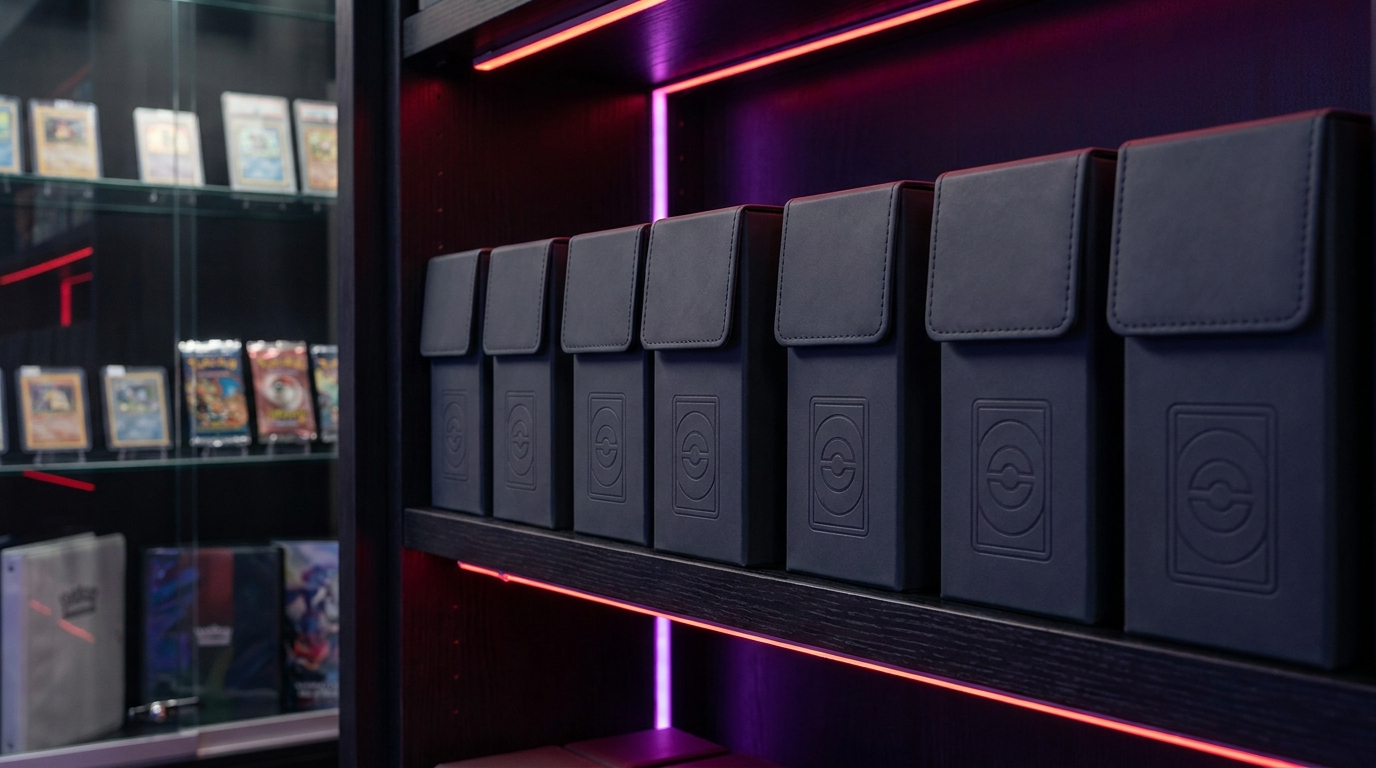
Sealed product has different enemies: sunlight, damp and crushing. UV fades box art and wrappers surprisingly fast, so keep sealed product out of direct light — a cupboard or closed shelf is ideal. Store boxes flat or upright as they were designed to sit, never under weight, and leave shrink wrap exactly as it is; the factory seal is a huge part of authenticity and resale confidence.
For anything you plan to keep long-term, acrylic display cases solve the display-versus-preserve tension: UV-filtering, stackable and crush-proof. And a gentle warning from experience — an ETB kept ‘to open someday’ has a way of becoming a permanent resident, so decide early which sealed items are for ripping and which are for keeping. Moving house is the other moment sealed collections get hurt: boxes crushed under book cartons, wrap punctured by careless tape. If a move is coming, pack sealed product in its own rigid container, padded, and carry it yourself rather than trusting it to the van. You’ll find cases, sleeves, toploaders and boxes in our accessories section.
Cardboard storage boxes made for trading cards, rough-sorted by set with dividers. Keep rows firm enough that cards stand upright without slumping, but never packed so tight that removing one scuffs its neighbours.
Sleeve your hits and keepers, not your bulk. Sleeving commons costs more than the cards are worth, whereas an unsleeved hit can lose real value to a single scratch.
No. Damp and temperature swings damage card stock and foil over time, and the effects are usually irreversible by the time you notice them.
Out of direct light, in a cupboard or on a closed shelf, sitting as they were designed to sit and never under weight. Leave the shrink wrap exactly as it is.
Under £30 covers most collections — sleeves, toploaders, a couple of storage boxes and a binder if you need one.
Here’s the whole job, realistically scheduled:
The takeaway: audit, then match each pile to its home — boxes for bulk, rigid protection for hits, binders for keepers, dark shelves for sealed. One weekend of effort protects years of collecting, and it’s the cheapest value-preservation this hobby offers.
UK card shows explained: how the circuit works, what to expect at your first event, haggling etiquette and how to spot good deals. Meet the hobby.

Pokémon card trading is the best free fun in the hobby — until a bad trade stings. Value trades fairly, avoid scams online and trade with confidence.

Are Pokémon tins worth buying? We break down the tin line-up, mini tins vs full tins, the value maths and when a tin is genuinely the right buy.