
UK Card Shows & Events: Where Collectors Actually Meet
UK card shows explained: how the circuit works, what to expect at your first event, haggling etiquette and how to spot good deals. Meet the hobby.

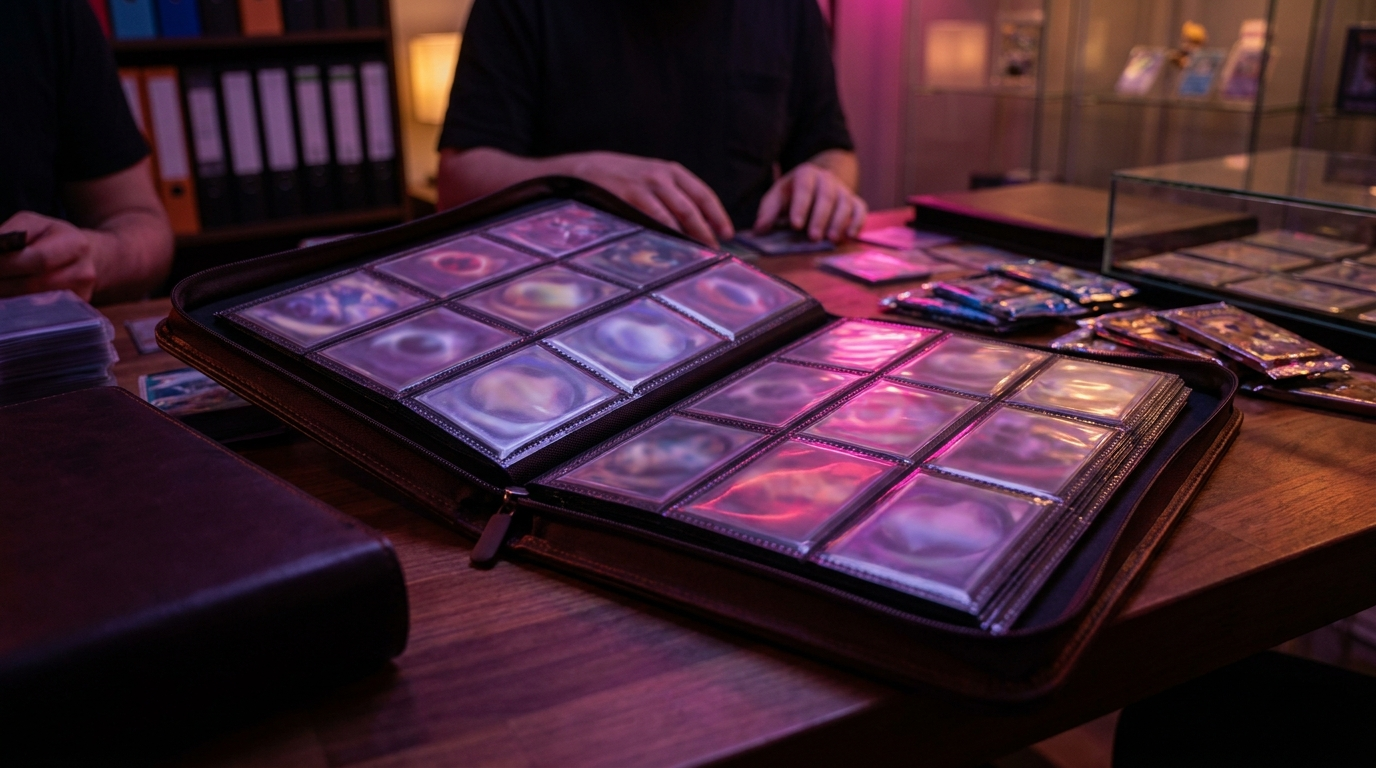
Ask ten collectors which Pokémon card binder to buy and you’ll get ten confident answers — most of them learned the hard way. Binders look like the simplest purchase in the hobby, but a bad one will quietly damage cards worth many times its price, and the differences that matter are exactly the ones nobody explains to beginners.
We’ve seen the aftermath across the counter: pressure dents from overstuffed pages, curved cards from cheap pockets, and the classic — a beloved childhood collection stored twenty years in a ring binder, every card wearing the same tell-tale imprint.
So here’s the guide we wish everyone got before their first purchase: what to avoid entirely, which features are worth paying for, and how to organise the thing once you own it.
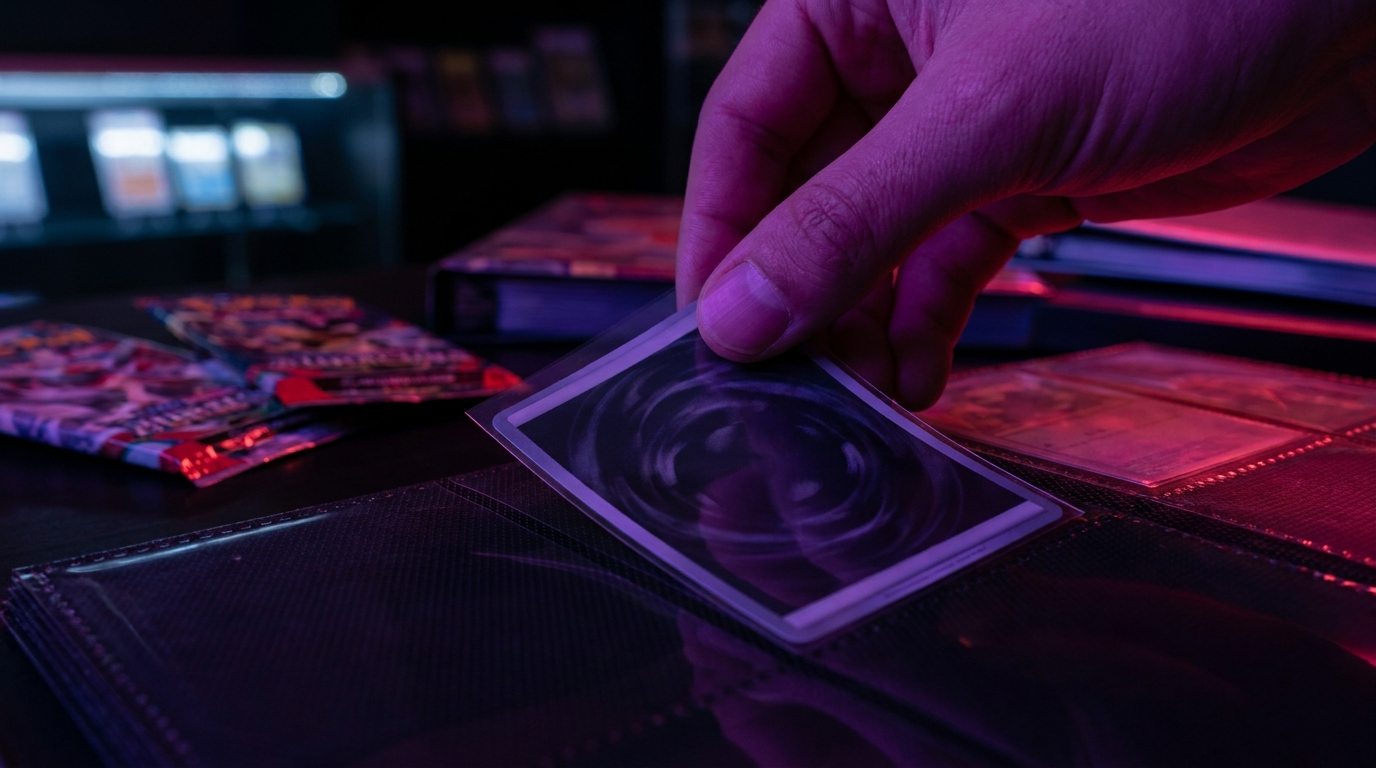
Let’s kill the biggest mistake first. Traditional ring binders — the school kind, with punched plastic pages clipped into metal rings — are genuinely harmful to cards. The rings press into the pages beside them, leaving dents and imprints on whatever sits in the first pocket column. Pages also lift and tear at the punch holes, and cards near the rings get bent every time the binder is opened carelessly.
Graders see the evidence constantly: ring-binder imprints are a classic condition fault, and the kind of surface damage they cause is exactly what separates a high grade from a mid one under PSA’s grading standards. Modern card binders are ringless: pages are stitched or welded directly into the spine, so nothing metal ever touches a pocket. Whatever else you take from this guide, take this — if it has rings, it’s not for cards you care about.
Watch outRing-binder damage is permanent and cumulative. The rings press dents into whatever sits in the first pocket column, pages tear at the punch holes, and the imprints show up as condition faults years later when you sell or grade. If your collection is in one now, move the valuable cards out this week.
What if your collection is already in one? Don’t panic, but don’t wait either. Move the cards out sooner rather than later, starting with anything valuable, and check the first column of each page for imprints so you know which cards have been affected — it matters if you ever sell or grade them. The damage is gradual, which is exactly why it catches people out: everything looks fine until the day it very much doesn’t.
Ringless binders close one of two ways. Zip closures seal the binder shut around all three open sides, keeping out dust, moisture and — crucially — stopping cards escaping if the binder is dropped or shelved carelessly. Elastic straps hold the cover closed but leave the edges open.
Zips win for anything valuable or transported regularly; the protection difference in a bag or car boot is meaningful. Elastic binders are lighter, cheaper and quicker to flick through, which makes them perfectly sensible for bulk commons, trade binders you open constantly, or a child’s everyday collection. If a binder will ever leave the house with cards you’d be upset to lose, choose the zip.
Card shows are the acid test here. Watch the trade tables at any UK event and you’ll see zipped binders passed around confidently while elastic ones get held flat like trays of drinks. If shows or trade nights are in your future, that’s your answer made for you.
Pocket count is about how you’ll actually use the binder:
| Format | Best for | Trade-off |
|---|---|---|
| 4-pocket | Trade binders and small showcases of favourites | Compact and portable, but fills up fast |
| 9-pocket | Most collections — fits a full evolution line or set page neatly, and a 360-card binder covers most modern master-set projects | None worth mentioning; it is the hobby standard |
| 12-pocket | Set collectors chasing big sets who want maximum density | Physically larger pages, so heavier and less shelf-friendly |
If in doubt, 9-pocket. It’s the format the whole hobby organises around — set layouts, page maths and display conventions all assume it.
Think about capacity honestly, too. Binders are sold by total card count — 160, 360, 504 and up — and collections grow faster than anyone plans for. Our experience: buy one size larger than you think you need, and keep a second cheap binder for the overflow that will absolutely happen. A binder crammed past capacity bulges, stresses the zip and presses pockets together, which defeats the point of owning a good one.
Collector’s tipLeave the last few pages of a binder empty. A part-filled binder closes flat and spreads pressure evenly across every pocket, whereas a stuffed one puts the entire load on the cards nearest the spine — which is exactly where your best cards usually live.
Here’s the feature that separates real card binders from stationery: side-loading pockets. Top-loading pockets open upward, and cards slide out of them — when the binder is carried upside down, dropped, or just flicked through enthusiastically. Side-loading pockets open toward the spine, so gravity and handling both work to keep cards seated.
Every binder we’d recommend is side-loading, full stop. Combined with each card being in its own sleeve first — see our sleeves guide for the right way to do that — a zipped, side-loading, ringless binder is about as safe as stored cards get outside a graded slab.
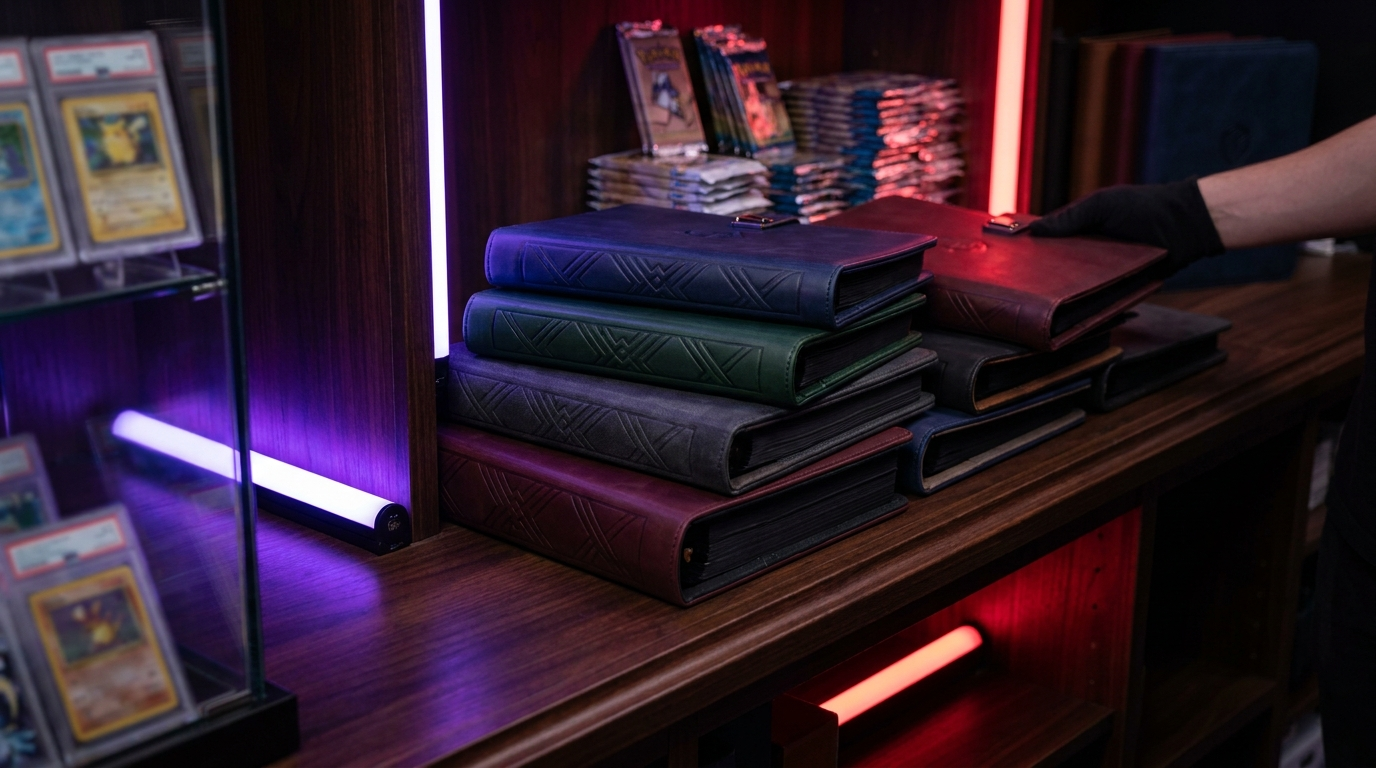
Brands like Vault X, Dragon Shield and Ultra Pro’s higher lines charge roughly two to four times the price of a bargain binder. What you’re paying for is real: stiffer covers that resist crushing, tighter stitching, better pocket material that doesn’t cloud or stick to holofoil, and padded interiors. Cheap no-name binders are where we see clouded pockets, sharp page edges and covers that warp within months.
Our honest take: for a binder holding hundreds of pounds of cards, the extra £15–£25 for a premium ringless zip binder is the cheapest insurance in the hobby. For bulk and playground cards, budget binders are absolutely fine.
You’ll find our current range of binders, sleeves and storage in the accessories section — we stock what we use ourselves, which keeps the range honest.
One caveat on premium: the badge on the cover matters less than the construction underneath. A mid-price binder that’s ringless, side-loading and zipped beats a designer-branded one that compromises on any of those three. Buy the feature list, not the logo — the cards can’t read.
Yes. The rings press dents and imprints into the cards beside them and pages tear at the punch holes. Ringless binders exist precisely because of this.
Nine, unless you have a specific reason not to. It is the format the hobby organises around, so set layouts and page maths all assume it.
Yes. One sleeved card per pocket is the standard, and it protects against the friction and pressure that binder pages cause over years of use.
For a binder holding hundreds of pounds of cards, the extra £15–£25 buys stiffer covers, better pocket material and tighter stitching. For bulk and playground cards, budget binders are fine.
Upright like books. Flat stacks press pages together and can leave pocket impressions on the cards over time.
There’s no single right system, but these are the approaches that keep collections coherent:
A separate, deliberately scruffy trade binder is worth running alongside your main collection: duplicates and cards you’d happily move on, organised roughly by value. It saves your showcase binder from constant handling at meets, and makes trades quicker because the other person isn’t leafing through your keepers to find what’s actually available.
Whichever system you pick, sleeve every card before it goes in a pocket, don’t double-stuff pockets, and store binders upright like books — flat stacks press pages together and can leave pocket impressions over time. Card-care basics like these are also exactly what graders reward later; PSA’s own resources are worth a browse if grading is ever in your plans.
The takeaway: ringless, side-loading, zipped, one card per sleeved pocket — get those four things right and your binder will protect your collection for decades instead of slowly eating it.
UK card shows explained: how the circuit works, what to expect at your first event, haggling etiquette and how to spot good deals. Meet the hobby.

Pokémon card trading is the best free fun in the hobby — until a bad trade stings. Value trades fairly, avoid scams online and trade with confidence.

Are Pokémon tins worth buying? We break down the tin line-up, mini tins vs full tins, the value maths and when a tin is genuinely the right buy.