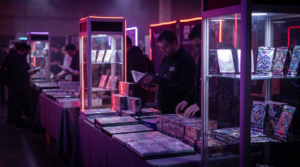
UK Card Shows & Events: Where Collectors Actually Meet
UK card shows explained: how the circuit works, what to expect at your first event, haggling etiquette and how to spot good deals. Meet the hobby.

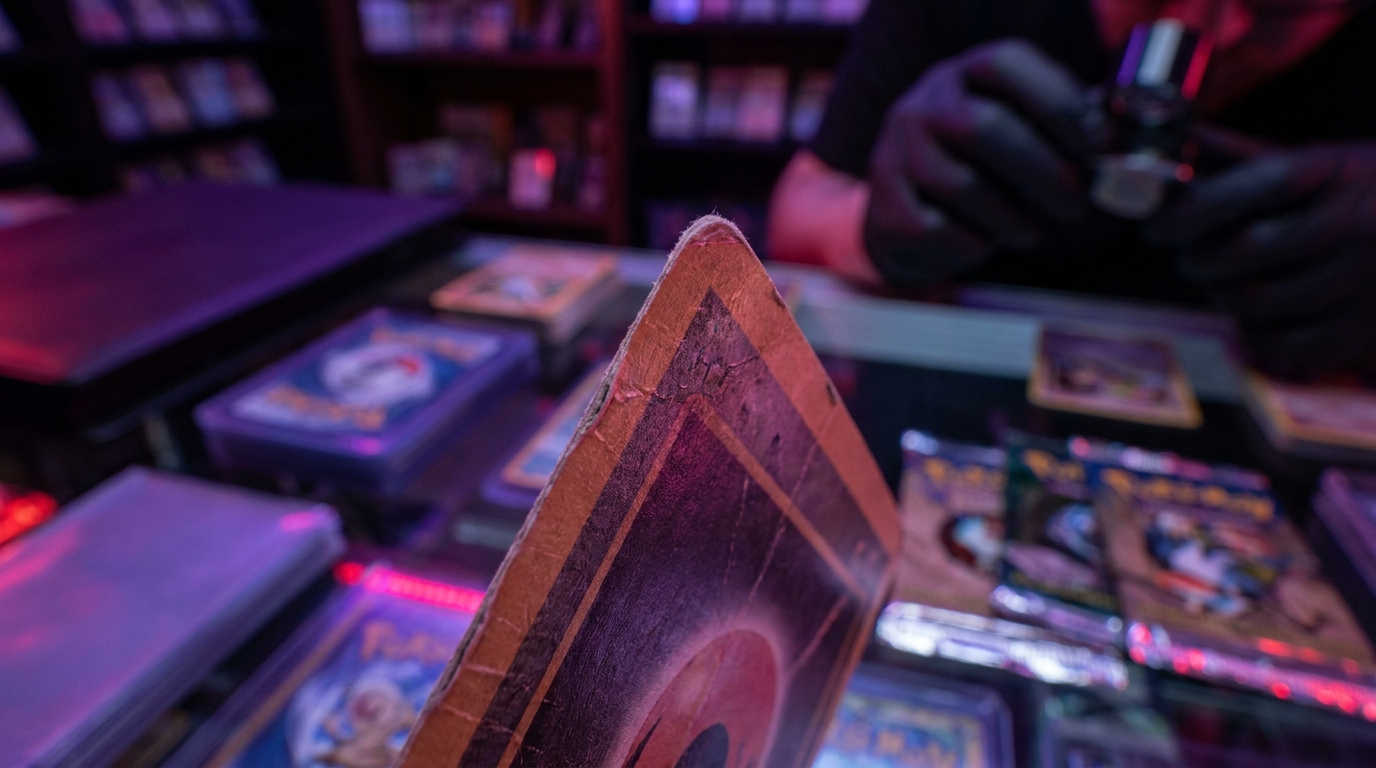
Two copies of the same card can sell for wildly different money, and the reason usually fits in two letters: NM, LP or MP. Pokémon card condition is the single most underestimated factor in what a card is worth — new collectors obsess over rarity and set, then get stung the first time they buy a “bargain” that turns out to be moderately played.
The good news is that condition isn’t subjective mush. There’s a broadly agreed scale, a repeatable way to inspect cards, and rough price multipliers that let you value any card in any state. This guide covers all three, plus how to photograph condition honestly when you sell or trade.
Most of the market uses five bands. Exact definitions vary slightly between platforms — TCGplayer publishes its own guide, and graders like PSA use a numeric 1–10 scale that maps loosely onto it — but these are the working definitions almost everyone recognises:
Note that Mint and Gem Mint sit above NM and, in practice, only mean much inside a grading slab, where a professional has certified them.
The scale’s fuzziness is worth taking seriously as a buyer. One seller’s NM is another’s LP, and marketplaces enforce their definitions with very different levels of rigour. That’s why experienced collectors buy from photos and reputations rather than acronyms alone — and why, when two listings for the same card differ by a few pounds, the one with better photos and a stricter seller is usually the real bargain. When you sell, being half a grade harsher than you think is fair costs a little on price and saves a lot in disputes.
Watch outTreat a listing with a single straight-on front photo as one band lower than described. Whitening lives on the back edges and scratches only appear when a card is tilted, so a seller who will not add corner close-ups and an angled shot on request is either careless or hoping you do not ask.
Three flaw types account for most condition downgrades:
Whitening is the white core of the card showing through worn edges and corners, most visible on the dark card back. Back-edge whitening is the most common flaw in the hobby — many cards have a touch of it straight from the pack, thanks to factory cutting.
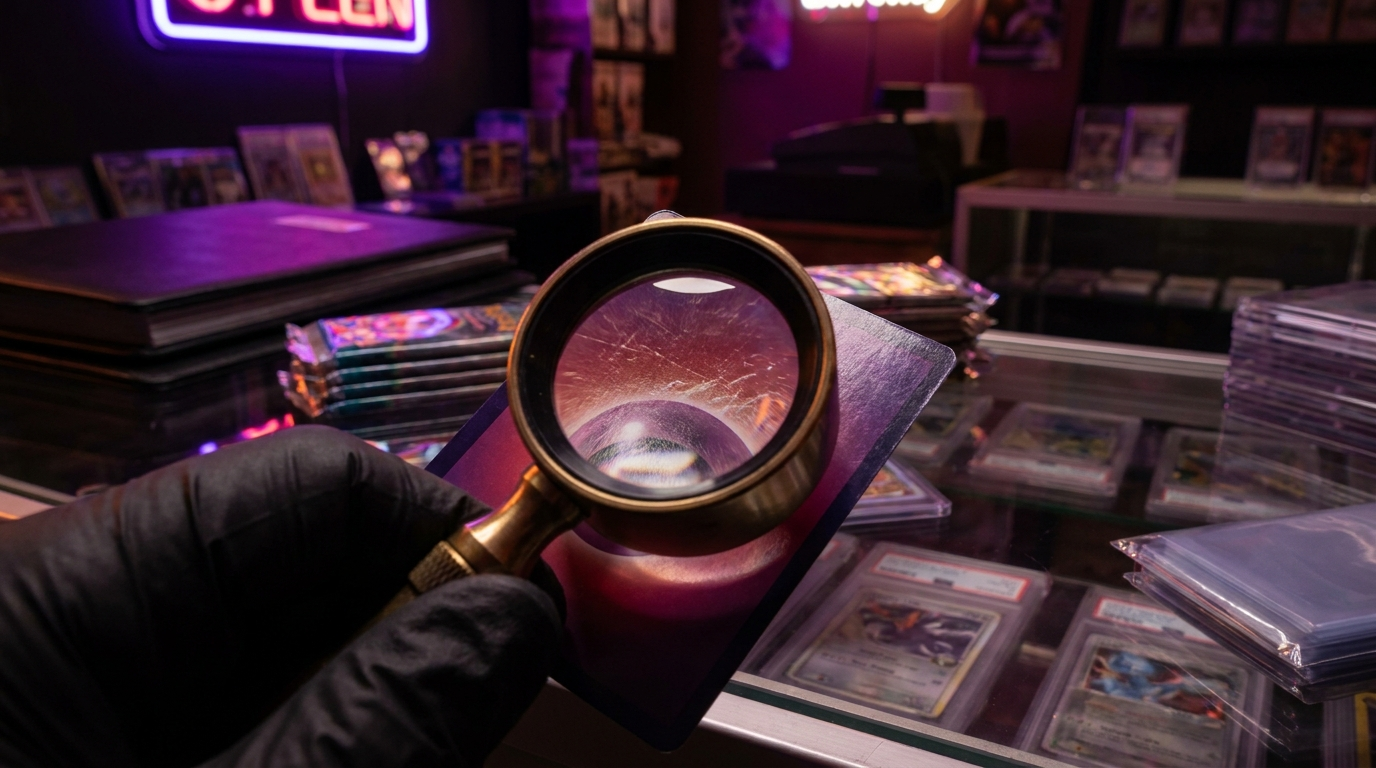
Surface scratches live on the holofoil layer. They’re often invisible face-on and leap out the moment the card is tilted under light. Holos and full-art cards are especially prone, and sleeves only prevent new scratches — they don’t erase old ones.
Print lines are thin horizontal or vertical lines from the factory printing process. They’re not wear — the card may be otherwise untouched — but graders and buyers still treat them as flaws. Factory defects like poor centring fall into the same bucket: not your fault, still priced in.
Beyond the big three, keep an eye out for creases (the flaw that instantly drops a card multiple bands — check by looking along the card’s surface at a shallow angle), dents and pressure marks (often from cards stored under weight or behind tight elastic), and holo clouding — hazy patches on the foil layer that some vintage holos develop with age. Edge silvering, where the foil layer peeks through a worn edge on holo cards, is the front-side cousin of whitening and just as common on shuffled cards.
Here’s the routine we use on every card that comes across the counter. It takes under a minute:
Collector’s tipInspect cards over a soft surface, hold them by the edges, and sleeve them straight after. There is dark comedy in scratching a card while checking it for scratches — it happens more than anyone admits. Our guide on how to store Pokémon cards covers keeping them flaw-free afterwards.
As a rough rule of thumb — and prices vary by card, so treat these as ballpark figures — the market prices condition bands something like this relative to NM:
| Condition | Share of NM value | What you will see |
|---|---|---|
| NM | 100% (the baseline) | Looks unplayed; at most a flaw or two visible only under close inspection |
| LP | Roughly 70–85% | Light edge whitening, a small scratch or slight corner softening; still displays well |
| MP | Roughly 50–65% | Obvious wear at a glance, with noticeable whitening and possible minor edge creasing |
| HP | Roughly 30–45% | Creases, heavy whitening and scuffing, but structurally intact |
| Damaged | 20% or less | Major creases, tears, water damage or writing |
Two things sharpen those numbers. First, the more valuable the card, the harsher the drop — buyers of expensive cards are condition-sensitive, so an MP copy of a £300 card falls proportionally further than an MP copy of a £5 card. Second, the jump above NM is the biggest of all: a certified 10 can be worth several multiples of the raw NM price, which is the entire economic engine behind grading. Whether that jump pays for the grading fee is a maths question we work through in our grading worth-it guide.
Vintage bends the rules slightly: genuinely old cards hold value better in lower condition, because supply of clean copies is so thin.
Put numbers on it with a concrete example. Suppose a chase card’s NM copies are selling around £100. The same card described honestly as LP will typically move at £70–£85; an MP copy at £50–£65; a heavily played one at £30–£45. Now flip your perspective: if you don’t mind light wear, that LP copy is a 20–30% discount on a card that looks nearly identical in a binder. Deliberately buying LP copies of expensive cards — “binder condition” collecting — is one of the best value strategies in the hobby, precisely because so many buyers refuse to consider anything below NM.
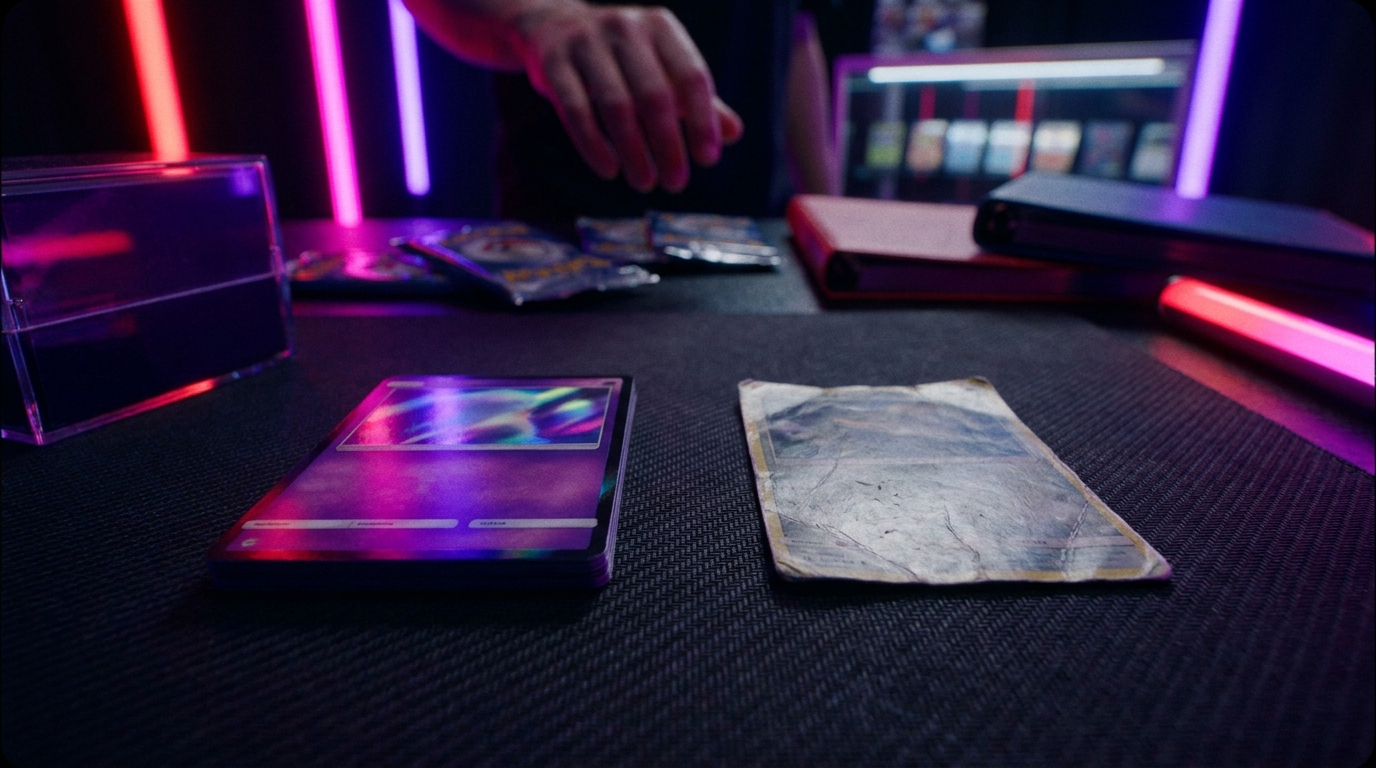
Near Mint, Lightly Played and Moderately Played. NM looks unplayed, LP has minor visible wear that still displays well, and MP shows obvious wear at a glance.
Typically 70–85% of the Near Mint price, so roughly a 15–30% discount. Expensive cards drop proportionally further than cheap ones, because their buyers are more condition-sensitive.
Very. Back-edge whitening is the most common flaw in the hobby and many cards leave the factory with a touch of it, thanks to the way sheets are cut.
A thin line running across a card from the printing process. It is a factory defect rather than wear, but graders and buyers still price it as a flaw.
It is the single most damaging flaw, dropping a card multiple bands at once. Check for creases by looking along the card’s surface at a shallow angle before you buy.
If you sell or trade, your photos are your condition description. The honest approach also happens to be the one that gets fewer returns and disputes:
We’ve put together a full walkthrough of camera settings, lighting and holo glare in our guide to photographing Pokémon cards.
The bottom line: condition is a multiplier on everything else a card has going for it. Learn the scale, inspect before you buy, describe honestly when you sell, and you’ll immediately be trading smarter than most of the market. And if you’d rather skip condition roulette entirely, everything we sell at TCG Smiths is checked and described exactly as we’d want it described to us.
UK card shows explained: how the circuit works, what to expect at your first event, haggling etiquette and how to spot good deals. Meet the hobby.
Pokémon card trading is the best free fun in the hobby — until a bad trade stings. Value trades fairly, avoid scams online and trade with confidence.
Are Pokémon tins worth buying? We break down the tin line-up, mini tins vs full tins, the value maths and when a tin is genuinely the right buy.