
UK Card Shows & Events: Where Collectors Actually Meet
UK card shows explained: how the circuit works, what to expect at your first event, haggling etiquette and how to spot good deals. Meet the hobby.

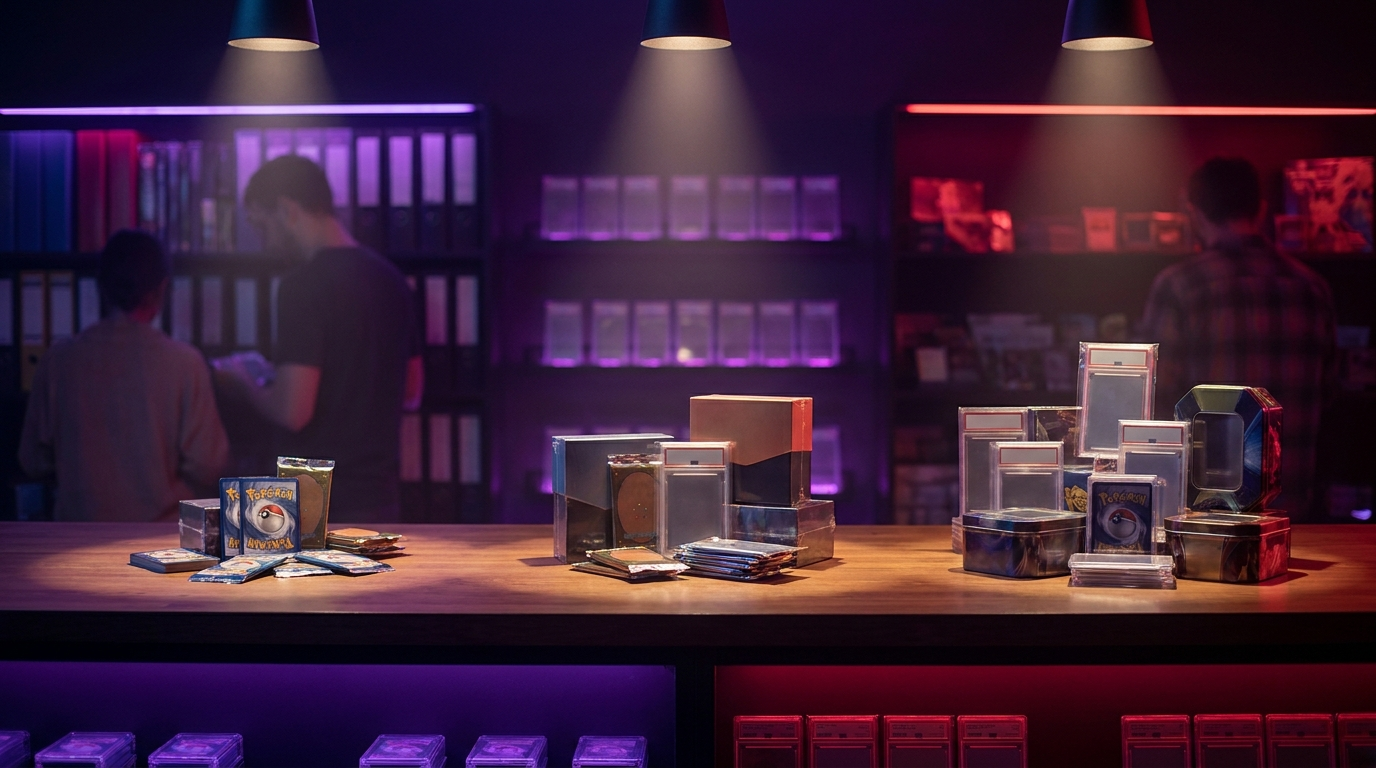
January conversations in the shop always sound the same: ‘I’ve got some money set aside for cards this year — what should I actually get?’ It is the eternal question, and in the Pokémon TCG what to buy depends far more on your goals and your budget than on whatever product is trending this week. So rather than another vague listicle, here is exactly how we would spend £100, £250 and £500 across 2026, with reasoning you can steal even if your number is different.
Two disclaimers first, because honesty beats hype. One: we sell this stuff, so read us with the same healthy scepticism you would read anyone. Two: nothing here is investment advice — cards can fall in value as easily as rise, and every plan below is built to be worth it in enjoyment even if prices go nowhere. Collect first; anything else is a bonus.

The short version of the market right now: the hobby is still riding the momentum of the Mega Evolution era and the 30th anniversary celebrations, demand for premium products remains ferocious, and hyped releases continue to sell through instantly while standard sets get reprinted in deep quantities. Chase-card premiums are concentrated at the very top of each set’s rarity ladder, singles from cooled-off sets remain the quiet bargain of the era, and sealed prices at the time of writing swing hard with each reprint wave announcement. Our full read is in the Pokémon card market in 2026, but that paragraph is the context every plan below assumes.
What follows from it are three practical rules that shape every budget: buy sealed at RRP or not at all, because the premium on hyped product evaporates the moment a reprint lands; buy singles from sets the crowd has moved past, because that is where a pound buys the most cardboard; and keep some powder dry, because the best prices of any year arrive on their own schedule, not yours.
| Budget | Where it goes | The point of it |
|---|---|---|
| £100 | ETB £45–55, singles £30–35, protection £15–20 | Focus beats spread |
| £250 | Booster box £120–150, singles £60–70, patience fund £30–40, protection £20 | One anchor, one project, one reserve |
| £500 | The £250 plan plus a £100–150 centrepiece and roughly £50 of flex | Quality, not more packs |
At £100, the enemy is dilution — spread this across everything and you will feel like you bought nothing. Our split:
What this plan deliberately skips: loose packs at inflated prices, mystery boxes and anything marketed with the word ‘guaranteed’.
Why an ETB rather than more singles at this level? Because £100 has to fund enjoyment as well as efficiency. A collection built entirely from optimal purchases is a spreadsheet; the ETB is the part of the budget that reminds you why you started. If ripping packs genuinely does nothing for you, by all means reallocate it to singles — the plan gets more efficient and only slightly less fun.
At £250, you can add a proper sealed anchor and some patience money. We would allocate roughly:
The shape of this plan matters more than the exact numbers: one anchor purchase, one focused singles project, one reserve. It scales in both directions, and it prevents the classic £250 failure mode — drifting through the year making eight unrelated £30 purchases and ending up with a drawer rather than a collection. Whether the ETB or the booster box is your anchor, decide it in advance and let everything else orbit it; a decision made in January is worth ten made at midnight on a release day.
Collector’s tipGive the patience fund a rule rather than just a pot: it only gets spent when something already on your want list drops below the price you wrote next to it. Reaching December with it unspent is a perfectly good outcome — it rolls straight into next year’s centrepiece.

At £500, resist the urge to simply buy more packs. Diminishing returns arrive fast; what a bigger budget buys is quality. Our shape: take the £250 plan as the base, then add a centrepiece — one card you genuinely love at around £100–£150, bought as a graded copy where sensible because a slab from a recognised grader like PSA removes condition and authenticity doubt at this price level. Put the remaining £50 or so toward either one premium collection box from the anniversary wave — bought at RRP from the main Pokémon range, chosen because you want it on display — or topping up the patience fund. A collection with one card that makes your chest tight beats fifty more packs of bulk every single time.
Choosing the centrepiece deserves real thought, so give it a month rather than an evening. Watch several copies sell, learn what the card actually trades at in the condition you want, and buy the example rather than the listing — at this level, the difference between a strong and weak copy of the same card is where the money hides. And choose with your own taste, not the market’s: the centrepiece you still love in five years was never going to come from a trending list.
Watch outEvery plan above is built to be worth it in enjoyment even if prices go nowhere, and that is deliberate. Buying sealed product purely to flip it is the one approach here that can genuinely leave you worse off than when you started — treat any price rise as a bonus, never as the plan.
A strategy written in January should bend by June. Reprint announcements, surprise sets and anniversary products will all reshuffle what is worth buying, so hold the plans loosely and the principles tightly: RRP or don’t, singles for precision, sealed for joy, protection before expansion, and patience as a budget line. Check in on your plan quarterly, sell or trade what no longer sparks anything, and let the collection follow what you actually love rather than what the hobby is shouting about that month.
The anniversary year adds one specific wrinkle: celebration products tend to be announced in waves, and the later waves are historically where the most desirable items land. Spending your whole special-product budget on the first shiny thing announced in spring is the most predictable mistake of an anniversary cycle — pace yourself, because the calendar will not.
Protection, then one Elite Trainer Box from a set you actually love, then a handful of singles for a defined mini-collection. That order stops you damaging the cards you are about to care about.
A booster box gives you far more packs per pound, so it is the better anchor once your budget reaches around £250. An ETB wins at £100 because it bundles the accessories a new collection needs alongside the packs.
We would not plan around it. Some products have appreciated and plenty have not, with no guarantees either way. Buy things you would be happy to own or open regardless, and treat any rise as a bonus.
Whatever is genuinely comfortable — the shape matters more than the number. One anchor purchase, one focused singles project and one reserve works just as well at £100 as it does at £500.
Singles, if you want specific cards: you pay for exactly what you get. Sealed is what you buy for the experience of opening it, which is a real thing worth budgeting for — just book it honestly as enjoyment rather than strategy.
The takeaway: if you searched ‘Pokémon TCG what to buy’, the honest answer is a plan, not a product — a good year of collecting is designed, not accumulated. So pick the plan that matches your budget, spend most of it on what you love and a little of it on being patient. If you want a nudge when the moments arrive — restocks, price drops, pre-order windows — join the mailing list, and if you are placing regular orders through the year, our Ultra membership plus 10 loyalty points per £1 quietly stretches every one of these budgets a little further.
UK card shows explained: how the circuit works, what to expect at your first event, haggling etiquette and how to spot good deals. Meet the hobby.

Pokémon card trading is the best free fun in the hobby — until a bad trade stings. Value trades fairly, avoid scams online and trade with confidence.

Are Pokémon tins worth buying? We break down the tin line-up, mini tins vs full tins, the value maths and when a tin is genuinely the right buy.