
UK Card Shows & Events: Where Collectors Actually Meet
UK card shows explained: how the circuit works, what to expect at your first event, haggling etiquette and how to spot good deals. Meet the hobby.

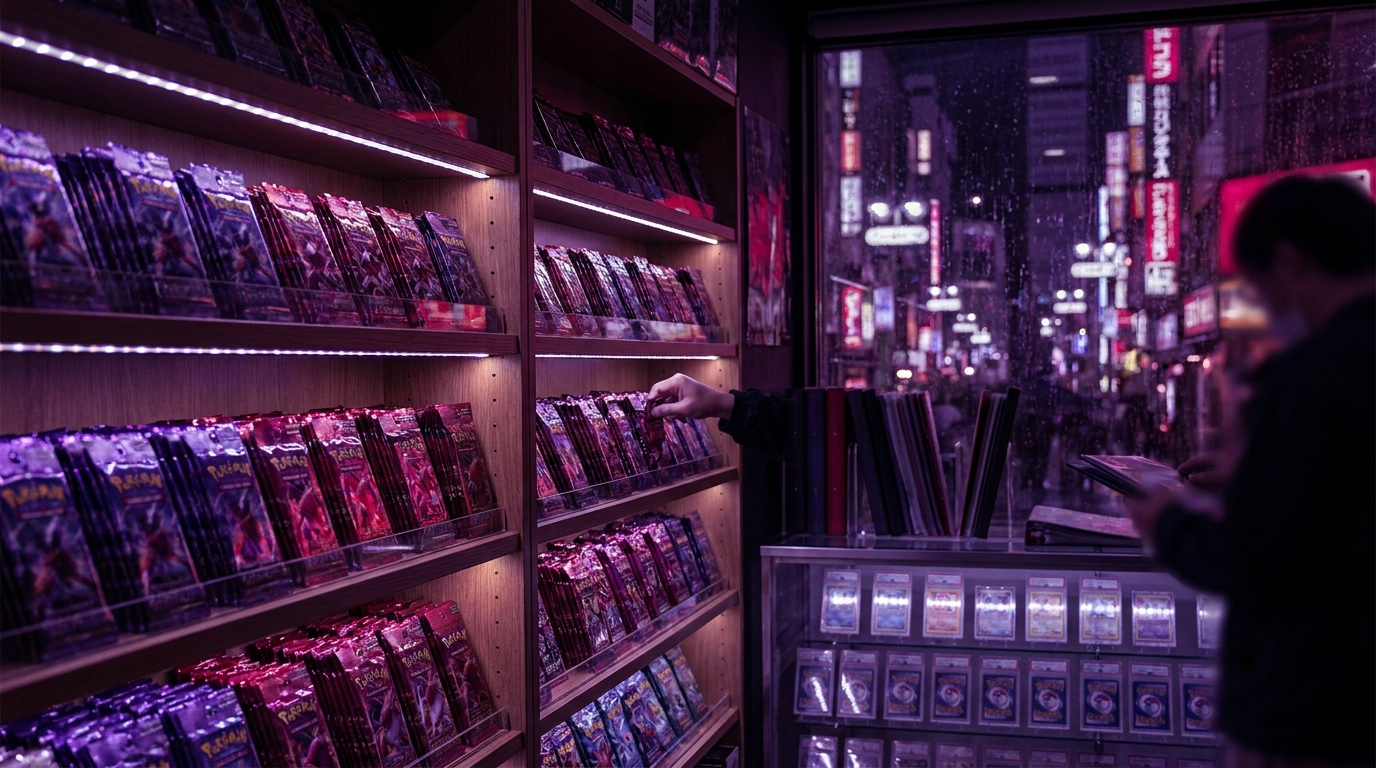
Spend any time in UK collecting circles and you’ll notice a quiet migration happening: more and more collectors are picking up Japanese Pokémon cards alongside — or instead of — their English collections. It’s not a hipster affectation. There are solid, practical reasons behind the switch, and once you understand them it’s hard to unsee the appeal.
In this guide we’ll cover what actually differs between Japanese and English cards, why print quality and pull rates keep coming up, where the price advantages are real (and where they aren’t), how to read Japanese sets and rarities without speaking a word of Japanese, and how to buy safely from the UK.
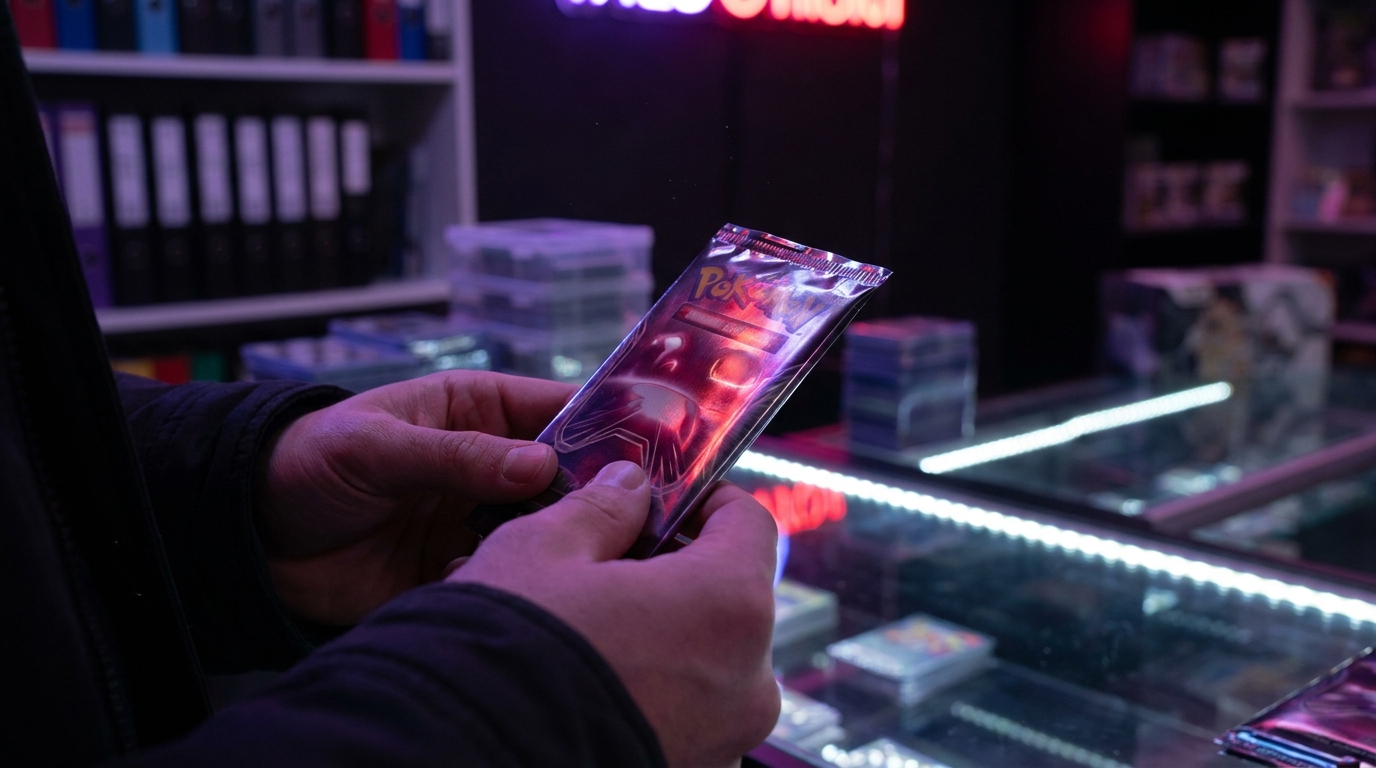
The cards themselves share artwork and gameplay, but the products around them are quite different:
| Feature | Japanese | English |
|---|---|---|
| Release timing | Sets land first; English releases are built from them plus promos, so Japan previews what is coming | Weeks or months behind, often combining one or more Japanese sets |
| Pack size | Around five cards per booster, at a fraction of the price | Ten cards per booster |
| Box economics | Cheaper boxes with a more predictable rarity breakdown; many modern boxes effectively guarantee particular slot types | Pricier and far more variable from box to box |
| Card stock | Glossier finish, cleaner edges and — crucially — better centring off the printer | More prone to edge whitening and off-centre cuts |
Two practical notes before you dive in. First, playability: Japanese-language cards aren’t legal in official English-language tournaments here, so if you play competitively, your deck still needs to be English — plenty of collectors run an English playing collection alongside a Japanese display collection for exactly this reason. Second, promos and exclusives differ between regions: Japan gets promo cards, subsets and products that never release in English at all, which is part of the fun and part of the rabbit hole. Neither point is a dealbreaker; both are worth knowing before your first order.
Ask a grader-focused collector why they buy Japanese and the answer is almost always condition. Japanese cards tend to leave the factory in noticeably better nick: centring is more consistent, edge whitening is rarer, and surface print lines are less common. None of this is absolute — bad Japanese cards exist — but if your goal is high grades, starting with cleaner raw cards stacks the odds in your favour.
Pull rates are the other half of the story. Because Japanese boxes follow more predictable structures, opening them feels less like a lottery. You’ll typically know roughly what class of hits a box will produce, and chase-card odds in many Japanese sets compare favourably with the English equivalents. Some Japanese sets even feature the famous god pack — an ultra-rare pack in which every card is a top-tier hit. If sealed products interest you mainly for the opening experience, that predictability is worth a lot; our post on Pokémon pull rates explains why English odds feel so swingy by comparison.
Here’s where the switch becomes genuinely rational. At the time of writing, a Japanese booster box typically costs less than half the price of an English booster box of an equivalent set — sometimes a third. Per card, sealed Japanese product is dramatically cheaper.
Singles follow a similar pattern with one big exception. Mid-tier hits — illustration rares, standard SRs, most ex cards — are usually cheaper in Japanese. But the true top-end chase cards can flip the other way: because Japanese boxes are opened in huge volumes and global demand funnels into a handful of iconic cards, the most hyped Japanese cards occasionally command a premium over English versions, and the rest of the set stays cheap. As always, check sold prices rather than asking prices before assuming either language is the bargain.
One honest caveat: resale demand in the UK still skews English. If you collect purely to sell locally later, English product remains the more liquid market. If you collect for the cards themselves, Japanese is extraordinary value.
A quick worked example makes the point. Take a modern set where the English booster box runs around £120–£150 on the aftermarket. The equivalent Japanese box frequently lands somewhere around £50–£70 delivered — and because Japanese box structures are more predictable, you’ll typically pull a comparable or better spread of art rares and chase-tier cards from it. Per hit, per card and per hour of enjoyment, the Japanese box wins comfortably. The gap narrows for older, out-of-print Japanese sets where collectors have caught on, but for current sets it remains one of the most reliable value plays in the hobby.
You don’t need Japanese to navigate Japanese cards — you need about ten codes, printed in Latin letters on the card itself:
Set codes (like sv4a or the newer Mega-era codes) identify the exact set, and the card number sits underneath. A resource like Bulbapedia’s TCG pages lists every Japanese set with its English equivalent, which makes cross-referencing painless. Within a week of collecting Japanese you’ll read these codes without thinking.
Two structural quirks are worth knowing as well. Japanese “high class” and special sets — the equivalents of English special sets — often have much richer guaranteed contents than standard boxes, with some effectively promising a top-tier hit per box; they’re popular with UK buyers for exactly that reason. And Japanese sets frequently split one English set’s contents across two smaller Japanese releases, so if you’re chasing a particular card, check which Japanese set it actually debuted in — the full expansion list on Bulbapedia maps every Japanese release to its English counterpart — before ordering a box of the wrong one.
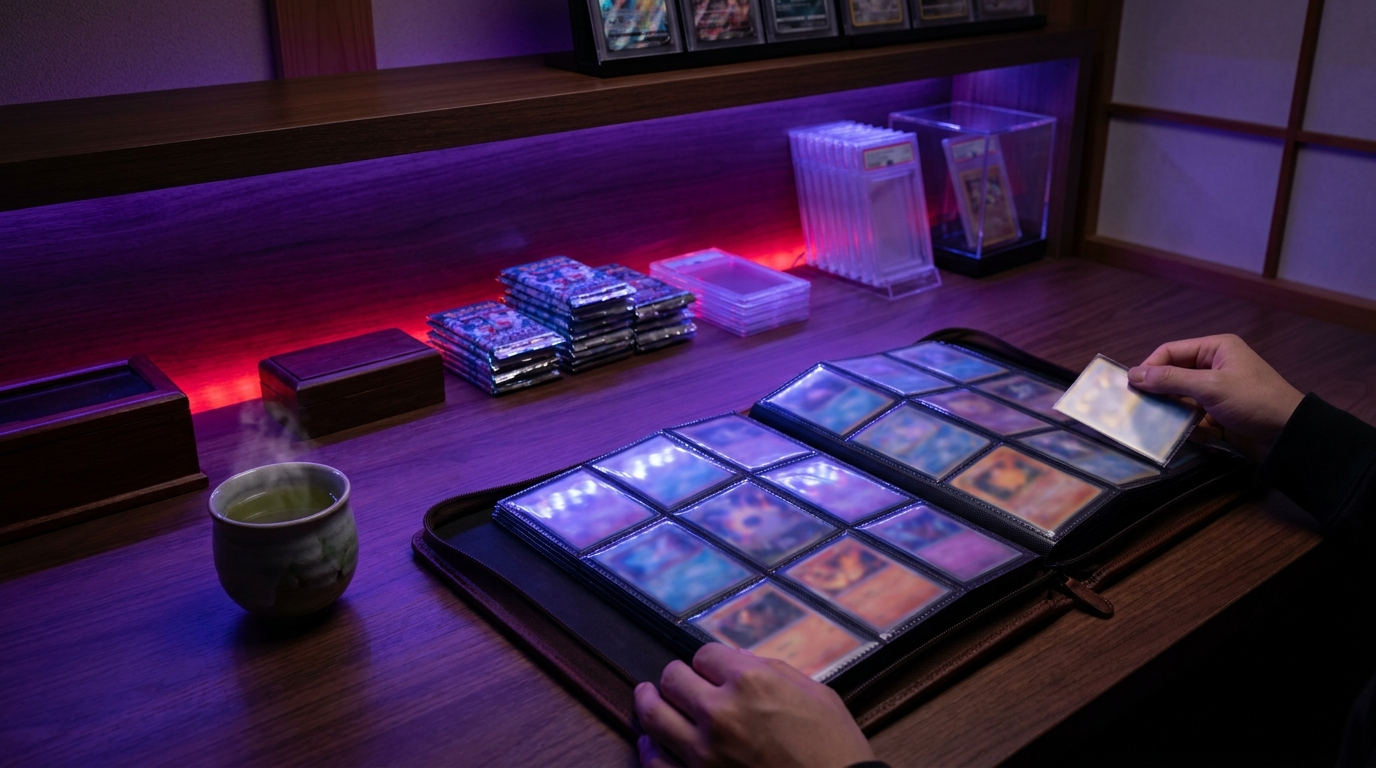
UK collectors buy Japanese product through three main routes:
Collector’s tipWhen importing, factor in that UK import VAT applies above the standard thresholds. Price a box as its “landed cost” — item, shipping and tax together — before comparing it with a UK shop’s shelf price. Sometimes the UK shop wins outright.
Sealed product usually is, often at half the price or less for an equivalent box, and mid-tier singles tend to be cheaper too. The very top chase cards can flip the other way, because global demand funnels into a handful of iconic Japanese cards.
Not in official English-language events — decks there need English cards. Plenty of collectors keep an English playing collection alongside a Japanese display collection for exactly this reason.
They tend to start cleaner, with more consistent centring and less edge whitening, so a given card has a better shot at a high grade. It is not a guarantee; badly cut Japanese cards exist too.
Art Rare, Special Art Rare and Super Rare. AR matches English Illustration Rares, SAR matches Special Illustration Rares and is usually the set’s biggest chase, SR is the full-art tier and UR covers the gold cards.
Direct imports have the best base prices and deepest selection, but shipping, import VAT and handling can erase the saving on small orders. One large consolidated order beats several small ones; for a single box, a UK shop often wins outright.
We’ll put our cards on the table: we think Japanese product is one of the best-value corners of the hobby right now, and we’re steadily growing the Japanese side of our Pokémon range at the same fair-pricing approach we apply to everything else — you can read more about how we work on our about page. Every purchase earns the usual 10 loyalty points per £1, Japanese or English.
The takeaway: Japanese cards offer cleaner print quality, kinder odds and better value per pound, at the cost of slightly less UK resale liquidity. If that trade sounds good, start small — one box, one set you love — and see how it feels. New Japanese arrivals and restocks always hit the mailing list first, so that’s the place to hear about them before they go.
UK card shows explained: how the circuit works, what to expect at your first event, haggling etiquette and how to spot good deals. Meet the hobby.

Pokémon card trading is the best free fun in the hobby — until a bad trade stings. Value trades fairly, avoid scams online and trade with confidence.
Are Pokémon tins worth buying? We break down the tin line-up, mini tins vs full tins, the value maths and when a tin is genuinely the right buy.