
UK Card Shows & Events: Where Collectors Actually Meet
UK card shows explained: how the circuit works, what to expect at your first event, haggling etiquette and how to spot good deals. Meet the hobby.

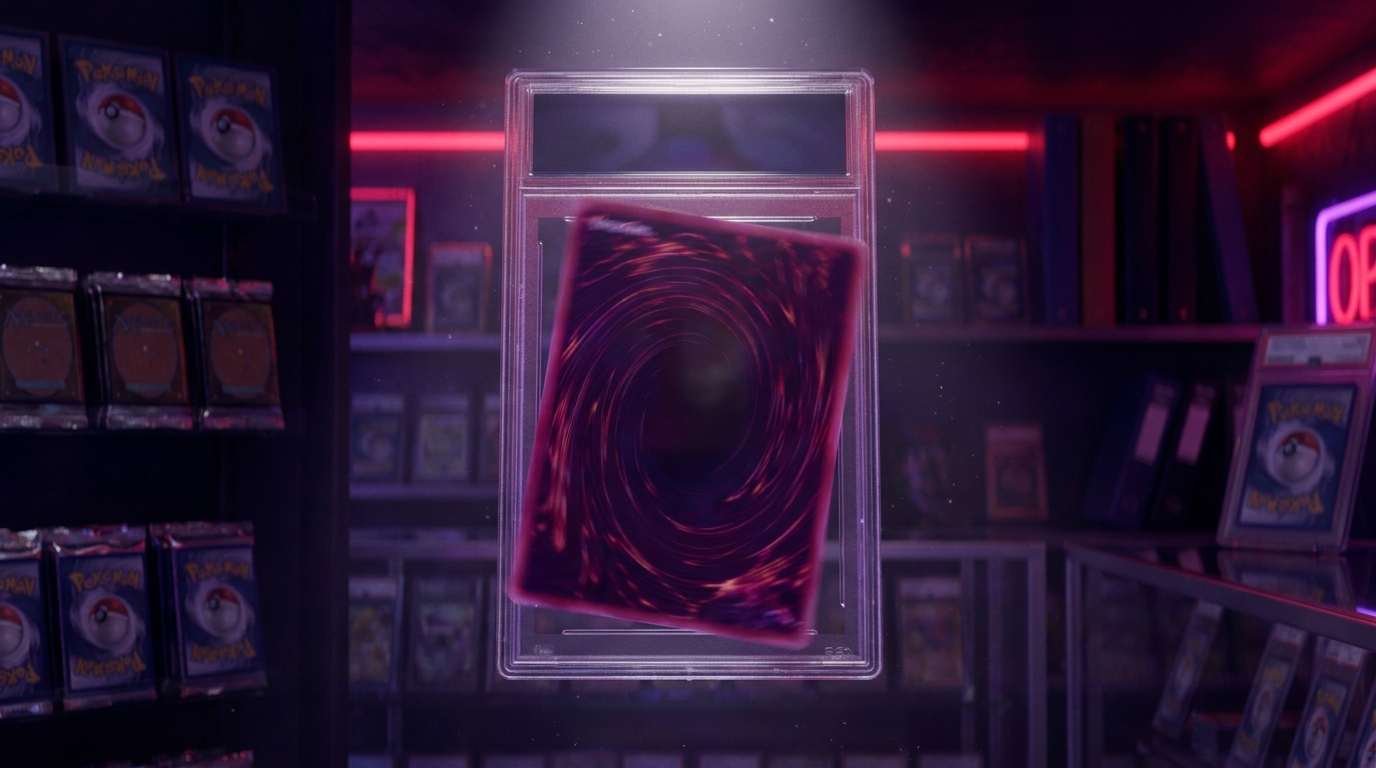
Most manufacturing industries destroy their mistakes. The card industry accidentally sells them — and collectors have decided some of them are treasure. Pokémon error cards occupy a genuinely strange niche: cards that are worth more precisely because something went wrong, whether that is a missing set symbol, a wildly off-centre cut or ink that never made it onto the card.
But the niche is full of traps. Not every oddity is an error, not every error is valuable, and a cottage industry exists around faking the ones that are. This guide covers the main types of errors and misprints, the famous examples, how the market actually prices mistakes, and the fakes to watch for before you pay an error premium.
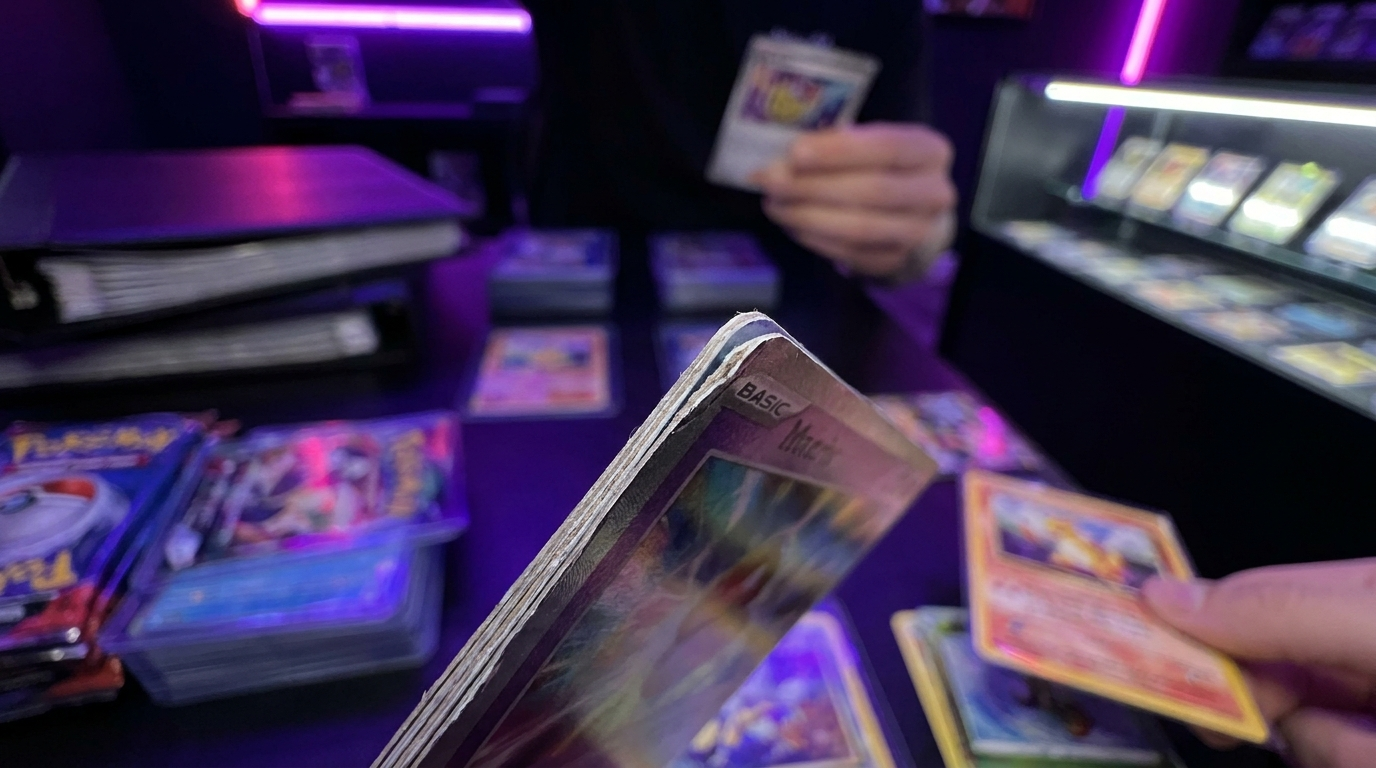
It helps to sort production mistakes into rough families:
That last distinction matters enormously for value, and it is the first question to ask about any error: is it a one-off production accident, or a run-wide mistake? A crimp is unique to one card; a typo exists on every copy printed before the fix.
A few mistakes have become legends in their own right. The best known cluster comes from the 1999 Jungle set, where a run of holographic cards was printed missing the Jungle set symbol entirely — ‘no symbol’ Jungle holos remain a classic vintage error chase. The early print runs of Base Set produced their own canon of quirks, from the ‘Red Cheeks’ Pikachu variant to typo-laden early text, and the shadowless style of early printing is so collectable it has transcended ‘error’ status into a recognised variant class of its own — we cover that whole family in our guide to first edition and shadowless cards.
Beyond those, the hobby’s folklore includes the famous Prerelease Raichu — a card long rumoured to exist from a test stamping accident, with only a tiny number ever claimed to be real — and countless one-off spectacle pieces: dramatic miscuts showing two cards at once, holos with entirely missing ink layers, and evolution boxes containing the wrong Pokémon. Documentation of run-wide errors and corrected printings is scattered across the community, with Bulbapedia the best starting point for verifying whether a quirk you have found is a known, catalogued error.
One-off production accidents are the most dramatic errors, and each has its own market personality. Miscuts are prized roughly in proportion to how spectacular they are — a slightly off-centre card is just poor centring, while a cut showing half of a neighbouring card is a display piece. Crimps divide collectors: to some they are charming proof a machine hiccuped, to others they are simply damage, and prices reflect that ambivalence unless the card underneath is desirable. Ink and layer errors — missing holo layers, absent text, blank backs — sit at the exotic end, partly because they are rare and partly because they are the easiest to confuse with damage or tampering. In every case the value question is the same: is the error obvious, attractive and verifiable at a glance? Subtle errors make poor trophies.
Collector’s tipProvenance is the quiet superpower here. A one-off error with a story — pulled on camera, kept with the pack wrapper, documented from the moment it appeared — is dramatically easier to sell than the same card appearing from nowhere. If you ever pull something strange, photograph it immediately alongside the pack and the rest of the pull, and resist the urge to handle it; you are creating the paper trail that a future buyer or grader will lean on.
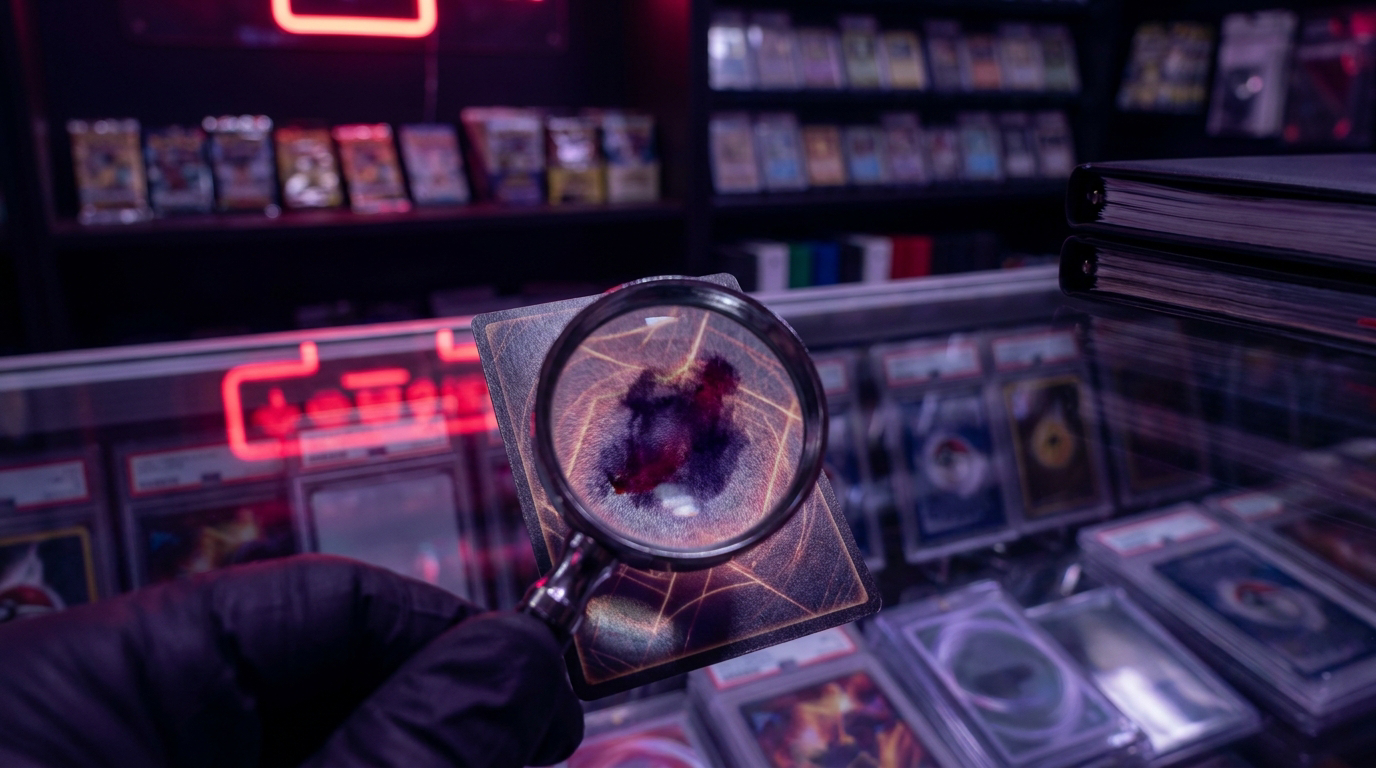
There is no neat price guide for mistakes, but the market weighs a consistent set of factors:
Because sales are thin and irregular, hedge any valuation: check what comparable errors have actually sold for recently rather than what optimistic listings ask, and expect wide swings either side of any estimate.
Note what is missing from those four factors: age. Modern Pokémon error cards can outsell vintage ones when the spectacle and the character line up, because the market for mistakes runs on delight rather than history. A jaw-dropping miscut from this year’s set has an audience today; a subtle vintage text variant may wait years for its buyer.
Watch outWherever mistakes carry a premium, mistakes get manufactured. If an error card is expensive, buy it graded or do not buy it at all — a raw error with no provenance is a story attached to a card, and stories are the cheapest thing in this hobby to produce.
Wherever mistakes carry premiums, people manufacture mistakes — and faked Pokémon error cards are now common enough to deserve their own checklist. The common cons: home-made miscuts trimmed from ordinary cards or printed sheets (check that card dimensions are standard and edges show factory-style cutting); artificial crimps pressed into cards with pliers or seals (genuine crimps come with the pack’s machine pattern, and a crimped card sold without provenance deserves suspicion); ‘missing layer’ cards that are actually chemically stripped or faded; and simple damage rebranded as errors — scratches, stains and print lines from worn rollers are wear and quality variance, not collectable mistakes. The same forensic habits that expose counterfeits work here, so run suspect cards through the checks in our guide to spotting fake Pokémon cards, and for anything expensive, insist on graded examples or walk away.
Far from it. An error needs a card people already want underneath it, a mistake obvious enough to photograph well, and some way of verifying it is genuine. Without all three it is a curiosity rather than a chase card.
The ‘no symbol’ Jungle holos from 1999 are the classic vintage example, printed without the set symbol entirely. Base Set’s early quirks and the semi-mythical Prerelease Raichu are the other names that always come up.
Check that the card is standard size with factory-style cut edges, that any crimp carries the machine pattern rather than a tool mark, and that a ‘missing layer’ is not simply fading or chemical stripping. For anything expensive, let a grader answer the question instead.
Yes. Major graders recognise and label qualifying errors on the slab, and that attestation is worth real money because it converts a claim into a verified fact.
Only when the miscut is dramatic. A card that is merely off-centre is a centring problem and will grade badly; a cut showing half of the neighbouring card is a display piece with its own audience.
The takeaway: errors are worth money when they are dramatic, verifiable and sitting on a card people already love — everything else is a curiosity, and a fair few are outright fakes. Keep pulling packs and checking your oddities; mistakes find every collector eventually. And if you would like the hobby’s genuine oddness delivered without the scams, browse our range — every card and box exactly as the factory intended, give or take the occasional lucky crimp.
UK card shows explained: how the circuit works, what to expect at your first event, haggling etiquette and how to spot good deals. Meet the hobby.

Pokémon card trading is the best free fun in the hobby — until a bad trade stings. Value trades fairly, avoid scams online and trade with confidence.

Are Pokémon tins worth buying? We break down the tin line-up, mini tins vs full tins, the value maths and when a tin is genuinely the right buy.