
UK Card Shows & Events: Where Collectors Actually Meet
UK card shows explained: how the circuit works, what to expect at your first event, haggling etiquette and how to spot good deals. Meet the hobby.

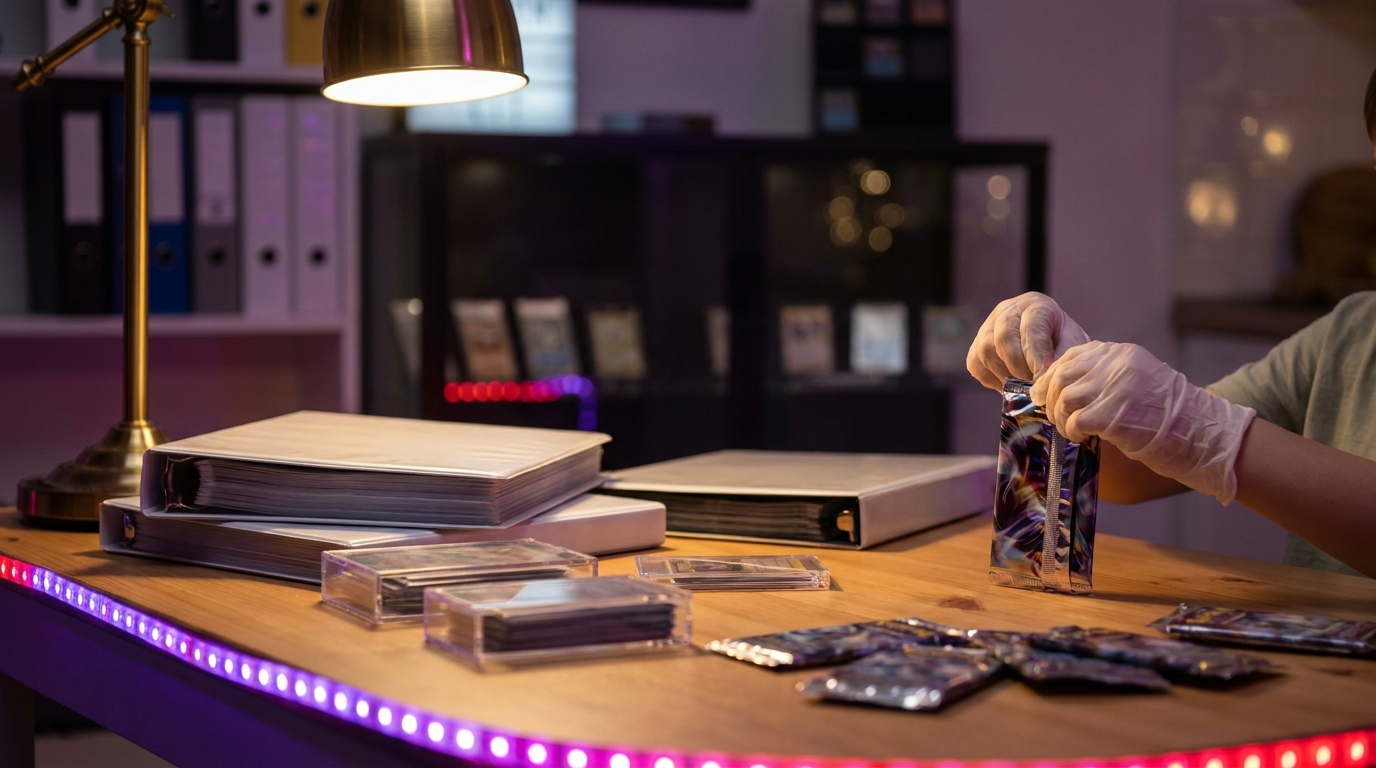
It starts with one pack from a birthday party bag, and three weeks later your child speaks fluent “ex”, “full art” and “chase card”, and you’re being begged for products you can’t pronounce at prices you don’t believe. Welcome — Pokémon cards for kids are a genuine phenomenon, and this guide is the crash course we wish every parent got handed at the till.
We’re a specialist card shop, so yes, we sell this stuff — but we’re also collectors who started as card-obsessed kids, and most of what follows is about spending less, not more. Here’s what’s worth buying, what to skip, and how to keep playground trading from ending in tears.
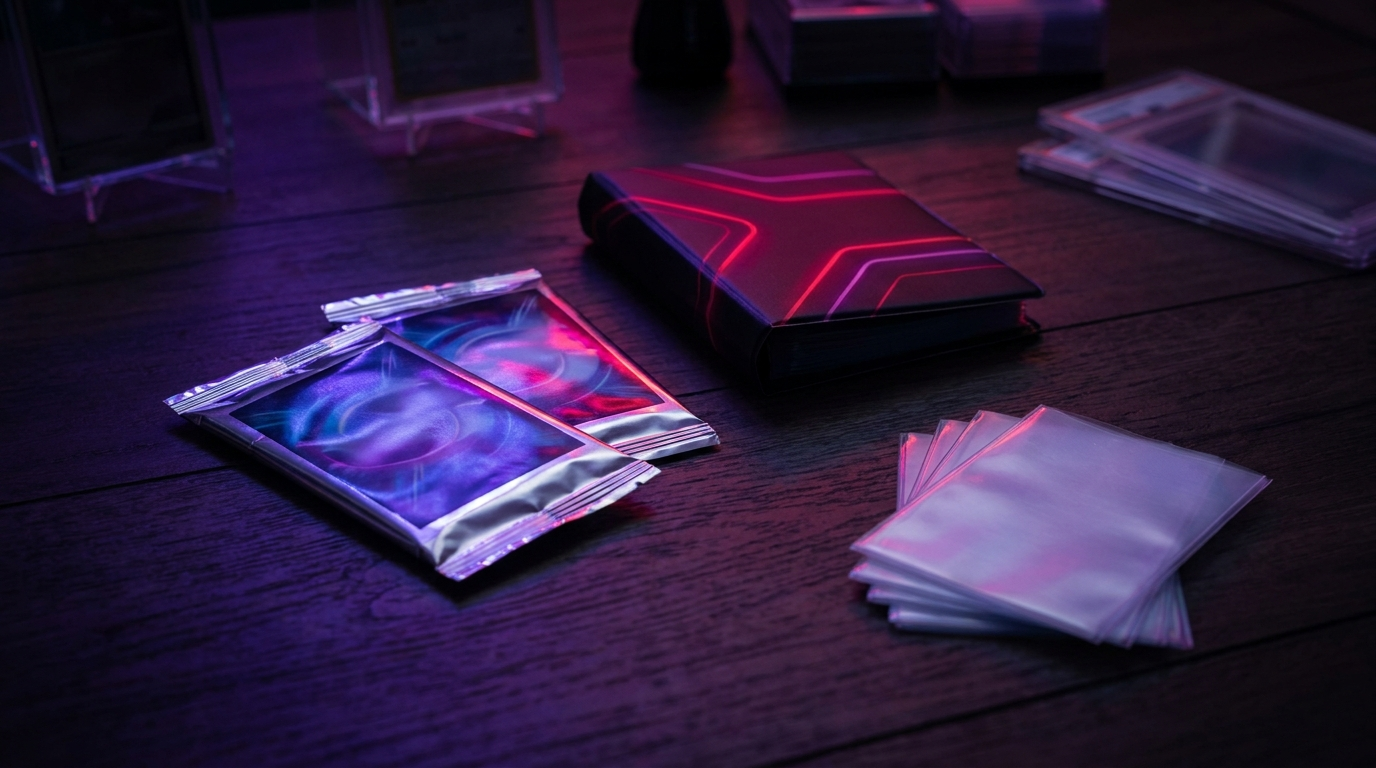
The Pokémon Trading Card Game has been running since the late 1990s — the same cards, more or less, that today’s parents collected — and it’s designed to be collected, played and traded all at once. Kids love it for solid reasons: the art is genuinely great, the rarity ladder makes every pack a tiny treasure hunt, and cards are social currency in a way video games aren’t. Swapping cards at break time is the point, not a side effect.
It also helps to know the obsession usually follows a pattern: a collecting-mad first phase (everything is amazing, quantity is king), then either the game itself (learning to actually play, which is a genuinely good strategy game), or the collector’s path (rarities, sets, favourite Pokémon). None of these phases need much money — they need packs to open occasionally, someone to trade with, and a parent who doesn’t accidentally recycle the collection.
It’s also one of the healthier obsessions on offer: it gets kids reading, doing mental maths, negotiating and organising things obsessively. The official Pokémon parents’ guide covers the wider franchise; for the cards specifically, everything you need to referee is below.
The golden rule: young kids need volume, not value. A seven-year-old gets the same joy from twenty commons as from one £50 chase card — often more, because the commons can be safely carried, traded and played with. So:
You don’t need archival-grade storage for a school-bag collection, but a few habits save heartbreak (and money) later:
If the collection graduates into something serious, our full guide on how to store Pokémon cards covers the proper kit — but a tin and a £5 binder honestly cover the first year or two.
Collector’s tipWrite your child’s name inside the lid of the trader tin, never on the cards themselves. Tins get left on lunch tables and picked up by accident constantly, and a named tin comes home — whereas a pen mark on a card wipes out its value and starts an argument at the next trade.
Watch outThe number one cause of ruined kids’ cards isn’t playground roughness, it’s the washing machine. Pockets get checked for tissues, never for a holographic Charizard. The tin rule exists for a reason.
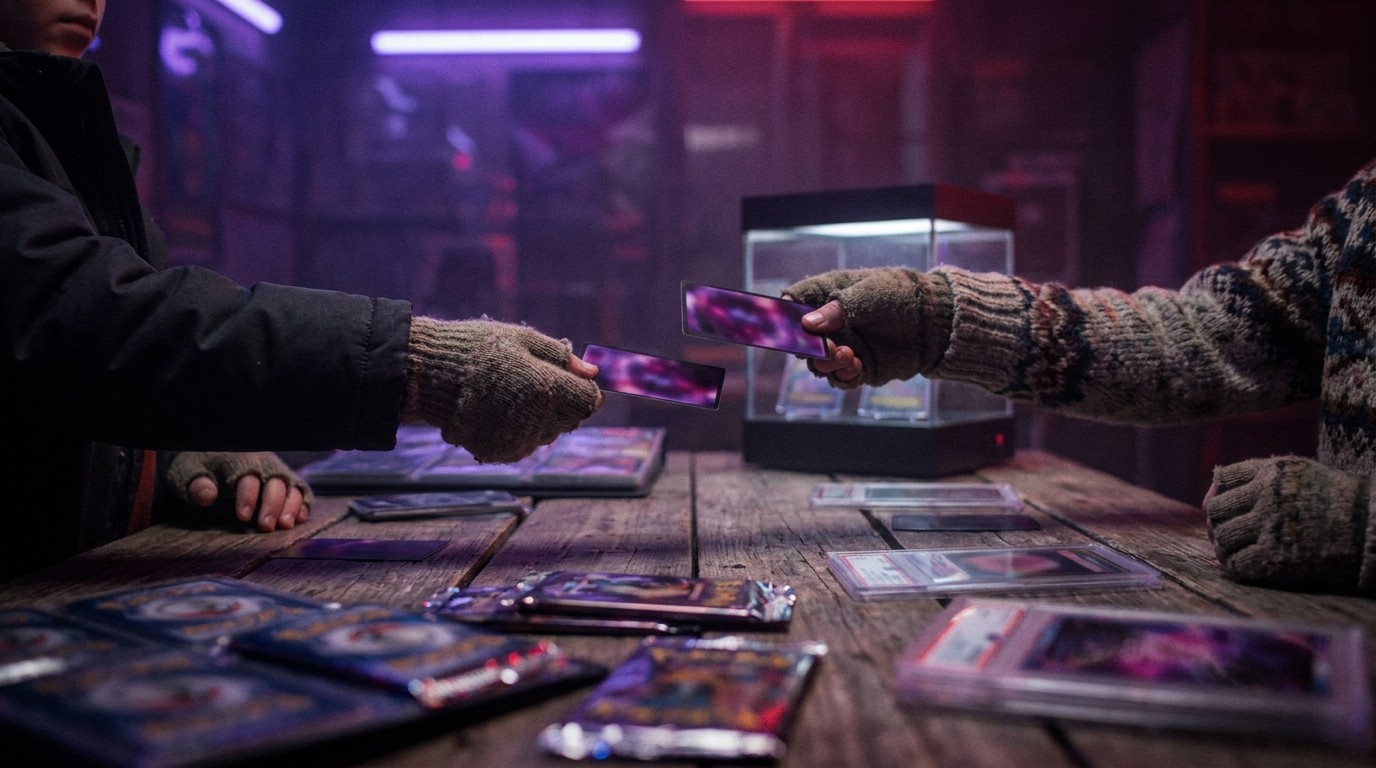
Trading is the best bit of the hobby and the source of every tearful car journey home. A few house rules keep it fun:
Screenshot this bit for relatives who ask what to get:
| Budget | What to get | Why it works |
|---|---|---|
| Under £10 | A couple of booster packs, a mini tin, or a sleeve-and-binder starter kit | Instant excitement, and nothing precious to lose in a school bag |
| £10–£25 | A full tin, a battle deck, or a booster bundle | The sweet spot for most kids: packs to open plus something that lasts |
| £25–£50 | An Elite Trainer Box — nine packs plus sleeves, dice and a big promo card | The classic main present, and a genuinely good one thanks to the storage box |
| £50+ | A premium collection box, or (whisper it) a booster box opened a pack a day | Only for properly hooked older kids, and best stretched across a holiday |
Whatever the budget, buy from a proper retailer — supermarket shelves and the official TCG site for current products, or a specialist like our shop — rather than marketplace listings, where fakes aimed squarely at kids are depressingly common.
A note on those fakes, because they’re the biggest genuine hazard here: counterfeit “Pokémon” cards sold in bulk lots — 100 cards for a few pounds, suspiciously shiny, often with misspelt names and wrong-feeling card stock — are everywhere on marketplace sites and at market stalls. Kids usually can’t tell; classmates sometimes trade them in good faith. If a deal looks impossibly generous, it’s fake. The simple defence is to buy from real shops and teach your child that genuine cards come ten to a pack, not a hundred to a bag.
Around five or six for collecting and trading, and roughly seven or eight for playing the game itself. Younger children enjoy the cards just as much — they simply need cheap ones they can handle freely.
A couple of boosters or a tin. Tins give packs to open plus a metal box to keep everything in, which solves the storage problem on day one.
Usually not. Genuine cards come ten to a pack, so huge, suspiciously shiny bundles sold cheaply on marketplace sites are the classic counterfeit aimed squarely at children.
Almost certainly not much, and that is fine. The overwhelming majority of cards are worth pennies, and the few worth real money need grading fees and months of adult admin to realise.
The trader tin rule: only cards from the trader tin can be swapped, keeper-binder cards stay at home, and any trade involving a favourite waits until the next day.
Eventually they’ll see a YouTuber pull a card “worth £500” and ask whether their binder is a pension. Gentle honesty works best: almost all cards are worth pennies, a few are worth real money, and the expensive slabs online involve fees, posting cards away for months and a lot of adult admin. If they have a genuinely valuable pull — it happens! — sleeve it, pop it somewhere safe and let it be a marvel rather than a market position. The moment collecting becomes about money, the fun drains out fast, for kids especially.
You’ve got this. Buy small, sleeve the favourites, enforce the trader tin, and enjoy the fact your kid is obsessed with something you can actually join in with. Anything we haven’t covered is probably in our FAQ — and if you’re ever unsure what’s right for their age and budget, ask us; talking parents out of overspending is a service we provide free of charge.
UK card shows explained: how the circuit works, what to expect at your first event, haggling etiquette and how to spot good deals. Meet the hobby.
Pokémon card trading is the best free fun in the hobby — until a bad trade stings. Value trades fairly, avoid scams online and trade with confidence.

Are Pokémon tins worth buying? We break down the tin line-up, mini tins vs full tins, the value maths and when a tin is genuinely the right buy.