
UK Card Shows & Events: Where Collectors Actually Meet
UK card shows explained: how the circuit works, what to expect at your first event, haggling etiquette and how to spot good deals. Meet the hobby.

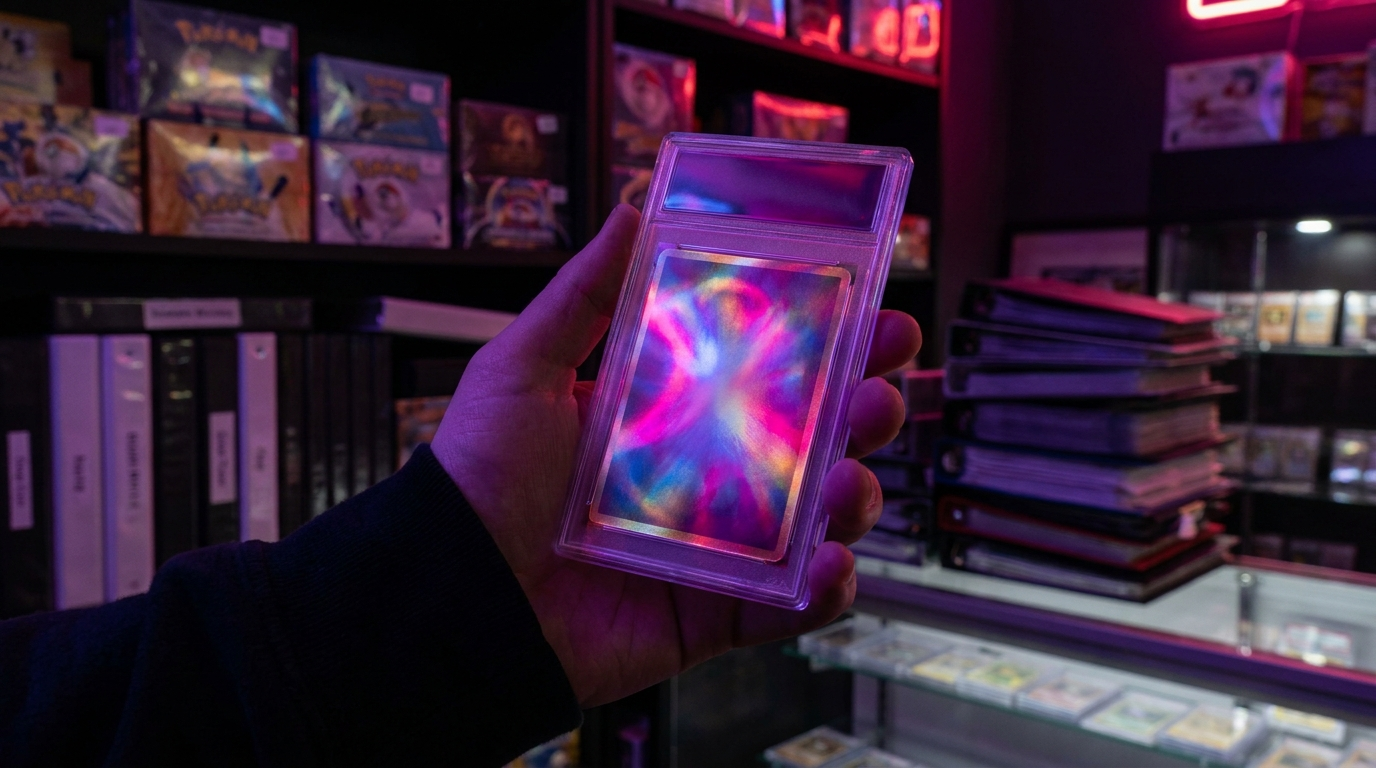
If you have been collecting for any length of time, you will eventually look at your best pull and wonder whether it deserves more than a toploader. Learning how to grade Pokémon cards — what the process actually involves, which company to trust and what it genuinely costs from the UK — is one of the most useful skills a collector can pick up, and one of the easiest to get wrong.
The problem is that most grading advice online is written for American collectors. Shipping, customs, insurance and turnaround times all look very different from this side of the Atlantic, and choosing the wrong route can quietly turn a £15 grading fee into a £60-per-card headache.
This guide covers the whole journey: what grading actually is, how the 1–10 scale works, how PSA, ACE and Beckett compare for UK collectors in 2026, and a step-by-step walkthrough of getting your cards from binder to slab and safely back again.

Card grading is a professional, third-party assessment of two things: whether your card is authentic, and what condition it is in. A grader examines the card under magnification and strong light, assigns it a numerical grade, then seals it inside a tamper-evident plastic case — the slab — with a label showing the card, the grade and a unique certification number.
That certification number matters more than people realise. Anyone can look it up on the grading company’s database to verify the slab is genuine, and the companies publish population reports showing exactly how many copies of each card they have graded at each level. A card that is one of only a handful in top grade is a very different proposition to one with thousands.
Collectors grade for four main reasons:
What grading is not is a magic value machine. A common card in a slab is still a common card, and grading fees are the same whether the card is worth £5 or £5,000 — which is why the maths matters so much later in this guide.
The slab also changes how a card sells, not just for how much. Graded cards trade sight-unseen across borders because the buyer trusts the label rather than the seller’s photographs; raw cards of any value invariably attract condition haggling. That liquidity is a big part of what you are paying for, and it is why graded examples of popular cards often sell within days while raw copies of the same card can sit listed for weeks.
Every major company uses a 1–10 scale, with 10 as the best. The grader weighs up four things: centering (is the artwork evenly framed by the borders?), corners (sharp or softened?), edges (clean or whitened?) and surface (scratches, print lines, dents, holo wear).
Roughly, the scale breaks down like this:
Beckett adds half-grades and sub-grades for each category, and its perfect Black Label 10 is famously hard to achieve. The gap in value between a 9 and a 10 is often the difference between doubling your money and losing it, so it pays to be brutally honest about condition before you submit — our card condition guide walks through how to inspect a card the way a grader would.
Two practical notes on the scale. First, graders are strict in ways that surprise first-timers: a card that looks perfect to the naked eye can come back an 8 for centering you never measured, or a surface mark you needed a loupe to see. Second, the scale is not linear in value terms — prices typically step up gently from 7 to 8 to 9, then leap at 10. Realistic grade prediction, not hope, is the submitter’s core skill, and it is a skill you build by inspecting your own cards ruthlessly before anyone else does.
PSA is the market leader by a distance. Its slabs are the most recognised worldwide, its population report is the deepest, and PSA-graded cards typically command the strongest resale prices. The trade-off for UK collectors is that PSA is US-based, so submissions involve international shipping, longer waits and more cost unless you use a UK-based intermediary.
ACE Grading is the home-grown option — a UK company that has grown rapidly with collectors here. Being domestic means no international shipping, no customs anxiety, lower postage costs and generally quicker turnaround. ACE slabs have built a solid reputation and UK buyers increasingly accept them, though on the open market PSA still tends to carry a resale premium.
Beckett (BGS) sits somewhere between: long-established, respected for its sub-grades and the prestige of the Black Label, but with a smaller footprint in the Pokémon world these days and the same international logistics as PSA for UK submitters.
| Grader | Typical fee per card | Turnaround | Best for |
|---|---|---|---|
| PSA | £20–£30 plus insured postage both ways | Slowest — US round trip | Cards you intend to sell |
| ACE Grading | £12–£20 at bulk tiers | Fastest — UK domestic | Collection pieces and budget submissions |
| Beckett (BGS) | US pricing plus insured postage both ways | Slowest — US round trip | Sub-grades and Black Label chasers |
Our honest steer: if the card is being graded to sell, PSA’s premium usually justifies the extra hassle. If you are grading for your own collection, for protection, or working to a budget, ACE is a genuinely good UK answer. For a deeper cost comparison of the US route, see our PSA grading UK guide.

Here is the process from start to finish:
The errors we see most often: submitting cards without inspecting them under proper light first (hope is not a grading strategy); shipping in toploaders when the company asks for card savers; under-declaring value to trim fees, which backfires badly if an insurance claim is ever needed; sending one card on its own and paying single-card logistics for it; and aggressively cleaning cards before submission, creating the very surface marks the grader will then find. Every one of these is avoidable with ten minutes of preparation.
Collector’s tipPhotograph every card, front and back, before it leaves your hands. If anything goes wrong in transit, dated photos make insurance claims far less painful.
Prices change, so treat these as ballpark figures at the time of writing rather than gospel. ACE’s standard tiers typically work out somewhere around £12–£20 per card for bulk-level submissions, with faster tiers costing more. PSA’s economy-level services generally start around the equivalent of £20–£30 per card before you add international shipping both ways, insurance and any handling fees on the return leg.
The hidden costs are the ones that sting: insured international postage can add £30–£60 to a submission, and returned parcels occasionally attract courier brokerage or handling charges even though your own cards are coming home. This is why many UK collectors either batch dozens of cards into a single PSA submission to spread the fixed costs, use a UK-based group submission service, or simply keep the whole process domestic with ACE.
Watch outUnder-declaring a card’s value to slip into a cheaper service tier is the costliest false economy in grading. The declared value is what your insurance pays out if the parcel goes missing, and grading companies can re-tier or reject a submission they believe has been under-declared — leaving your cards sitting in a queue until you pay the difference.
As a rule, a single-card PSA submission from the UK rarely makes financial sense. Ten cards in one box usually does.
ACE, being domestic, is the quickest route because there is no international leg at either end. PSA and Beckett submissions have to cross the Atlantic twice on top of the grading queue itself, so plan for months rather than weeks and check current service-level estimates before you commit.
The grading itself is well regarded and UK buyers increasingly accept ACE slabs without question. The difference is resale reach: PSA is recognised globally and generally commands a premium on the open market, which matters if you are grading to sell rather than to keep.
You can grade any card, but a played card will come back in the lower half of the scale and the fee is identical to grading a mint one. Unless the card is vintage, scarce or personally meaningful, the grade rarely justifies the cost.
A gentle wipe with a dry microfibre cloth to lift dust is all that is safe. Anything more aggressive creates exactly the surface marks the grader is looking for, and cleaning damage cannot be undone once it is on the card.
A slab from a reputable company is strong evidence, but verify it yourself: every slab carries a certification number you can look up on the grader’s own database. Counterfeit slabs exist, and checking the number takes seconds.
Here is the honest filter we suggest. Grade a card when at least one of these is true: it is worth several times the all-in grading cost raw; it is a strong candidate for a 9 or 10 after a proper inspection; it is vintage or low-population and benefits from authentication; or it means enough to you personally that protection and presentation justify the fee on their own. Sentimental grading is a perfectly valid choice — just make it knowingly.
Skip grading when the card is modern, common and mid-value, when the condition honestly is not there, or when you would be grading purely because everyone on social media seems to be. A £20 card in a £25 slab is still a £20 card.
The bottom line: grading is a brilliant tool used selectively and an expensive habit used indiscriminately. Start with one small, well-chosen submission, learn the process, and build from there. If you want our set-by-set thoughts on which modern cards are worth slabbing as new releases land, join the TCG Smiths mailing list — we are a UK shop run by collectors, and we would rather tell you not to grade a card than watch you waste the fee.
UK card shows explained: how the circuit works, what to expect at your first event, haggling etiquette and how to spot good deals. Meet the hobby.

Pokémon card trading is the best free fun in the hobby — until a bad trade stings. Value trades fairly, avoid scams online and trade with confidence.

Are Pokémon tins worth buying? We break down the tin line-up, mini tins vs full tins, the value maths and when a tin is genuinely the right buy.