
UK Card Shows & Events: Where Collectors Actually Meet
UK card shows explained: how the circuit works, what to expect at your first event, haggling etiquette and how to spot good deals. Meet the hobby.

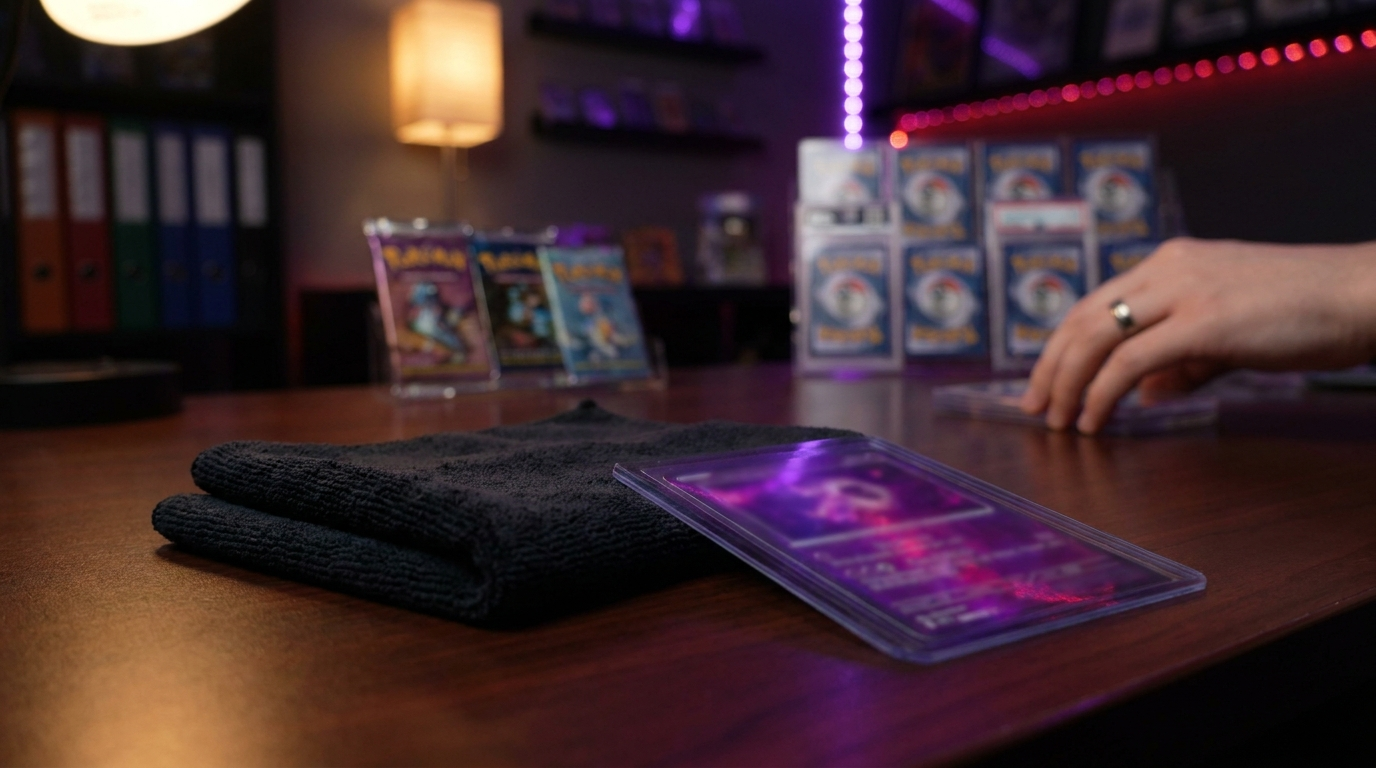
Sooner or later every collector pulls a beautiful card with a fingerprint on the holofoil, or buys a vintage classic that has picked up decades of shelf grime, and the same question follows: should you clean it? Knowing how to clean Pokémon cards safely — and, more importantly, when not to try — is one of those skills that costs nothing to learn and can save you from wrecking a genuinely valuable card in under thirty seconds.
Here is the uncomfortable truth up front: cards are layered paper with delicate ink and foil finishes, and almost every cleaning method people suggest online does more harm than good. This guide covers the little that is safe, the long list of things that are not, and how to think about cleaning if grading is your end goal.
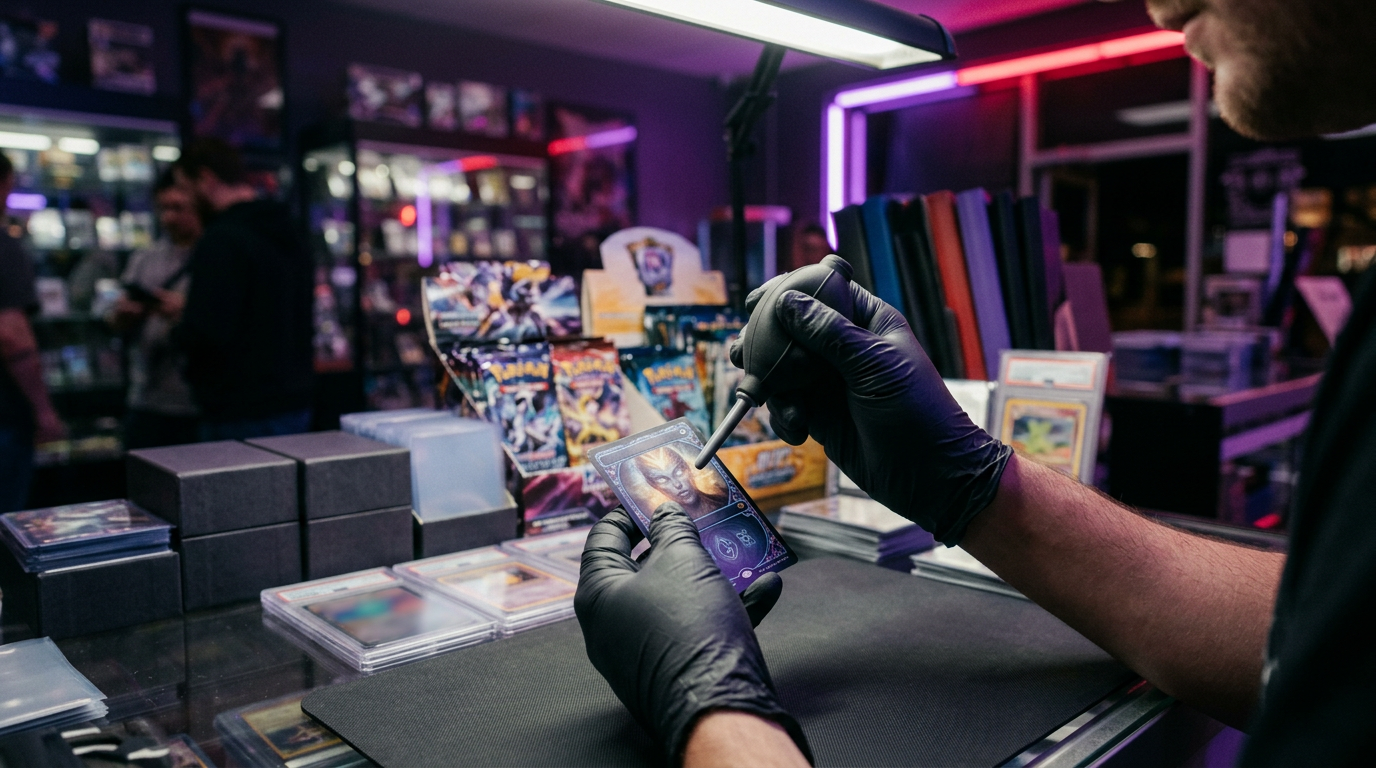
A Pokémon card is a laminated sandwich of paper stock, ink and (on holos) a thin foil layer, none of which was designed to be scrubbed, soaked or polished. Every intervention carries risk, and the risk is asymmetric: careful cleaning might improve a card’s appearance slightly, while careless cleaning can destroy its surface entirely. Surface is one of the four things graders assess, and it is the easiest one to ruin at home.
So the golden rule is simple, and most advice on how to clean Pokémon cards gets it backwards: do the minimum, and when in doubt, do nothing. A card with a light fingerprint is a near-mint card. A card with a polished-out fingerprint and a haze of micro-scratches across the holofoil is a damaged one. The best cleaning routine is prevention — clean dry hands, handling cards by the edges, and getting them into sleeves before they need any of this.
There are only a few interventions we would ever perform on a card, and all of them are gentle:
That is the whole list. Notice there is no liquid anywhere on it.
For balance, here is the hall of shame — methods that circulate in the hobby and reliably ruin cards:
Watch outThere is a hard line between cleaning a card and altering one. Trimming, re-colouring or pressing changes the card itself, and once it is done there is no way back: the card is labelled Altered rather than graded, and selling it on without disclosing that is fraud rather than a mistake.
Collector’s tipBefore doing anything to a card, examine it under a bright light at a low angle and decide what the mark actually is. Fingerprint on the gloss? A dry cloth helps. Scratch through the foil? Nothing helps — it is part of the card now.
A special word on pack-fresh cards, because this catches people out: cards can come out of a factory-sealed pack with print lines, holo scratches, edge whitening or silvering already present. These are production flaws, not dirt, and no cleaning method removes them. If a card emerges from the pack imperfect, that is simply the copy you pulled — which is one more reason the top grades are rarer than people expect.
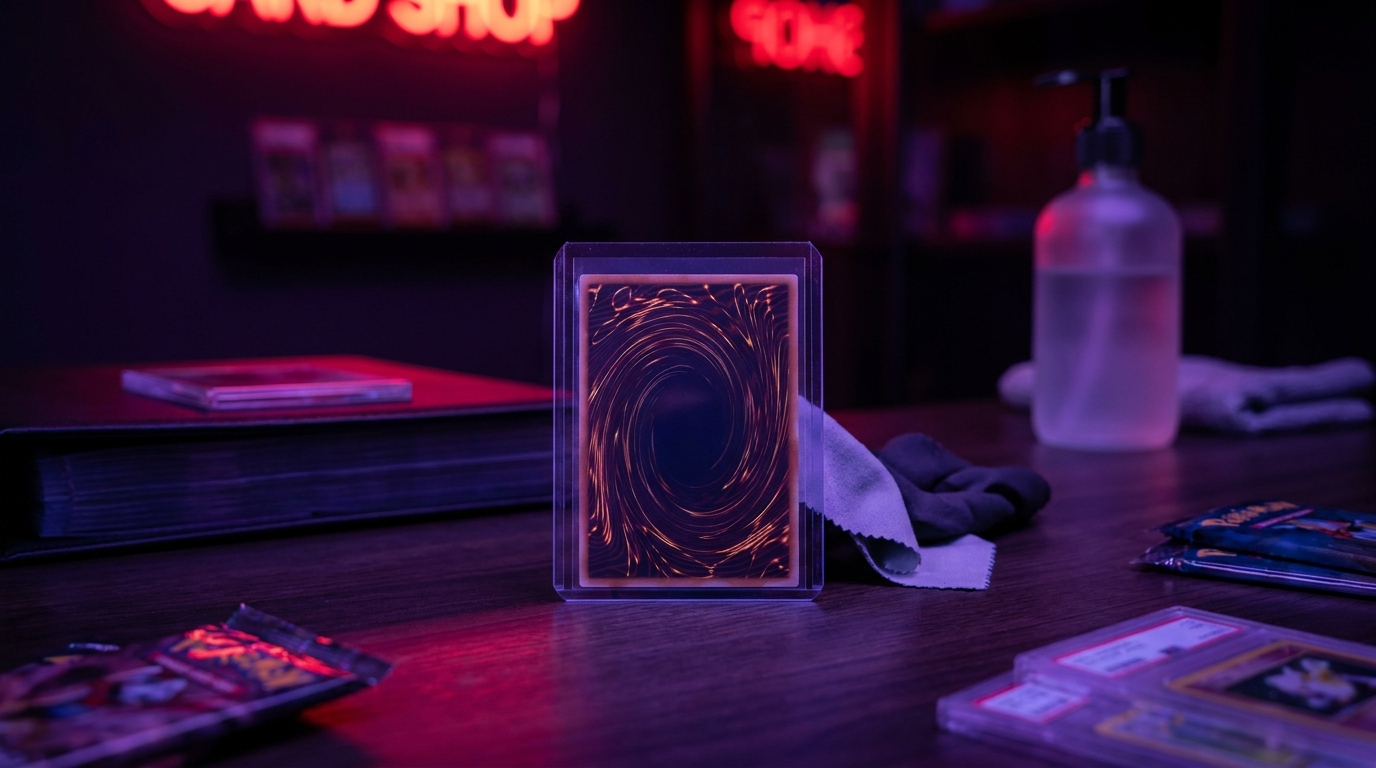
Grading is where knowing how to clean Pokémon cards — and how not to — has real money attached. Graders at PSA and UK-based ACE Grading assess centring, corners, edges and surface — and a fingerprint or speck of dust genuinely can be the difference at the top grades, where standards are unforgiving. Sensible prep looks like this: work on a clean surface, use the dry microfibre wipe described above, blow off any dust, then get the card straight into a sleeve and card saver so it stays that way.
What you should never do is gamble on aggressive cleaning to chase a higher grade. Graders inspect surfaces under strong angled light and magnification; polished patches, eraser dullness and solvent haze are all familiar sights to them, and alteration suspicions can tank a submission entirely. If you are weighing up whether a card justifies grading fees in the first place, our breakdown of whether grading is worth it runs the actual numbers.
Collector’s tipDo your gentle prep just before packaging the submission, not weeks in advance, so the card goes from cloth to sleeve to card saver in one sitting and never gets the chance to pick up a fresh fingerprint on the way.
Finally, learn to recognise the marks that no amount of care will fix: edge whitening, creases, indentations, scratches through the holofoil, ink flaking, water damage. These are structural, not superficial. A cloth cannot put fibres back on a corner, and anything that claims to is alteration. If a card you own has these, the honest move is to accept its condition, sleeve it and enjoy it for what it is — ‘played but loved’ describes most of the best collections we have ever seen. Understanding exactly how these flaws affect price is covered in our card condition guide.
No. Moisture swells the paper stock, can lift the layers at the edges and often leaves permanent tide marks once it dries. That includes damp cloths, breath-fogging and baby wipes.
Lay the card flat on a clean surface and wipe once in a single direction with a dry microfibre cloth, using barely any pressure. If it does not lift after two or three gentle passes, stop and leave it.
Only marginally, and only by removing loose dust or a light fingerprint that would otherwise cost you at the very top grades. Anything more aggressive risks damaging the surface and inviting alteration suspicion, which is far more costly than the mark you were trying to remove.
Never. An eraser is effectively sandpaper at card scale, and the dull patch it leaves is obvious under angled light. Graders recognise it immediately.
Usually not. Print lines, holo scratches, silvering and edge whitening are production flaws baked into the card, not dirt sitting on top of it, so no cleaning method will shift them.
The takeaway: a dry microfibre cloth, a dust blower and restraint are the only cleaning tools a collector needs — everything else risks turning a minor flaw into a permanent one. Prevention beats cure every time, so if your collection is still living unsleeved in a shoebox, start with proper protection from our accessories range and your future self will thank you.
UK card shows explained: how the circuit works, what to expect at your first event, haggling etiquette and how to spot good deals. Meet the hobby.
Pokémon card trading is the best free fun in the hobby — until a bad trade stings. Value trades fairly, avoid scams online and trade with confidence.
Are Pokémon tins worth buying? We break down the tin line-up, mini tins vs full tins, the value maths and when a tin is genuinely the right buy.