
UK Card Shows & Events: Where Collectors Actually Meet
UK card shows explained: how the circuit works, what to expect at your first event, haggling etiquette and how to spot good deals. Meet the hobby.

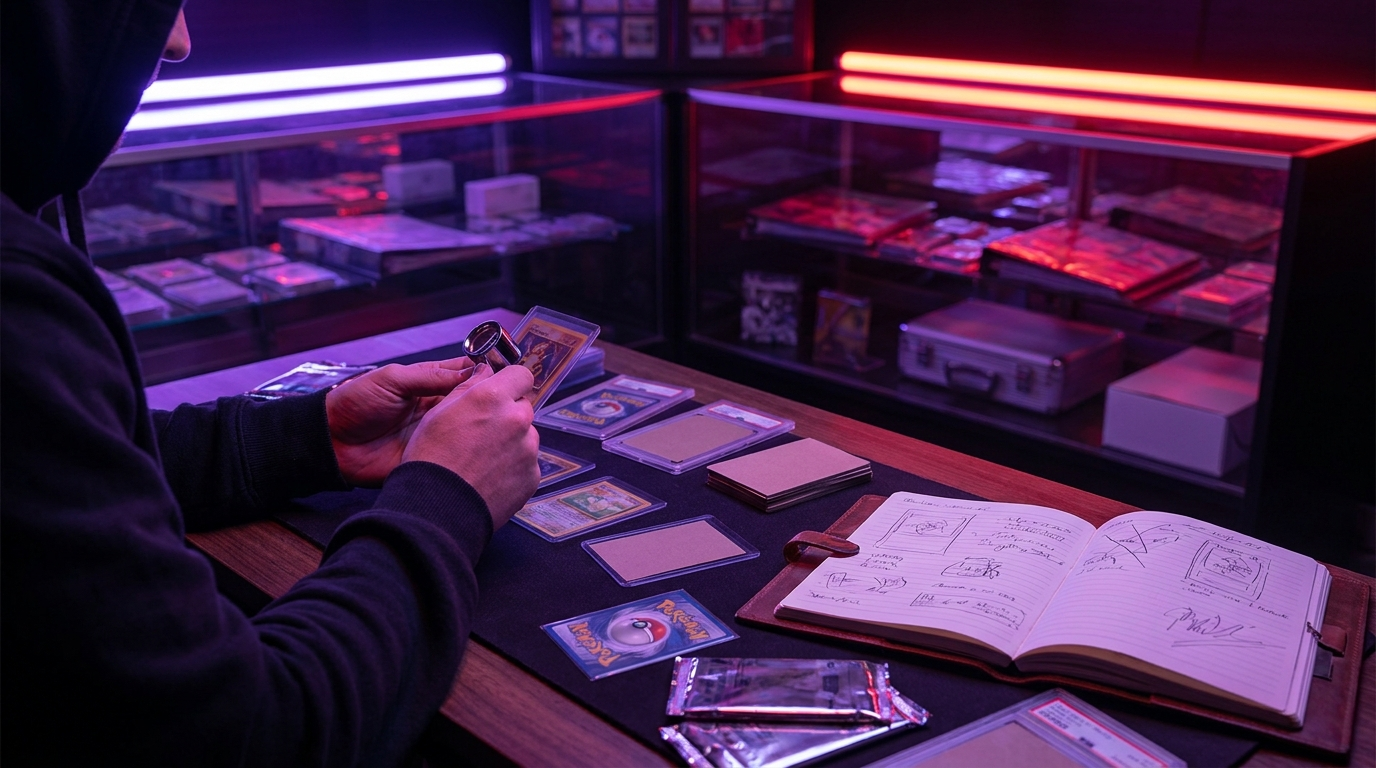
Sooner or later everyone with a shoebox of cards asks the same question — and most people get the answer wrong, because they look in the wrong places. Pokémon card values are not what a hopeful eBay seller lists a card for, and they are not what a five-year-old article says a card sold for once. They are what real buyers are paying, this month, for a card in the condition yours is actually in.
The good news is that finding real values is a learnable, fifteen-minute skill. The card market is unusually transparent: millions of transactions are publicly visible if you know where to look.
This guide covers what actually drives a card’s price, how to look values up properly, why condition changes everything, the graded-versus-raw question, some sleeper cards worth checking your binders for, and when and where to sell.
Almost every price in this hobby comes down to three forces:
Set age matters less than people assume — plenty of 20-year-old cards are worth pennies because supply dwarfs demand. Rarity only pays when somebody wants the card.
Two sources between them answer almost every value question:
eBay sold listings. On eBay, search the exact card — name, set and card number, e.g. ‘Umbreon ex 161/131’ — then filter to Sold items. Asking prices are fantasy; sold prices are the market. Look at the last five to ten sales, ignore outliers, and note the condition and whether each sale was graded or raw.
Market aggregators. TCGplayer shows live market prices across thousands of listings — US-centric, so treat the numbers as a guide to relative value and convert with care, but superb for spotting trends and checking every version of a card in a set.
Three mistakes to avoid: searching the card name without its number (many cards share names across sets — check the set symbol and numbering); trusting price-guide ‘estimated values’ that no buyer actually pays; and valuing from a single sale, which may have been a bidding war or a mistake.
Collector’s tipOnce you have built a good sold-listings search for a card, save it. Checking the same search monthly shows you the trend rather than a snapshot, and a card that has quietly halved over six months looks identical to a healthy one if you only ever glance at it once.
Watch outThe three numbers that mislead sellers most are the asking price on an active listing, the ‘estimated value’ in a price guide nobody buys from, and one spectacular sale from two years ago. All three feel like evidence and none of them is. If you cannot find at least a handful of recent completed sales for the exact card in the exact condition, you do not yet have a valuation.
Five minutes per card sounds slow until you compare it with the cost of mispricing something by £50 in either direction.
Here is the uncomfortable truth about the binder you have had since childhood: played copies of most cards sell for a fraction — often 20–40% — of Near Mint prices, and heavily played copies for less still. The market grades in tiers (Near Mint, Lightly Played, Moderately Played, Heavily Played, Damaged), and buyers pay for the tier, not for sentiment.
Before valuing anything, inspect it honestly under a bright light: edge whitening, corner softness, surface scratches visible at an angle, creases, and centering. Our card condition guide walks through the whole scale with the multipliers laid out. The discipline matters in both directions — undervaluing a genuinely mint card is as costly as overvaluing a played one.
Centering deserves special mention because it is invisible to most casual sellers: a card can be pack-fresh and still have borders noticeably wider on one side, and at the top of the market that alone separates a merely mint card from a Gem Mint candidate. Tilt the card under light for surface scratches, check the edges against a dark background for whitening, and inspect all four corners under magnification if you have it. Sellers who photograph these things properly, incidentally, consistently achieve better prices — condition transparency sells.
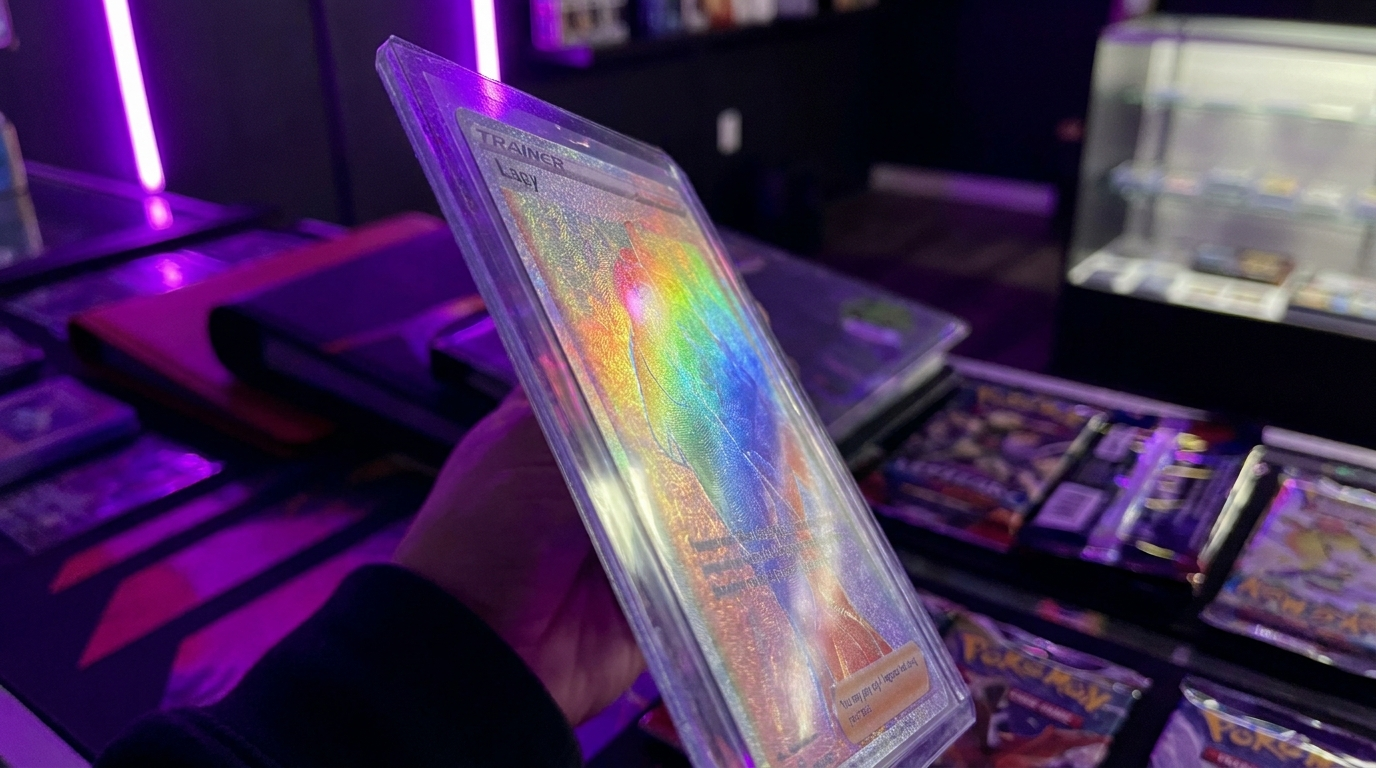
Grading converts an argument about condition into a number on a label, and the market pays for that certainty. A PSA 10 routinely sells for a large multiple of the raw Near Mint price; a 9 for far less than a 10; and grades of 7 or below often sell for little more than raw — sometimes less, once fees are counted. That cliff between 9 and 10 is where grading fortunes are made and lost.
So when you value a raw card, you are really pricing a probability: what would it grade, and what do those grades sell for? If a realistic 9 would not cover the card’s raw price plus fees, leave it raw. We cover the mechanics and costs in our UK grading guide — always check graded sold prices separately from raw ones, because they are effectively different markets.
Population reports add a further wrinkle: a PSA 10 with three thousand existing copies and a PSA 10 with thirty are very different assets, whatever the identical labels suggest. Before paying a large graded premium — or grading in hope of earning one — check how many copies already exist at that grade and what they actually sold for recently, not what they are currently listed at.
Worth a rummage through your bulk:
Identify it exactly — name, set symbol, card number, language and variant — then search eBay sold listings for that precise card and read the last five to ten genuine sales. Cross-check the direction of travel on a market aggregator, and repeat the search with the grade included if the card is slabbed.
Because anyone can list a card at any price, and optimistic listings sit unsold indefinitely while realistic ones disappear. Only completed sales show what a buyer was actually willing to pay, which is why the sold filter is the single most important habit in card valuation.
Often less than people hope, but not nothing. Played copies of most cards sell for roughly 20–40% of Near Mint prices, and heavily played copies for less again. The exceptions are worth checking properly: 1st Edition and shadowless Base Set cards, gold stars, early EX-era cards and genuine misprints all hold value even in imperfect condition.
Only when the maths works. You are pricing a probability: what would the card realistically grade, and what do those grades actually sell for? A 10 commands a large multiple, a 9 far less, and a 7 or below often no more than raw once fees are counted. If a likely 9 would not cover the raw price plus fees, leave it raw.
Occasionally clearing out a personal collection sits in a very different place from trading at volume, and it is worth reading HMRC’s own guidance or speaking to an accountant rather than taking a forum’s word for it. Keeping simple records of what you paid and what you sold for makes that conversation straightforward whenever it happens.
Timing: card prices move with hobby hype cycles — set releases, anniversaries, viral moments. Selling into excitement beats selling into a lull, and panic-selling a dip is the classic regret. There is no need to time perfectly; just avoid selling the week everyone else is.
Where: every venue trades reach against effort, and shops buy at a wholesale margin — fair, given they carry the resale risk. For bulk, selling by the thousand to a shop is almost always smarter than listing individually.
| Venue | Reach | What it costs you | Best for |
|---|---|---|---|
| eBay | The largest buyer pool | 10–15% in fees, plus listing effort per card | Singles where the top price matters most |
| Collector groups and forums | Enthusiasts who know the cards | Low fees, more admin and trust checks | Mid-value cards |
| Local shop or card show | Immediate and in person | A wholesale margin | Hassle-free sales and instant cash |
| Bulk to a shop | Immediate | Priced by the thousand | Bulk you would never list individually |
Whatever the venue, the mechanics of a good sale are identical: an accurate title with set and card number, honest condition photographs of front and back in natural light, tracked postage with the card in a sleeve, toploader and stiff envelope at minimum, and pricing pitched slightly under the recent sold average for a quick sale or at it if you can wait. Factor in the platform’s cut — typically 10–15% once fees and payment processing are counted — before congratulating yourself on a price, and keep records if you sell at volume, since large-scale trading can have tax implications worth understanding.
The takeaway: exact card, sold prices, honest condition, graded and raw checked separately — do those four things and you will value cards better than most sellers on any marketplace. For market notes and set-by-set value commentary as releases land, join the TCG Smiths mailing list; we are collectors first and we call the market as we see it.
UK card shows explained: how the circuit works, what to expect at your first event, haggling etiquette and how to spot good deals. Meet the hobby.

Pokémon card trading is the best free fun in the hobby — until a bad trade stings. Value trades fairly, avoid scams online and trade with confidence.

Are Pokémon tins worth buying? We break down the tin line-up, mini tins vs full tins, the value maths and when a tin is genuinely the right buy.