
UK Card Shows & Events: Where Collectors Actually Meet
UK card shows explained: how the circuit works, what to expect at your first event, haggling etiquette and how to spot good deals. Meet the hobby.


Every few months the cycle repeats: a new set is announced, the hype machine spins up, and suddenly every shop is taking deposits on boxes that will not exist for weeks. If you have ever wondered whether a Pokémon TCG preorder is a smart move or a mug’s game, the honest answer is: it depends on the set, the price and the seller — and knowing how the system works behind the counter makes the call much easier.
We sit on the retail side of this, so consider this the view from inside. Here is why pre-orders exist at all, what ‘allocation’ actually means, how to tell fair pre-order pricing from scalping, when waiting beats committing, and how we run things at TCG Smiths — finishing with a survival guide for release day itself.
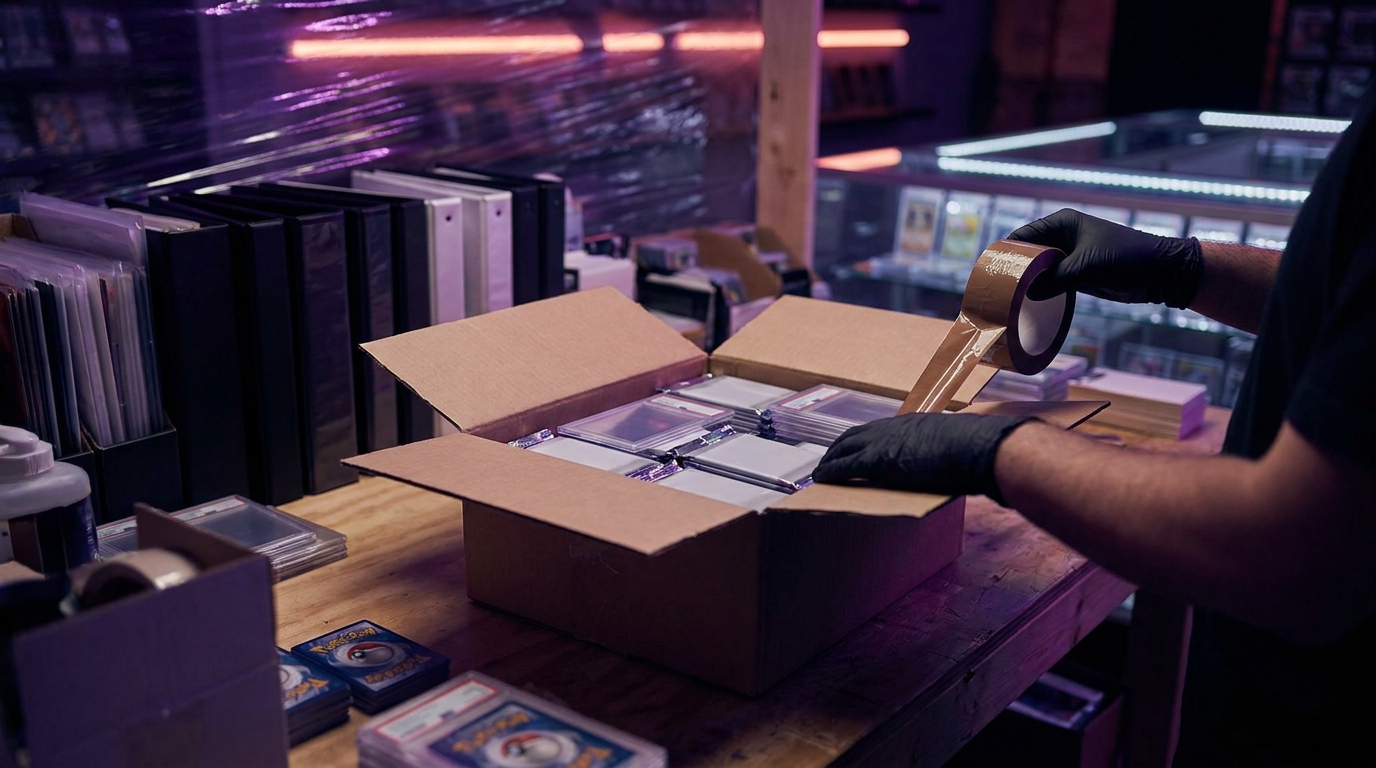
A Pokémon TCG preorder is not just marketing. For shops, pre-orders solve a real problem: sealed product is expensive to stock, and demand for any given set is genuinely hard to predict. Pre-orders tell a shop how much to order from distributors while there is still time to adjust, and they spread the cost of a large stock purchase. For collectors, they solve the opposite problem: guaranteeing a copy of something that might be difficult to find at RRP after launch. When the system works, both sides win — the shop carries less risk, and you skip the release-day scramble.
The system stops working when hype outruns supply, which in this hobby is often. That is where allocation comes in.
Allocation means a shop does not simply order what it wants — distributors divide a limited production run among their accounts, and each shop receives its share, which can be far less than it requested. Hyped sets are frequently allocated, and here is the uncomfortable part: shops often take pre-orders before final allocations are confirmed. A responsible shop pre-sells conservatively against what it is confident of receiving; an irresponsible one sells optimistically and cancels orders later, usually with a mealy-mouthed email and a slow refund.
You cannot see a shop’s allocation, but you can see its behaviour. Shops that cap pre-order quantities per customer, communicate openly about allocation risk, and have a track record of honouring orders are managing the problem properly. Unlimited quantities of a hyped product at a too-good price is the classic sign of a shop selling stock it does not have. Set-by-set supply chatter — which products are heavily allocated, what print runs look like — tends to surface early on community news sites like PokéBeach, and it is worth a skim before committing money.
Allocation also explains a pattern that baffles newcomers: the same product ‘sold out’ at one shop and freely available at another. Distributor relationships, order history and sheer timing all shape who gets what, which is why savvy collectors keep accounts with two or three trusted shops rather than betting everything on one. When a set is tight, breadth is your friend.
Pre-order pricing tells you a lot about a seller. A fair pre-order sits at or near RRP — the manufacturer’s suggested price — because the shop is selling product, not scarcity. At the time of writing, that means roughly £40 to £55 for a typical ETB and around £120 to £160 for most booster boxes, varying by set and product line; you can sanity-check current RRPs against the official listings at pokemon.com. Meaningfully above that before a product has even released is scalping with extra steps.
Collector’s tipOur rule: never pre-order at a premium. The entire point of pre-ordering is securing RRP before the market decides the product is special. Paying the hype price weeks early combines the worst of both worlds — full commitment, zero certainty.
Watch the deposit terms too. Small or refundable deposits are collector-friendly; large non-refundable ones shift all the risk onto you. And a pre-order at a suspiciously deep discount is the same red flag it always is — a seller who may not intend, or be able, to deliver.
Watch outUnlimited quantities of a hyped product, priced below everyone else, is the signature of a shop pre-selling stock it has not been allocated. Pair that with a large non-refundable deposit and you are funding someone else’s gamble months before anyone finds out whether the stock exists.
Finally, pay by a method with buyer protection — a credit card or a protected payment service — for any pre-order of real value. If a seller fails to deliver months down the line, that choice is the difference between a quick chargeback and a long argument.
The decision comes down to a few honest questions. A Pokémon TCG preorder makes sense when the set genuinely matters to you, the product is likely to be constrained — special sets, premium collections and anniversary products have form here — and you have found a fair price from a shop you trust. Waiting is the smarter call for standard expansion sets, which are printed in enormous quantities and almost always remain available at RRP well after launch; recent eras have seen aggressive reprint waves that punished panic-buying handsomely. Check what is actually coming and when in our 2026 release calendar, and remember the collector’s comfort: for mainline sets, missing launch day costs you almost nothing but patience.
| Product type | Pre-order or wait? | Why |
|---|---|---|
| Standard expansion sets | Wait | Printed in enormous quantities and reprinted aggressively |
| Special sets and premium collections | Pre-order at RRP | Restricted product lines, rarely restocked at RRP |
| Anniversary and event products | Pre-order at RRP | Fixed windows and heavy allocation |
| Anything listed above RRP | Neither | You are paying the hype price with none of the certainty |
For transparency, our approach: we price pre-orders at RRP or below it, we only list quantities we are confident of receiving from our distributors, and if an allocation ever comes in short, we honour orders in the order they were placed and refund immediately and in full where we cannot deliver — no store credit sleight of hand. Pre-orders earn loyalty points like any other purchase, and we announce new pre-order windows to our mailing list before they go live to everyone else. The rest of the details live in our FAQ, and current pre-orders sit alongside everything else in the shop.
If you skipped the pre-order and want product on day one, a little preparation goes a long way:
Distributors divide a limited production run between their retail accounts, so a shop receives a share rather than the amount it ordered. It is why the same product can be sold out at one shop and sitting in stock at another.
It depends entirely on the shop, so read the terms before paying. Small or fully refundable deposits are the collector-friendly model; large non-refundable ones shift all the risk onto you.
Usually not. Mainline sets are printed in huge quantities and reprinted when demand holds, so they stay available at RRP well after launch. Save pre-ordering for genuinely constrained products.
Almost always because the shop sold more units than its allocation delivered. A shop handling it properly honours orders in the sequence they were placed and refunds the rest in full, immediately, rather than offering store credit.
A fair pre-order at RRP usually is, because release-day marketplace prices are hype at its peak. The exception is mainline sets, where simply waiting a few weeks gets you the same RRP without the commitment.
The takeaway: pre-order the special stuff at RRP from shops that behave like partners, wait patiently on mainline sets, and never pay a premium for a promise. If you want pre-order windows, allocation news and restock alerts as they happen — rather than after everything is gone — join the mailing list and we will keep you a step ahead of the cycle.
UK card shows explained: how the circuit works, what to expect at your first event, haggling etiquette and how to spot good deals. Meet the hobby.

Pokémon card trading is the best free fun in the hobby — until a bad trade stings. Value trades fairly, avoid scams online and trade with confidence.

Are Pokémon tins worth buying? We break down the tin line-up, mini tins vs full tins, the value maths and when a tin is genuinely the right buy.