
UK Card Shows & Events: Where Collectors Actually Meet
UK card shows explained: how the circuit works, what to expect at your first event, haggling etiquette and how to spot good deals. Meet the hobby.

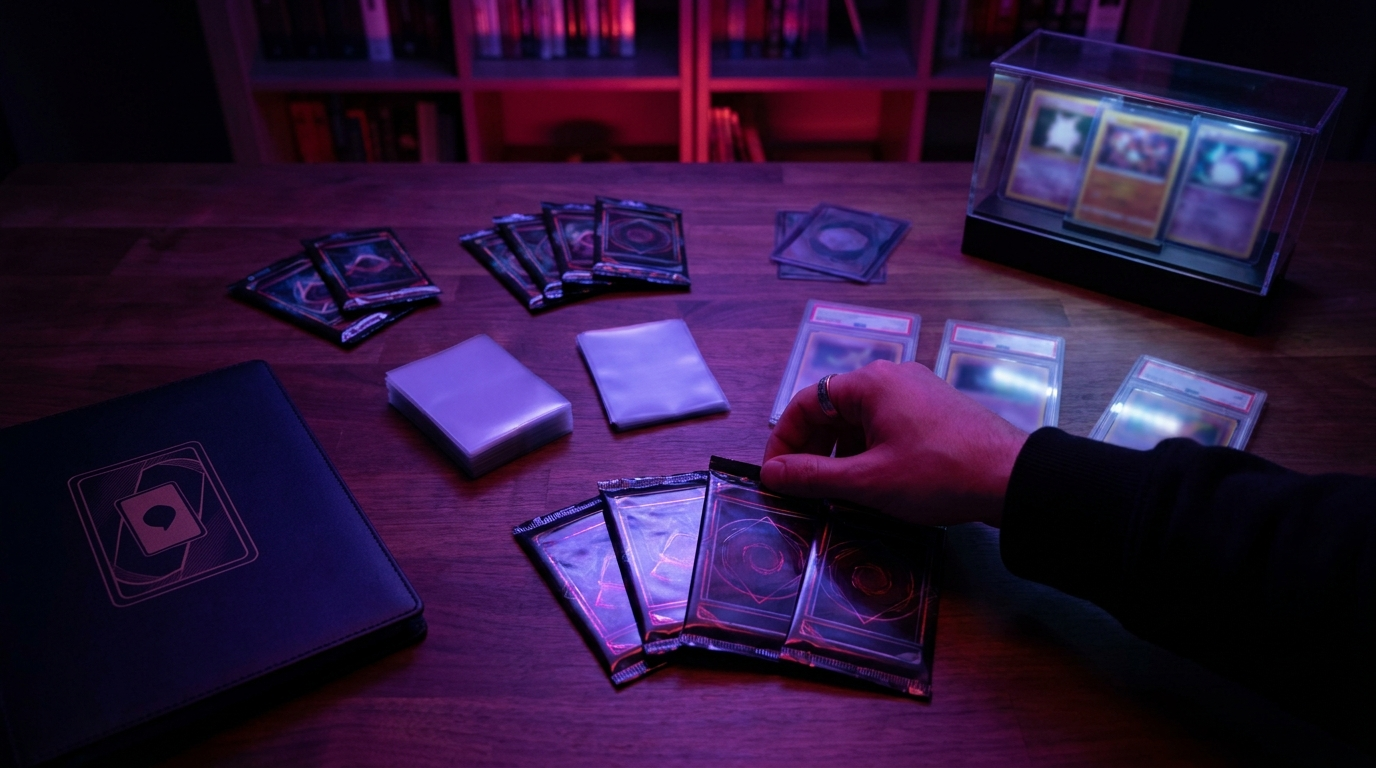
So you want to know how to start collecting Pokémon cards — maybe Pocket pulled you in, maybe your kids did, or maybe a loft clear-out reignited something that never really went away. Welcome. This hobby is having its biggest moment in decades, and 2026 is a genuinely great time to join it.
It’s also an easy time to waste money. Between hype pricing, scalpers, fake cards and an alphabet soup of rarities, beginners face more traps than we did opening Base Set packs in the playground. The good news: avoiding nearly all of them takes about twenty minutes of reading.
This is that reading. No fluff, no upselling — just the advice we give across the counter every week: how to pick your lane, what to buy first (and never buy first), how modern rarity works, the supplies that matter, and how to learn the market before it teaches you an expensive lesson.
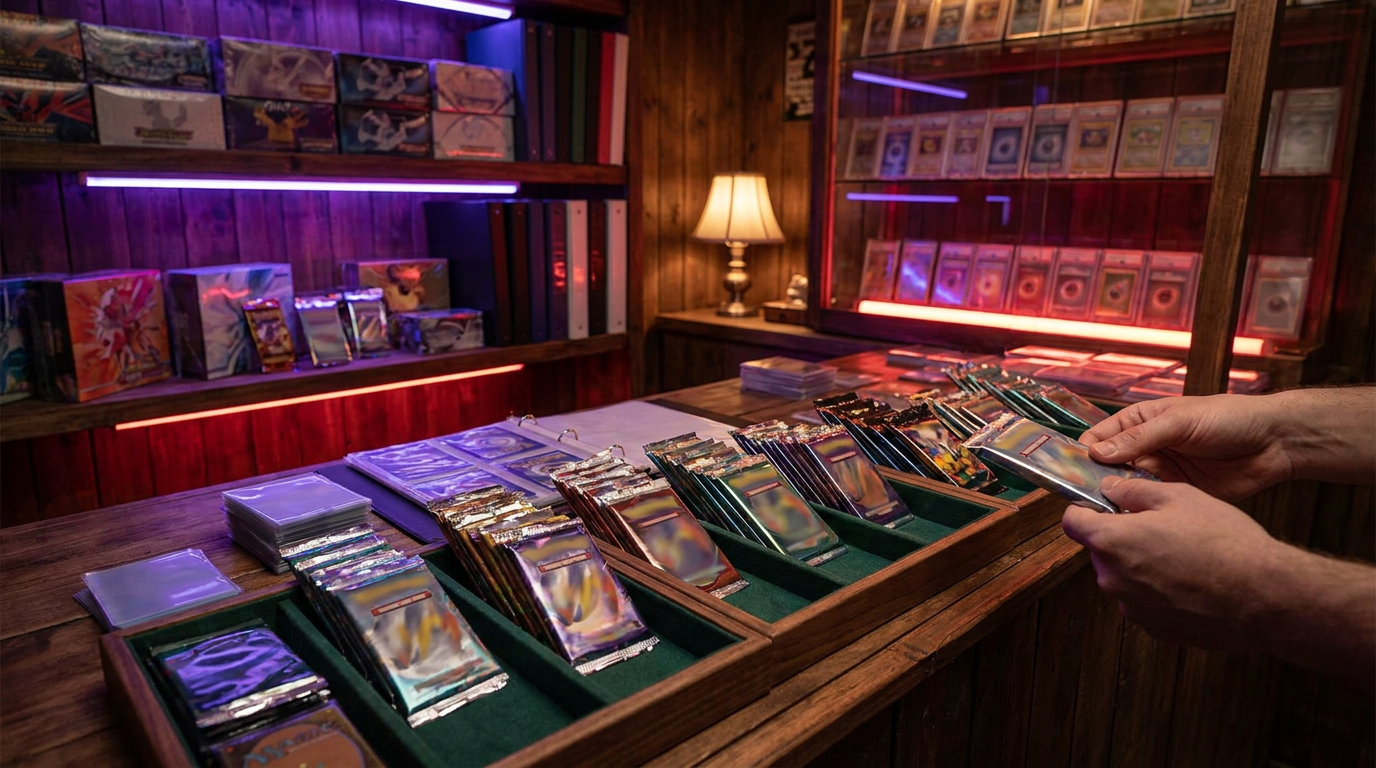
Before spending a pound, answer one question: what do you actually want out of this? There’s no wrong answer, but each one points at a different way to spend:
You’ll drift between lanes over time — everyone does. But starting with one keeps your first purchases coherent and your budget pointed somewhere.
Our standard recommendation for a first buy is boring and correct: a couple of loose packs from a current set, plus basic protection. Total damage, £15 or so, and you’ll learn more from opening them than from any article — including this one.
If you want a proper first product, an Elite Trainer Box is the classic gateway: nine packs plus sleeves, dice and a storage box that’s genuinely useful for a starting collection. From there, singles — individual cards bought directly — are the smartest money in the hobby and the fastest way to own cards you actually want. It surprises beginners, but the maths is blunt: the pack odds on any specific card are long, so if there’s a particular card you’re dreaming about, buying it outright almost always costs a fraction of trying to pull it. Packs are for fun and surprise; singles are for actually getting the card. The happiest collectors budget for both and never confuse the two.
What to avoid in month one:
Watch outAnything sold to you as an investment is a sales pitch, not advice. Mystery bundles, "guaranteed hit" lots and vintage packs from marketplace sellers target beginners specifically, because that is where knowledge is lowest and enthusiasm is highest.
Modern rarity confuses everyone at first, so here’s the practical version. Every card carries a rarity symbol, and the current ladder runs roughly: common → uncommon → rare → double rare (ex cards) → ultra rare (full arts) → Illustration Rare → Special Illustration Rare → hyper rare (golds). On top of that, most cards also exist as reverse holos, and recent sets have added special foil patterns like Poké Ball and Master Ball reverses.
Three beginner-useful truths about all this. First, Illustration Rares and Special Illustration Rares are what the hobby chases now — art drives value in the modern game far more than raw rarity tier. Second, most packs contain nothing of significant monetary value, and that’s normal, not bad luck. Third, you don’t need to memorise any of it — rarity is printed on the card, and set lists on the official site at pokemon.com or community databases will tell you what you’ve pulled. Our FAQ covers the jargon that trips new collectors most often.
One vintage-versus-modern wrinkle worth knowing early: older cards (roughly pre-2003) use a completely different rarity system, where the holographic rare was the top of the tree. If a relative hands you a folder of 1999 cards, don’t judge them by modern standards — and don’t let anyone else judge them for you at a car boot sale. When in doubt, look the set up before you make any decisions.
Protection is the least glamorous and most important purchase you’ll make. The full starter kit costs less than one hyped ETB:
That’s it — everything else is optional. We stock all of the above in our accessories range — and when your collection grows, refinements like double sleeving and perfect-fit inners can come later.
Collector’s tipSleeve every good pull the moment it leaves the pack. Penny sleeves work out at roughly two pence each, and the difference between a sleeved and an unsleeved chase card at resale is routinely tens of pounds — it is the highest return on any spending in this hobby.
Just as important is what not to buy yet: magnetic display cases, grading submissions, premium sorting trays, UV-protected frames. All have their place, but that place is later, once you know what your collection is actually becoming. Beginners who blow the budget on deluxe storage for twelve cards always end up rebuying the basics anyway.
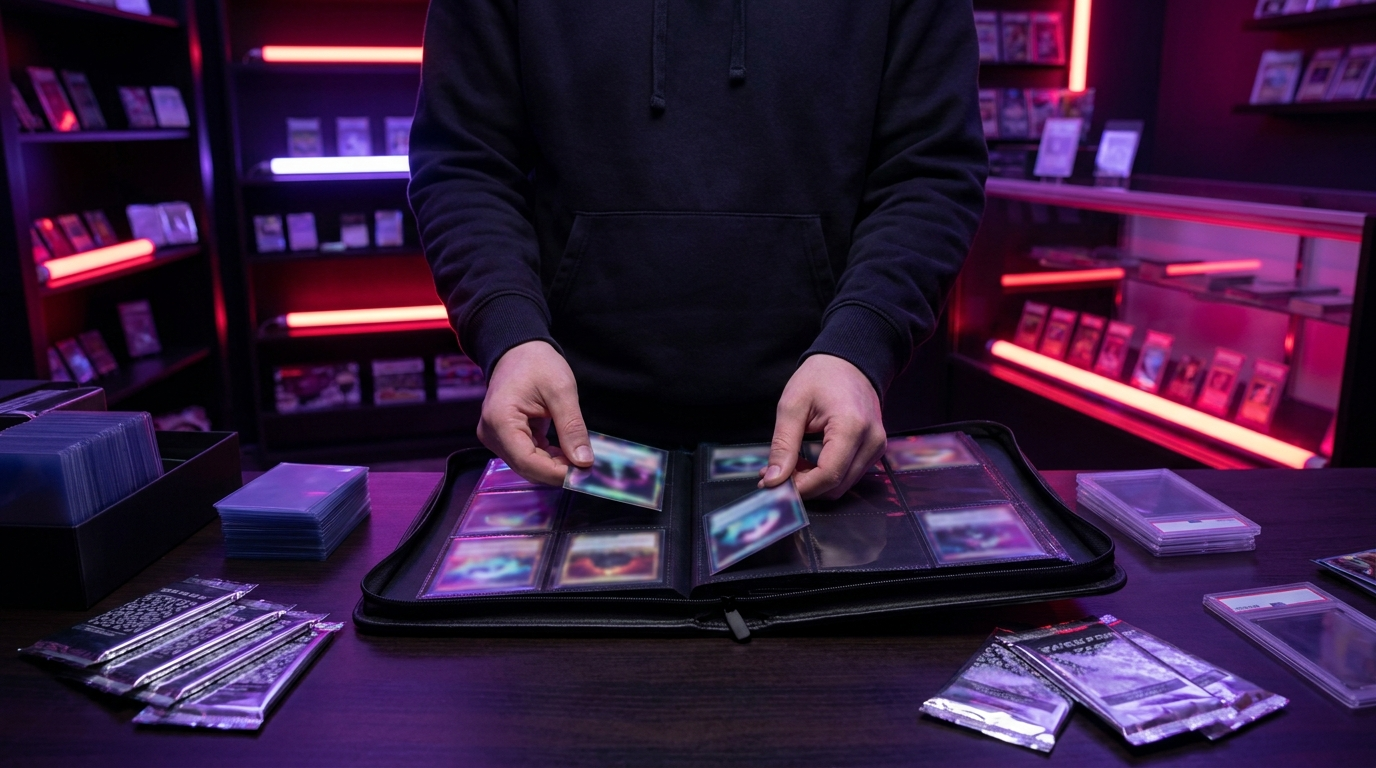
You don’t need to care about card prices to enjoy collecting — but you do need basic literacy, because it’s what protects you from bad deals. The rules that matter:
Price by sold listings, not asking prices. Anyone can list a card for £500; what identical copies actually sold for this month is the real number. Condition changes everything — a scratched holo is worth a fraction of a mint one, and beginners consistently overestimate their cards’ condition. Hype fades — chase cards from brand-new sets usually cost more in week one than they will three months later. And if a deal looks impossible, it’s fake — counterfeit cards are common on marketplaces, and ‘too cheap’ is their signature.
The golden beginner rule: spend slowly for your first three months. Every experienced collector has a drawer of early purchases they regret; the smaller yours is, the luckier you’ll feel later.
A practical habit that builds literacy fast: before any purchase over £20, spend five minutes checking what the same item sold for recently, in the same condition, from the same kind of seller. That single ritual — boring, repeatable, five minutes — filters out the vast majority of bad buys, and after a couple of months you’ll find you’ve absorbed the market’s shape without ever meaning to study it.
When you’re ready to go deeper, our guide to card values covers pricing properly, and our budget collecting plan shows how far £20 a month genuinely goes.
About £15 for a couple of packs from a current set, plus under £30 for a full protection kit. You do not need more than that to begin properly.
Both, for different reasons. Packs are for the fun of opening them; singles are how you actually get a specific card you want, almost always for far less than chasing it.
Penny sleeves, toploaders, a ringless side-loading binder and a plain storage box for bulk. Everything else can wait until you know what your collection is becoming.
Treat them as a hobby, not an investment. If a seller’s pitch is profit rather than collecting, that is a reason to walk away.
Check what identical copies actually sold for recently, in the same condition — not what people are asking. Condition changes value dramatically, and beginners consistently overestimate it.
Here’s the part beginners underrate: this hobby is social, and it’s better with people. Local card shops (ours is in Leeds — come say hello) host trade nights and league sessions where you’ll learn faster in an evening than in a month of videos. UK card shows put thousands of collectors and hundreds of vendors in one room. Online, the big Pokémon TCG communities are welcoming to newcomers and endlessly helpful for ‘what is this card?’ questions — and the official Pokémon site lists organised play events if the game itself tempts you.
Communities are also your best defence against every trap in this article. Scam formats, fake cards, overpriced products — someone in the room has seen it before and will happily save you the money.
If you’re collecting alongside kids, the community angle doubles in value. Trade nights teach negotiation and card care better than any lecture, and a shop counter is a far safer first market than an unsupervised marketplace app. Set the house rule early that big trades get a grown-up sanity check, and the playground economy mostly takes care of itself.
The takeaway: pick a lane, start small, protect everything, price by reality, and find your people. Do those five things and you’ll be a happy collector for years — the cards themselves will take care of the rest. When you’re ready for that first purchase, our shop is stocked with the beginner-friendly stuff, priced fairly, with loyalty points on every pound.
UK card shows explained: how the circuit works, what to expect at your first event, haggling etiquette and how to spot good deals. Meet the hobby.

Pokémon card trading is the best free fun in the hobby — until a bad trade stings. Value trades fairly, avoid scams online and trade with confidence.

Are Pokémon tins worth buying? We break down the tin line-up, mini tins vs full tins, the value maths and when a tin is genuinely the right buy.