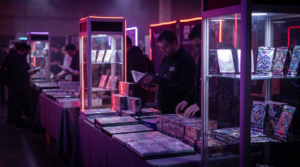
UK Card Shows & Events: Where Collectors Actually Meet
UK card shows explained: how the circuit works, what to expect at your first event, haggling etiquette and how to spot good deals. Meet the hobby.

Ask what the best card in a modern set is and nobody quotes attack damage — they name an illustration. Pokémon alt art cards and their successors have completely rewired what collectors chase, to the point where a card’s artwork now matters more than the Pokémon on it, its playability, or almost anything else.
But the naming is a mess. Alt arts, full arts, Illustration Rares, Special Illustration Rares, character rares, hyper rares — eras overlap, terms get used loosely, and half the hobby uses the old names for the new tiers. This guide untangles the whole ladder: where alternate arts came from, what today’s tiers actually mean, and how to build a collection around the art itself.
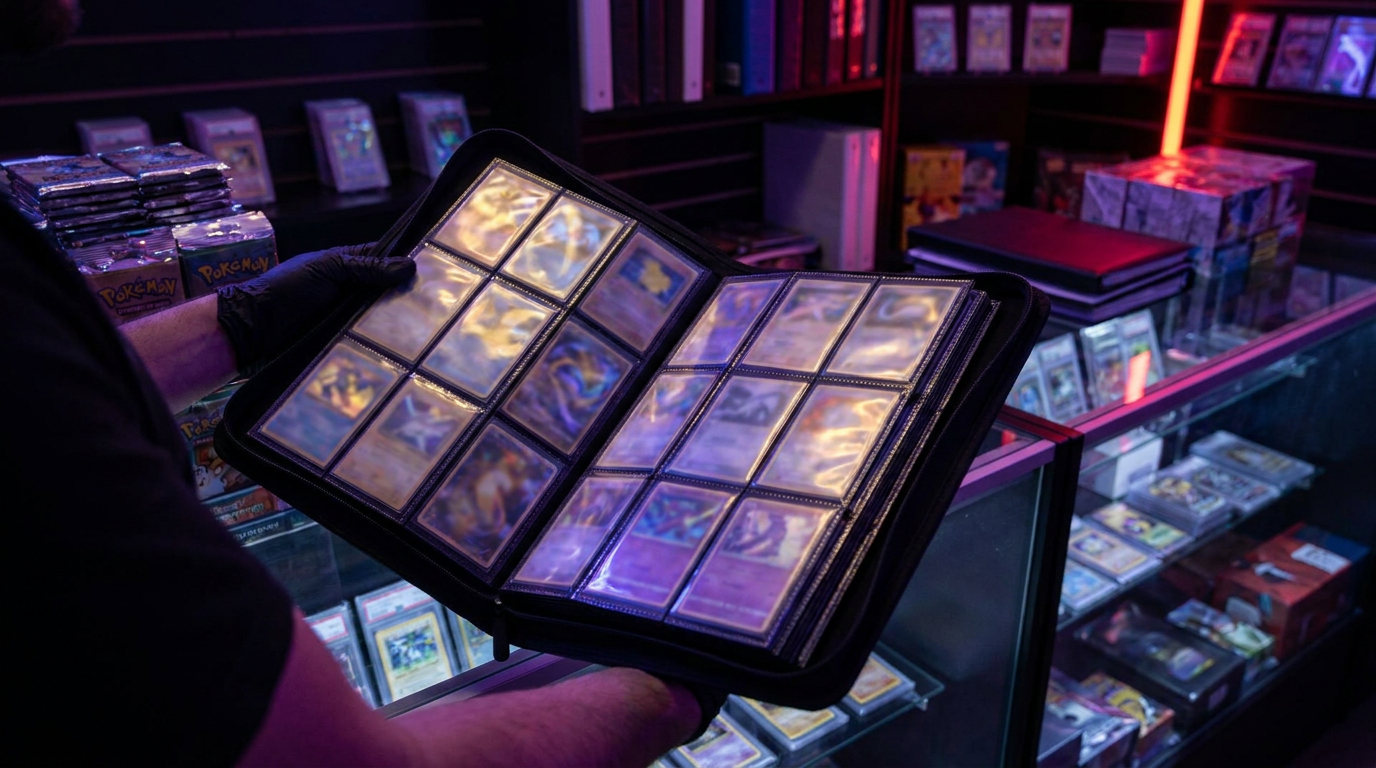
In the current era (Scarlet & Violet onwards into the Mega Evolution sets), the ladder above the ordinary rares runs like this:
| Tier | What it is | Market role |
|---|---|---|
| Double Rare | The standard ex cards | Common pulls, minimal premium |
| Ultra Rare / Full Art | Full-art versions of ex Pokémon and Supporters, artwork filling the frame with textured foil | Solid mid-tier value |
| Illustration Rare (IR) | Painterly cards showing Pokémon in scenes and stories, successors to the beloved character rares | The affordable art tier, often the best paintings in a set |
| Special Illustration Rare (SIR) | Extended scenic artwork on ex and Supporter cards | Nearly every modern chase card |
| Hyper Rare | The gold cards at the end of the set list | Scarcer than most SIRs, yet usually cheaper — rarity without the art appeal |
That last row is the key lesson of the whole era: scarcity sets the floor, but artwork sets the price. The market happily pays more for a common-ish IR with a stunning scene than for a rarer gold card nobody feels anything about.
Special artwork wasn’t invented yesterday — full arts date back well over a decade, and the Sun & Moon era’s Japanese “character rares” pioneered the idea of Pokémon shown in scenes with their trainers, cards collectors adored long before the term “alt art” existed. But those were occasional treats rather than the organising principle of a set.
The modern art movement kicked off properly in the Sword & Shield era. Alternate-art versions of V and VMAX cards — the original alt arts — took the era’s chase Pokémon and gave them full-bleed, story-driven illustrations. A handful became icons: the Evolving Skies alternate-art Umbreon VMAX (“Moonbreon”) grew into arguably the defining modern chase card, with alt arts of Rayquaza, Giratina and friends not far behind.
What made them special was partly odds — genuine alt arts were hard pulls — and partly that the artwork felt like a reward in itself. Illustrators were suddenly given room to tell jokes, set moods and hide details, and collectors responded instantly. By the end of the era, alt arts dominated every set’s value chart, and The Pokémon Company clearly noticed: the next generation of sets rebuilt its rarity system around exactly this kind of card. You can trace the full lineage of every one of these rarity systems on Bulbapedia’s rarity pages.
The Scarlet & Violet era formalised the idea: Illustration Rares for the storybook commons-tier art, Special Illustration Rares for the big extended-art chases. The formula has carried straight into the current Mega era, and a few patterns are worth knowing:
On odds: SIRs are genuinely hard pulls — typically a small handful per booster box at best, spread across a chase pool of a dozen or more cards, so hitting the specific SIR you want from packs is a long shot. That scarcity is real, but it’s shared evenly across the tier; the tenfold price differences between SIRs in the same set come almost entirely from popularity. A beloved Pokémon’s SIR and a forgettable one’s SIR fall from packs at the same rate and sell for wildly different money — which is the clearest proof you’ll find that demand, not supply, rules this era.
Collector’s tipBefore committing to a set’s headline SIR, look up the same Pokémon’s Illustration Rare from that set. It is frequently the better painting for a fraction of the money, and it is the tier where a well-chosen card still looks like a deliberate choice years later.
A few forces converged. Social media rewards cards that look extraordinary in a photo — a scenic SIR simply travels further online than a gold rectangle. A generation of collectors returned to the hobby caring more about display shelves than tournament decks. Illustrators became names in their own right, with collectors following favourite artists across sets the way people follow authors. And The Pokémon Company leaned in, giving each set more genuinely beautiful cards, which widens the pool of cards people feel compelled to own.
The result is a market where the honest question before buying any chase card isn’t “how rare is it?” but “will people still love looking at this in five years?” Rarity fades as print runs grow; a genuinely great illustration doesn’t. When you’re weighing a purchase, current sold prices on TCGplayer will tell you what the market feels today — the artwork tells you whether that feeling will last.
Grading culture reinforces the loop. Because art cards are display pieces, condition-sensitive collectors slab their favourites, pushing the premium on clean copies of the best illustrations even higher — and every gorgeous slab photographed on a shelf becomes another advert for the card. Rarity tiers have never had a marketing department this effective.
Strictly, an alternate-art version of a V or VMAX card from the Sword & Shield era, with full-bleed, story-driven illustration. Loosely, collectors now use “alt art” for any alternate-art chase card, including today’s Special Illustration Rares.
Illustration Rares are the lower art tier, showing Pokémon in painted scenes. Special Illustration Rares are the premium extended-art versions of ex and Supporter cards — and they are where the money sits.
Usually not, despite being scarcer. Gold cards rarely inspire the same affection, and in this era demand rather than supply sets the price.
The Evolving Skies alternate-art Umbreon VMAX combined a hugely popular Pokémon, an outstanding illustration and genuinely hard odds — and became the poster card for the entire alt-art movement.
A small handful per booster box at best, shared across a chase pool of a dozen or more cards, so pulling one specific SIR from packs is a long shot.
If this era clicks for you, here’s the approach we’d suggest:
The short version: modern rarity is an art ladder — alt arts built it, SIRs perfected it, and the market now follows the illustrations. Whether you’re picking up singles or ripping for the big one, you’ll find sealed product from the art-heavy modern sets in our Pokémon range, priced the way we’d want to pay for it ourselves.
UK card shows explained: how the circuit works, what to expect at your first event, haggling etiquette and how to spot good deals. Meet the hobby.
Pokémon card trading is the best free fun in the hobby — until a bad trade stings. Value trades fairly, avoid scams online and trade with confidence.
Are Pokémon tins worth buying? We break down the tin line-up, mini tins vs full tins, the value maths and when a tin is genuinely the right buy.