
UK Card Shows & Events: Where Collectors Actually Meet
UK card shows explained: how the circuit works, what to expect at your first event, haggling etiquette and how to spot good deals. Meet the hobby.


Pull a Master Ball Pokémon card from a pack and you’ll know about it instantly: the entire card shimmers with a repeating pattern of tiny purple-and-pink Master Balls, in place of the ordinary reverse holo foil. It’s become the modern hobby’s favourite lottery ticket — a variant so scarce that even bulk commons become three-figure cards wearing it.
The ball-pattern reverses are also one of the most misunderstood corners of modern collecting. They’re not a rarity tier in the traditional sense, they don’t appear in every set, and the odds involved are genuinely brutal — which is exactly why the market treats them the way it does.
Here’s the full picture: what Master Ball reverses actually are, where they exist, the real odds, which ones command the big money, and the honest maths of chasing versus buying.
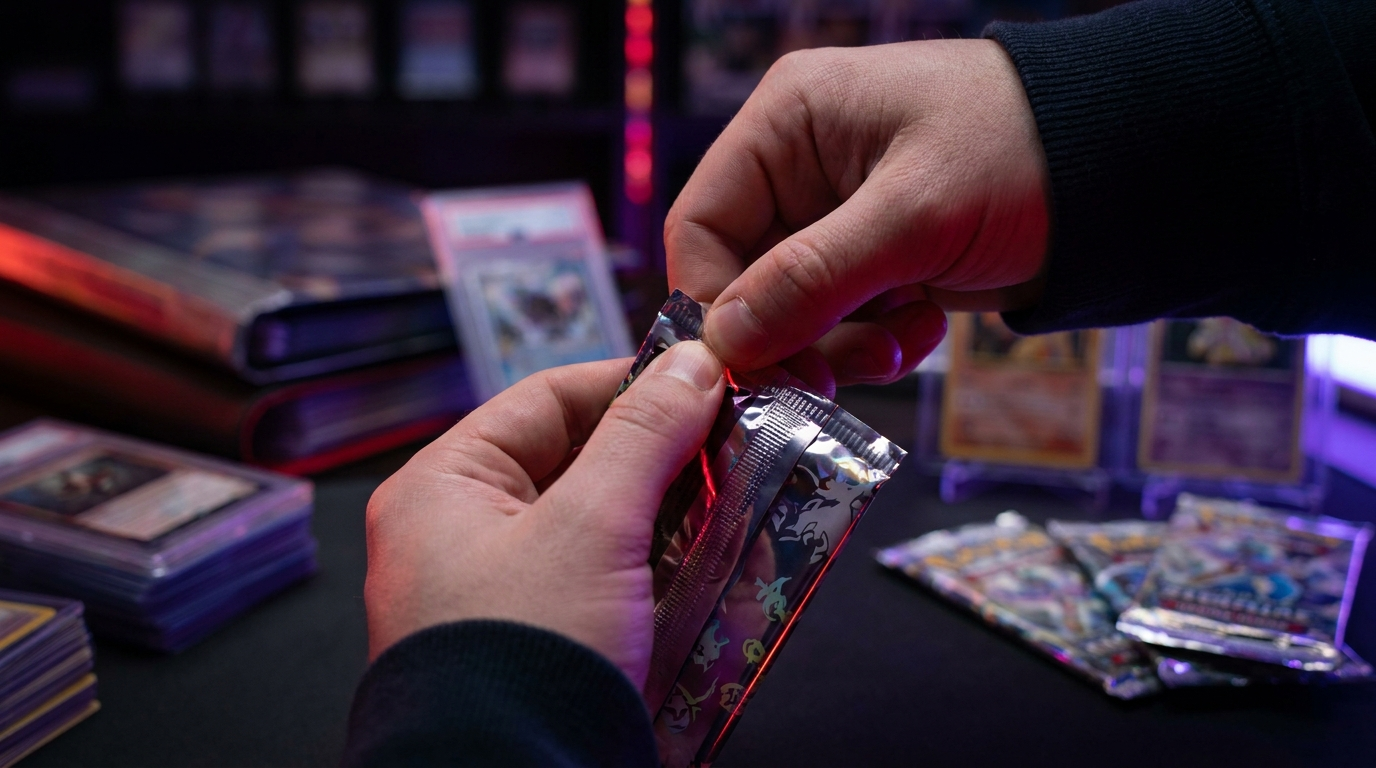
In a normal booster pack, one slot carries a reverse holo — a card whose body (rather than artwork) is foiled. Ball-pattern reverses hijack that slot. Instead of the standard foil, the card’s surface carries a repeating etched pattern: Poké Ball versions, which are uncommon but obtainable, and Master Ball versions, which are dramatically rarer and instantly recognisable by their purple sheen.
Two details make them special to collectors. First, they’re parallel variants: most cards in an eligible set can exist in ball-pattern form, so every common, trainer and chase card gains a hyper-scarce twin — a whole shadow set to collect. Second, supply is fixed by pack odds rather than by demand, so popular Pokémon in Master Ball form are scarce in a way even Special Illustration Rares aren’t.
The pattern reverses began in Japan — debuting in the high-class set Shiny Treasure ex in late 2023 — before making their English debut in Prismatic Evolutions in January 2025, where they promptly became a phenomenon. Since then they’ve remained a feature of special, celebration-style sets rather than every release: Japanese high-class sets have continued the tradition, and further English special expansions have carried ball patterns, though The Pokémon Company has kept them an occasional treat rather than a standard fixture.
That scarcity of appearances matters: because only certain sets carry the patterns, the existing pools don’t grow with each new release the way ordinary rarities do. Our Prismatic Evolutions set guide covers the set where English Master Balls began — and where the most valuable examples still live at the time of writing.
Japanese product is worth a mention for the dedicated: the pattern appears more often across Japan’s high-class sets, and Japanese Master Ball singles of the same Pokémon frequently trade below their English counterparts. For collectors who care about the pattern more than the language on the card, that price gap is one of the hobby’s quieter value plays — though check condition standards carefully when importing.
Precise pull rates are never published officially, but large community sample data is consistent on the shape of it. The picture, roughly:
That last line is the multiplier that catches people out. Pulling a Master Ball is a good day; pulling your Master Ball — the Umbreon, say — is lottery territory, and no quantity of sealed product a normal person can afford meaningfully changes that. It’s why we always point chasers at our pull rates explainer before they commit a paycheque to the hunt.
Why so brutal? Because the pattern occupies a shared slot rather than its own guaranteed position. There’s no ‘Master Ball pack’ and no pity timer — just a low fixed probability rolled fresh every time, pack after pack. Streaks of nothing are statistically normal, which is worth remembering when a box opening video makes it look routine; for every jackpot on camera there are dozens of unremarkable boxes nobody uploads.
Collector’s tipConsider building the Poké Ball set instead. The common pattern is achievable on an ordinary budget and gives you the same shimmering effect across a whole binder — a far more satisfying project than waiting on odds you cannot influence.
Reality check: a Master Ball pull should be a delightful surprise on the way to enjoying a set — never the business case for buying sealed product.

Master Ball value follows one rule: the pattern multiplies existing demand. The most valuable examples are the most beloved Pokémon, led — inevitably — by the Eeveelutions from Prismatic Evolutions. Master Ball Umbreon sits at the top of the pile, with Espeon, Sylveon and the rest of the family behind it, and fan favourites like Pikachu-line and starter cards forming the next tier. Even Master Ball energy cards and trainers with popular character art carry real premiums.
We won’t quote figures because they move constantly — check current sold and market prices on TCGplayer or recent UK sold listings before buying or valuing anything. What we will say: condition matters enormously here. The etched foil shows whitening and surface wear readily, and the gap between a mint and lightly played Master Ball is wide, so sleeve any pull immediately and scrutinise photos when buying raw.
Grading amplifies all of this. High-grade slabs of the top Master Balls carry substantial premiums over raw copies, partly because the foil pattern makes truly clean examples scarce and partly because a slab settles the authenticity question — relevant, since the pattern’s value has inevitably attracted fakes. If you pull a big one in clean condition, a grading submission is genuinely worth weighing up; and if you’re buying one at serious money, graded is the lower-stress route.
Watch outThe pattern’s value has inevitably attracted counterfeits, and etched foil is far easier to fake convincingly in a photograph than in the hand. At serious money, buy graded — a slab settles authenticity and condition in one go, and it is the lower-stress route by a distance.
A card whose reverse holo foil is replaced by a repeating etched pattern of purple-and-pink Master Balls. It occupies the normal reverse slot in a pack rather than being its own rarity tier.
Community sample data puts any Master Ball reverse at roughly one in eight to fifteen packs. A specific Master Ball card is far rarer again, because the parallel pool runs to over a hundred cards.
They began in Japan’s Shiny Treasure ex in late 2023 and debuted in English in Prismatic Evolutions in January 2025. They remain a feature of special, celebration-style sets rather than every release.
Master Ball Umbreon from Prismatic Evolutions, with Espeon, Sylveon and the rest of the Eeveelutions behind it.
Buying the single wins almost every time. Even at chunky market prices it costs a fraction of the sealed product you would statistically need to open.
The honest maths: if you want a specific Master Ball card, buy the single. Even at chunky market prices, a single costs a fraction of the sealed product you’d statistically need to open to pull it — search the exact card on TCGplayer’s Pokémon listings and compare it with the price of thirty-plus packs; the singles route wins almost every time.
If you simply love opening packs — and we absolutely get it, it’s half the joy of this hobby — then rip away, but with money you’d happily spend on the experience alone. Buy eligible sets at fair prices rather than hype prices, treat every Poké Ball reverse as a nice bonus, and if a Master Ball ever slides out of a pack, enjoy one of modern collecting’s genuinely great moments. You can browse current sets and booster boxes in our shop — priced at RRP whenever allocation allows, because the odds are long enough without paying a premium for the ticket.
The takeaway: Master Ball cards are the modern hobby’s purest scarcity — a beautiful pattern, brutal odds and fixed supply. Chase the experience, buy the card, and never confuse the two.
UK card shows explained: how the circuit works, what to expect at your first event, haggling etiquette and how to spot good deals. Meet the hobby.

Pokémon card trading is the best free fun in the hobby — until a bad trade stings. Value trades fairly, avoid scams online and trade with confidence.

Are Pokémon tins worth buying? We break down the tin line-up, mini tins vs full tins, the value maths and when a tin is genuinely the right buy.